Around six years ago, I watched The Irishman (2019) with my grandmother over Thanksgiving break. I was 13 years old and in the early stages of developing a taste for film. Despite a daunting three and a half hour runtime, The Irishman held my attention from start to finish. I found myself entranced by the way the film managed to tell a decades-long story, depict the cold brutality of violence and leave me contemplating rich themes of death, loyalty and regret.
Upon mentioning how much I enjoyed the film to my dad, he would go on to introduce me to Goodfellas (1990), The Departed (2006), and The Wolf of Wall Street (2013), all of which — like The Irishman — were directed by Martin Scorsese. Once again, I was blown away by the way Scorsese managed to explore themes of toxic masculinity, violence and the way in which money, sex and power can bring out the worst qualities in people. As I watched more and more of his work on my own, I knew that I was consuming the work of a true creative genius, a man able to work brilliantly to bring out the best in the actors he worked with and create magic through elaborate camerawork and staging.
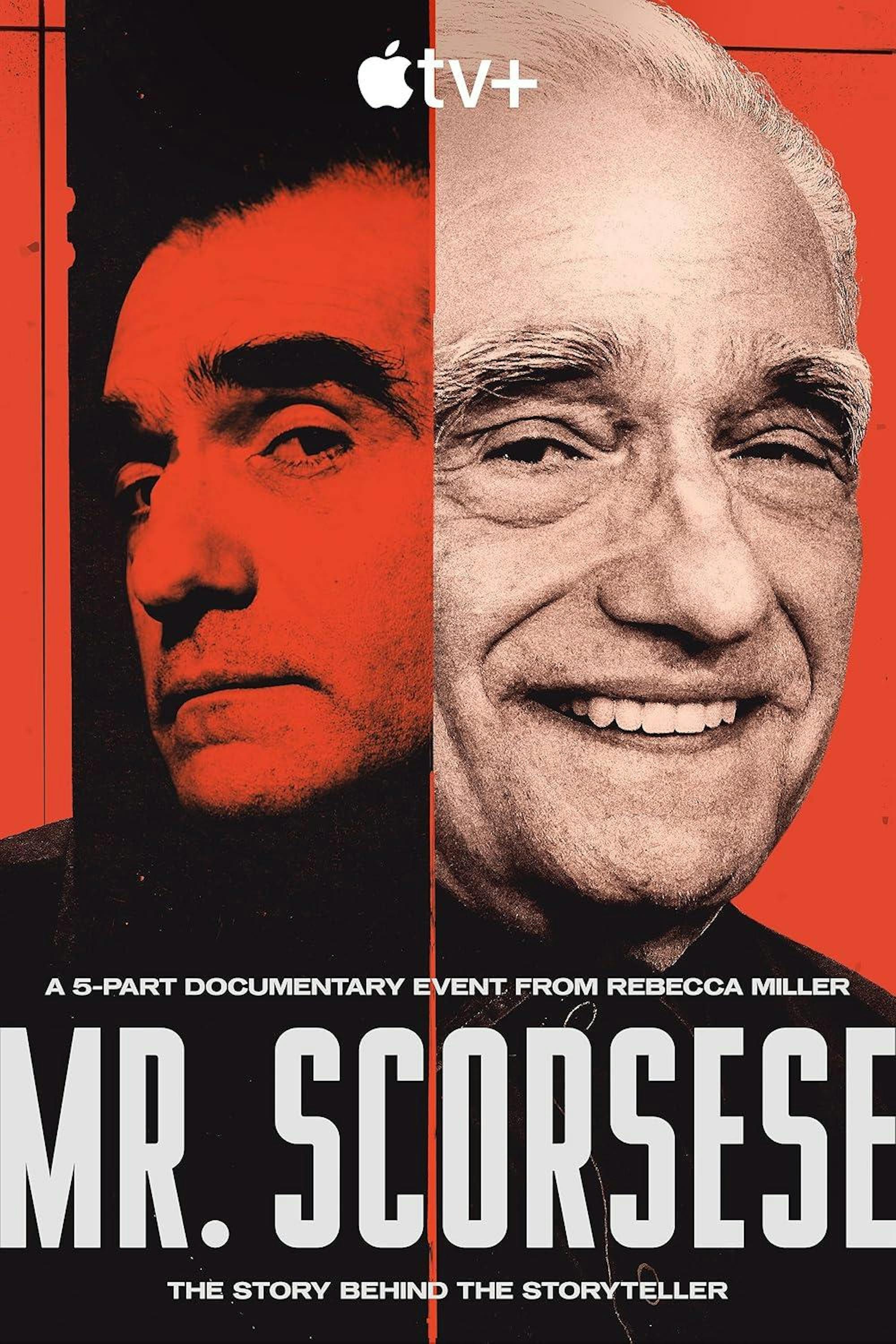
Being a strong admirer of Scorsese and his work, the release of the five-part, five-hour-long documentary Mr. Scorsese on Apple TV+ deeply excited me. I hoped to learn more about how Scorsese’s personal life impacted his work and gain a deeper understanding of Scorsese’s creative process. And, for the most part, Mr. Scorsese does an excellent job of providing a closer look into these topics.
For one, the docuseries doesn’t excessively glorify Scorsese’s personal life. Through interview clips with Scorsese’s romantic partners, family, friends and the man himself, we learn of Scorsese’s struggles and mistakes. The docuseries highlights his battle with cocaine addiction in the 1970s, the at-times distant relationships with his first two daughters and the inner rage that consumed Scorsese for much of his life. Many of Scorsese’s experiences and struggles greatly inform aspects of his style and art; for example, Scorsese frequently uses overhead shots because he spent much of his time indoors as a child due to his asthma and watched the outside world through his windows to overcome boredom.
Additionally, Mr. Scorsese dives quite nicely into the long-lasting partnerships Scorsese formed with different actors, writers and editors. While deservedly spending plenty of its runtime covering Scorsese’s enduring collaborations with Robert De Niro and Leonardo DiCaprio, the docuseries also features many interview clips with Thelma Schoonmaker, who has edited every Scorsese feature since Raging Bull (1980), and Paul Schrader, who wrote the screenplays for Taxi Driver (1976), Raging Bull, The Last Temptation of Christ (1988) and Bringing Out the Dead (1999). In hearing from these individuals, we gain a deeper understanding of Scorsese’s creative process and a heartwarming look into how much Scorsese has shaped and been shaped by those he works with.
Unfortunately, though, the docuseries fails to truly capture the entirety of Scorsese’s career in an even manner. While three entire episodes are dedicated to Scorsese's work between 1973 and 2000, only one episode (the final one) covers the 25 years that have passed since 2000. While it is obviously difficult to cover the entire career of a man who has been directing feature films for almost sixty years, I felt that some of the earlier episodes could have removed some repetitive material in favor of more time being allotted toward films like Bringing Out the Dead and Hugo (2011), which were brushed over with little more than a brief mention.
Despite these issues, Mr. Scorsese still stands as a worthwhile watch for fans of the prolific director. The five hour docuseries flies by in no time, easily keeping the viewer’s attention as diverse perspectives offer insight into the life and work of a cinematic legend.
Matthew Rentezelas is a sophomore in the College of Arts and Sciences. He can be reached at mmr255@cornell.edu.
Matthew Rentezelas is a member of the Class of 2028 in the College of Arts and Sciences. He is an assistant arts editor for the 144th Editorial Board and can be reached at mrentezelas@cornellsun.com.