In President Trump’s May 1st executive order titled “Ending Taxpayer Subsidization of Biased Media,” he declared that all government funding towards PBS, the government-funded Public Broadcasting Service, the order reads: “The CPB Board shall cease direct funding to NPR and PBS, consistent with my Administration’s policy to ensure that Federal funding does not support biased and partisan news coverage.” In July 2025, the order went into effect, causing a slow halt to all broadcast operations, with federal funds officially running out earlier this week. The current administration’s shots towards PBS have ultimately resulted in the shutdown of PBS Kids, a beloved children's TV programming channel that's been on air since 1999.
The defunding of PBS Kids has caused me to reflect a lot on kids' media today, specifically, questions on what kind of media is available for children to watch and what growing up without PBS could look like. My conclusion, kids' TV nowadays is degrading and the defunding of PBS will be detrimental to the development of kids' media in the future.
PBS Kids content is created around four pillars: communication, critical thinking, creativity and collaboration. These pillars are then divided into subcategories that focus on topics such as literacy, social-emotional learning, science and nutrition. The reason I laud PBS’s approach to media is precisely their emphasis on educational value in such a wide-reaching public broadcasting platform. Almost every person I know around my age grew up watching and loving PBS TV shows that emphasized the importance of curiosity and learning, sparking a love for reading, writing, science and math from an early age.
The defunding of these programs will negatively impact kids growing up today, especially since far-right politicians are pushing for the replacement of PBS with PragerU, a conservative media organization that makes children's content that “promotes American values of life.”
A quick scroll through PragerU’s kids' content library will present you with titles such as “Venezuela: Vivi’s Life Under Socialism” and “Tito’s Trouble With Communism” — but the worst of them all is Leo and Layla’s History Adventures. In this series, protagonists Leo and Layla time-travel throughout different historical periods, meeting a significant figure of the time along the way. In an episode titled “Christopher Columbus: Explorer of the New World,” Columbus tells Leo that slavery was “no big deal,” responding to Leo’s questions with “Slavery is as old as time, and has taken place in every corner of the world — even among the people I just left. Being taken as a slave is better than being killed, no? I don’t see the problem.” And that’s just one of their more problematic videos, but after watching multiple episodes, I can confidently say that these videos are literal Christian nationalist propaganda that pushes back historical efforts to tell stories beyond the perspective of the victor, giving a voice to the marginalized.
Beyond pure propaganda, children's media is generally declining in quality. I spent my summer working as a teacher's assistant in a summer camp for preschoolers and noticed just how terrible the media the kids are consuming really is. Shows like Bluey are generally great and contain valuable lessons on emotional intelligence and positive family values like gentle parenting and boundaries. I totally exclude Bluey from this argument because I actually think it’s great for both parents and kids! That being said, other dominating shows such as CoComelon and Peppa Pig are a part of the problem. My qualms with CoComelon started with the annoyance I would feel when the kids I worked with would ask to watch it — for some reason, CoComelon incited violence within these kids; they just had to watch it, even if it meant snatching the remote from my hands and a punishment of five minutes in a time-out. At first I would put the show on because it’s what they preferred, but I would be taken aback when the mob of kids that were nagging me about their desire to play just seconds prior would sit on the floor and get hypnotized by the CoComelon. The thing about CoComelon is that it doesn’t have a plot or any big end-goal; it’s a compilation of nursery rhymes in 3D animation that go on endlessly until the episode ends and another one follows. I felt evil playing CoComelon for these kids; the colors and movements are overstimulating and don’t leave any desire or curiosity to learn or gain anything from it; it’s just an audio visual pacifier. The fast-paced visuals and sounds can lead to behavioral issues in kids, like withdrawal symptoms and developmental concerns, like speech delays. In my time working with kids who regularly consume content like CoComelon and Peppa Pig, I noticed speech delays, inability to focus and an inability to regulate their emotions (of course, they’re kids, but some of these emotional outbursts were clearly just a mimic of tantrums they had seen on TV, like Peppa’s tantrums, for example).
Overall, but, especially in the United States, where the literacy rate has fallen from 86-88% in the 2010s to 79% in 2024, useless media like CoComelon, PragerU Kids and Peppa Pig serve no one and are making children zombies. Especially when incredible, low-stimulation children's media has already been around for so long, thanks to holistic programs such as PBS Kids! Incredible shows such as Little Einsteins, WordWorld, Super Why!, Dora the Explorer, Martha Speaks, WordGirl, Sid the Science Kid and Yo Gabba Gabba (I could go on) exist to make kids literate and help them enjoy unbiased learning that promotes empathy, a celebration of differences and most of all, a love for learning.
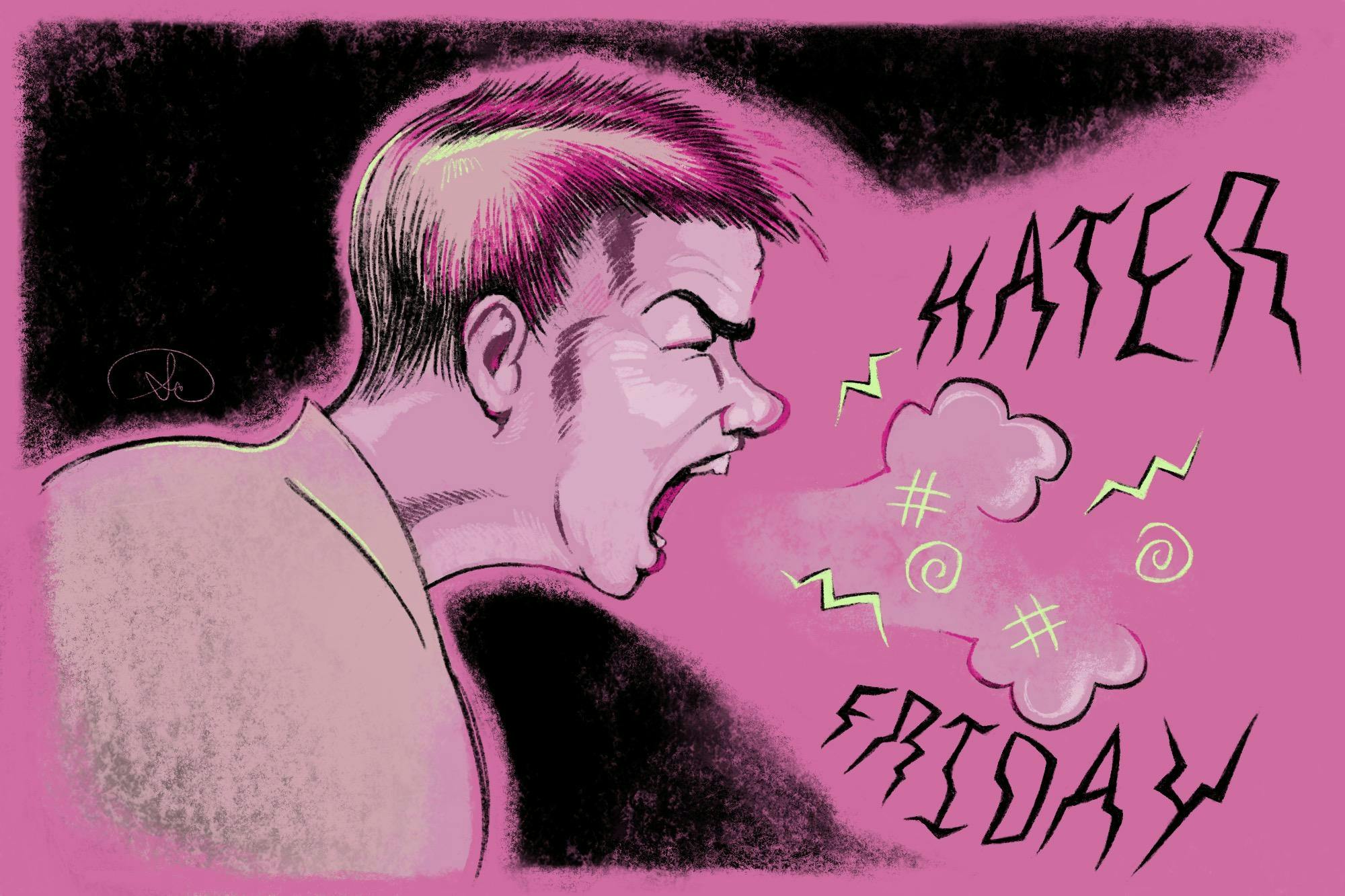
Hater Friday runs on Fridays and centers around critiquing media or culture.
Paulina Delgado Umpierre is a sophomore in the College of Arts and Sciences. She can be reached at pmd99@cornell.edu

Paulina Delgado-Umpierre is a member of the Class of 2028 in the College of Arts and Sciences. She is a staff writer for the Arts & Culture department and can be reached at pdelgadoumpierre@cornellsun.com.