Cornell’s Jewish community came together over the last Ten Days in celebration of Rosh Hashanah and Yom Kippur, the High Holidays that mark the beginning of the Jewish year and serve as a time for reflection and renewal.
The High Holidays began with Rosh Hashanah, the Jewish New Year, on Monday, Sept. 22 at sundown until Wednesday, Sept. 24 at sundown. Students attended services organized by Chabad Cornell and Cornell Hillel at Anabel Taylor Hall, offering services for Reform, Conservative and Orthodox traditions.
President of Cornell Hillel Maya Weisberg ’26 discussed what this time means to her.
“Rosh Hashanah, to me, is a time for reflection, intention-setting and hope,” Weisberg said. “In Judaism, we use the beginning of a new year to reflect on the past year and how we can improve ourselves in the coming year.”
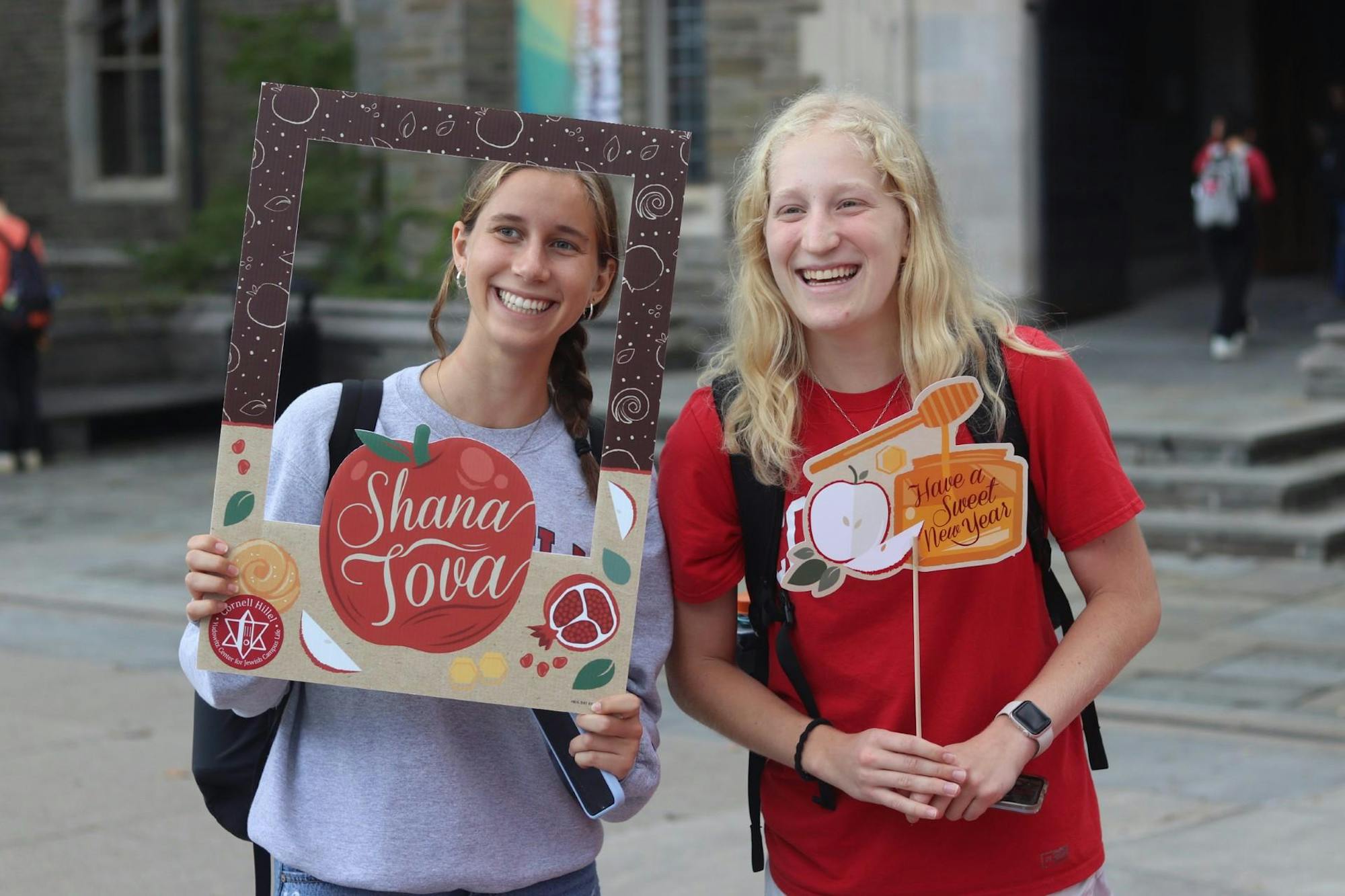
Hillel hosted a series of events leading up to Rosh Hashanah, including apple picking and baking challah, a special bread in Jewish cuisine.
Yael Schranz ’26, a Jewish student, shared the meaning behind these events.
“The Jewish New Year is all about starting … on a sweet note, so it’s a custom to have apples and honey,” said Schranz.
The events included shared meals in addition to sweet snacks. On the first day of Rosh Hashanah, nearly 400 students attended the Rosh Hashanah Banquet dinner held at Trillium. Hillel additionally offered funds for students to have their own meals which expanded opportunities for students to celebrate.
“We worked really hard to enable students to have the most meaningful experience they could,” Weisberg said.
Chabad similarly hosted large crowds, with an estimated 500 students attending its first-night dinner in its newly renovated building.
In addition to meals and services, some students participated in Tashlich, a symbolic ritual of casting bread into water, representing “throwing away all the things you regret from the past year,” said Schranz, who does this ceremony at Beebe Lake.
On Rosh Hashanah, students also heard the shofar — a ram’s horn blown as a call to spiritual awakening — on Ho Plaza, where volunteers made the sound accessible to those passing by.
“The shofar — to me — symbolizes … ‘God, you're here, and you're watching over us; thank you for everything you've given,’” said Schranz.
These events led into Yom Kippur, the Day of Atonement and fasting, which began on Wednesday evening and ended at sundown on Thursday.
Annabelle Raz ’26 described spending Thursday attending services until the day ended at sundown; “The highlight of my day was breaking fast at Collegetown Bagels,” Raz said, a meal funded by Hillel.
Looking back on the High Holidays, these celebrations on campus helped fill the gap of being away from their families during these important holidays.
“I think it's nice when you're all together [at these events] because you have each other as family,” Schranz said.
Clarification, Oct. 9, 8:04 p.m.: This article has been updated to clarify that Chabad's dinner was held at its newly renovated building.

Rowan Wallin is a member of the Class of 2027 in the Nolan School of Hotel Administration within the SC Johnson College of Business. He is a senior writer for the news department and can be reached at rwallin@cornellsun.com.