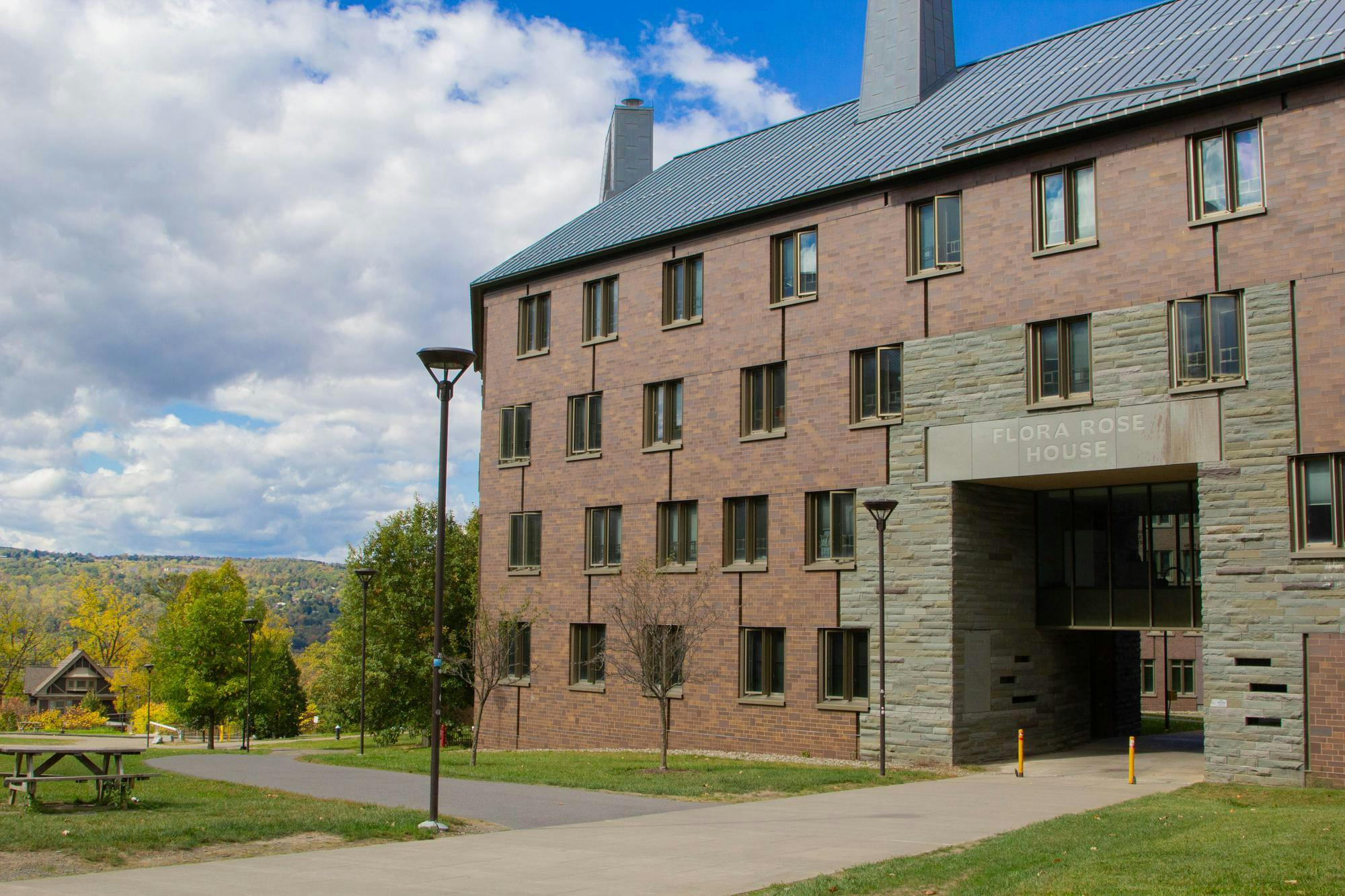
It is no secret that dorm-living is often not the most comfortable, clean or convenient experience in every college student’s life. It’s possible that you have encountered Cornell alumni waxing poetic about their time here, but frequently their tales involve some sort of exposé of their previous residence hall. I was working on campus for the most recent reunion weekend and can personally attest to hearing countless stories and debates about which dorms were bottom and top tier back in the day. Balch and Dickson had a few honorable mentions for top tier, but more often than not, alumni would take a few minutes to complain about the U-Halls.
The word “U-Hall” was repeated so often that it began to have an infamous ring even in my ears. The name eventually evoked the same visions I see whenever somebody mentions the Low-Rise residential community that I lived in my first year: cramped rooms, shower walls covered with long mystery hairs and suspicious smells of equally mysterious origin. For this anniversary edition, I decided it was finally time to get to the bottom of what made the U-Halls so infamous in the collective Cornell memory.
In my research, I discovered that the shortened “U-Hall” actually stands for “University Halls,” and they were referred to mostly by their numbers, not unlike the current Low Rise dorms. They were constructed to accommodate the influx of new students following the Second World War, but it became clear even before their erection that they were going to be immensely unpopular. Even upon merely looking at the blueprints for the buildings, a group of architecture students complained that the designs for the new buildings “ignored the sun, the wind, storms, views, orientation to existing buildings,” and that they bore a strange resemblance to army barracks, a living situation that would have been not far from the front of many students minds in the recent aftermath of the war.
As one might imagine, the dorms never became more popular. Years after their construction, students complained about the shoddy construction — infrastructure that would literally crumble, doors that would splinter should someone knock too hard and walls so thin you could have full conversations with your next-door neighbors. The interior design was downright unappealing as well: orange carpeting and cinderblock walls.
My uncle, David Gallagher ’98, lived in U-Hall 6 during his time here, and the kindest thing he could say about the dorm design was that they were “utilitarian” at best. My uncle’s stories about the U-Hall experience painted a picture very similar to the one I often conjure while describing my first-year living arrangements — it has reached a point of hilarity actually. I cannot be certain, but it is entirely possible that I am on the receiving end of a generational curse that predetermined my less-than-optimal Low Rise 9 living situation. At least I had the consolation of Morrison Dining Hall. The U-Hall residents had a cafeteria that was affectionately nicknamed the “Barf Bar.”
The only thing that was mentioned as frequently as the grim conditions of the U-Halls, though, were the outrageous memories that students had in them. In my conversations with alumni over reunion weekend, there were countless allusions to (likely intoxicated) hinjinx in the buildings. Further investigation into the buildings revealed more specific stories: a student who managed to fit an entire Volkswagen bug into his dorm, DIY steam rooms created by running all of the bathroom showers on their highest heat, fights waged between windows of rooms stacked on top of each other, flag football games in common rooms and hundred-person snowball fights in the courtyards. In my Uncle’s memory, “one of the U-Halls was so savage that Cornell boarded up their common room.”
One thing that did strike me about the stories of the gritty shenanigans in the U-Halls were the photos that accompanied them. These photos confirmed my initial suspicions that the U-Halls were the 20th century equivalent to the Low-Rise residential community. I smiled looking at the messy desks cluttered with homework and cork boards pasted over with mementos, thinking about how easily it could have been me and my friends in our nasty dorms if we could only master the impossible coolness of 70s and 80s fashion.
To say that the worst dorms on campus are less than ideal is an understatement no matter when one is a student here, but the stories relayed by U-Hall survivors reveal that there will be a humorous commiseration for many years to come. Let the stories of these former students serve as evidence that you may at some point have a vague sense of nostalgia for the grime and grit of your college living arrangements, but also that your seemingly endless nights of fun and laughter will become just as notable as the dorm halls themselves.
Caitlin Gallagher is a senior in the School of Industrial and Labor Relations. She can be reached at cmg323@cornell.edu.
Caitlin Gallagher is a senior in the School of Industrial and Labor Relations. She can be reached at cmg323@cornell.edu.