

By Giuliana Keeth
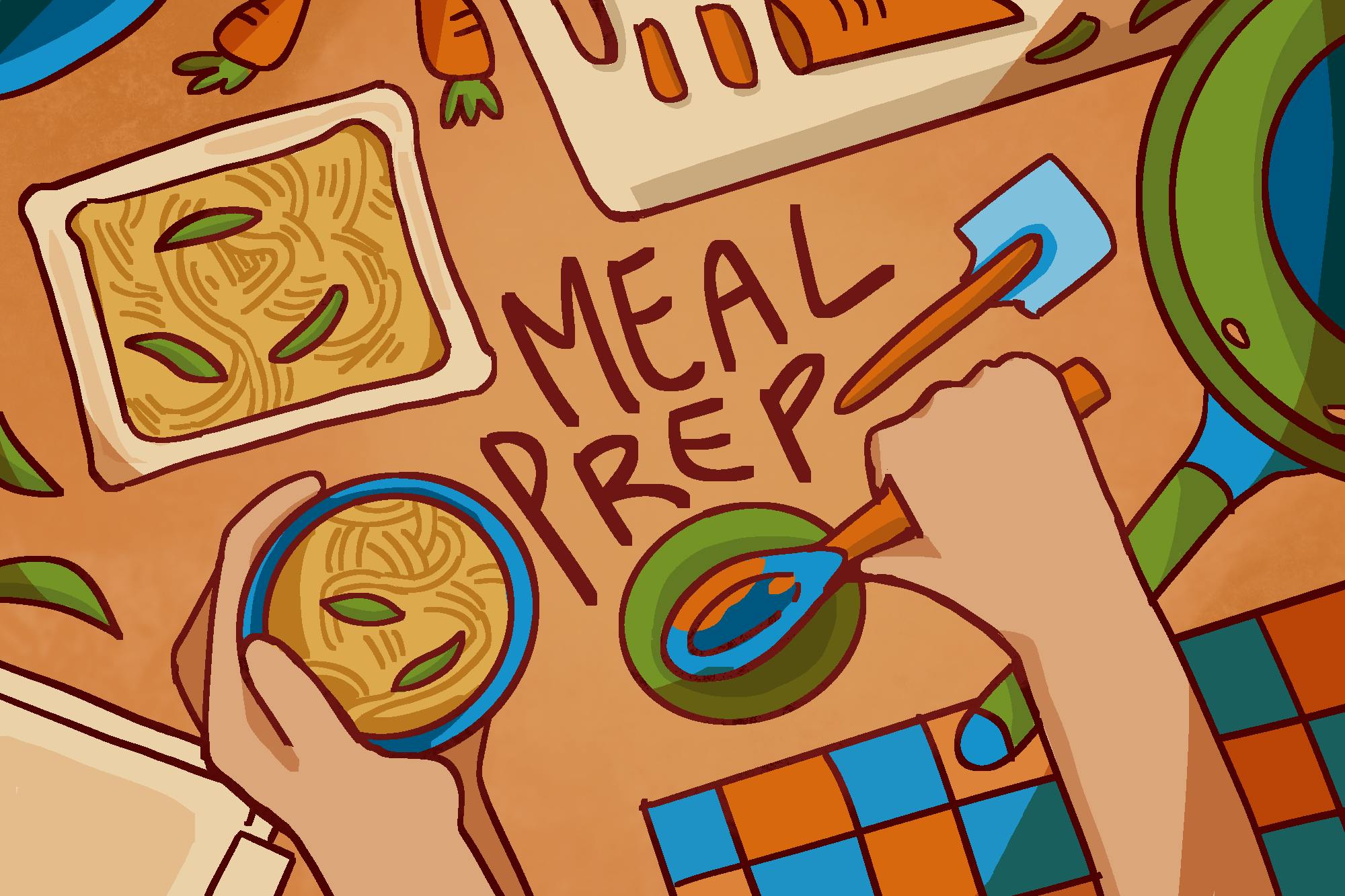
Meal prepping. If you would have said that phrase to me two years ago, my mind would have started racing with preemptive stress over how much time and work that would take. A pile of questions would emerge one after the other: What is meal prepping? How often should I be doing it? Would it be better to make my food on a daily basis? What if I end up hating what I prepare? How will I manage grocery shopping without a car?
Despite these overwhelming concerns, as a rising senior, I decided that it was about time to live off-campus. Three years on North Campus had left me feeling like I was missing out on way too many fun activities, despite the fact that my friends and I would try to make a couple of plans to go and get boba or eat dinner together. Most of the time, we couldn’t really spare an hour to walk or take the bus there.
Yet, even after signing a lease on an apartment for the school year, I still couldn’t face the fact that I wasn’t going to be eating on campus every day. Taking a pre-made lunch with me felt like a massive burden, especially since it didn’t give me any flexibility to eat with friends who had decided to stay on meal plans. At the same time, I knew that I really didn’t want to continue with a meal plan. When I ate at a dining hall, it was for pure necessity, a simple refuel before going to another class. I wanted to feel as though mealtime was a moment to pause and enjoy a delicious dish instead of a daily chore.
Luckily, I started living in my apartment over the summer, and I decided that it was the best time to experiment with meal prepping. I wasn’t completely set on the idea; but, I wanted to try my hand at cooking every day to see whether or not it would be plausible to do with a full class schedule in addition to other activities and responsibilities. The first week food prepping left me completely overwhelmed. During the Covid-19 pandemic, baking became my favorite hobby, so a small part of me had unconsciously assumed meal prepping would be a light activity, similar to what I was used to. But something about having to prepare a set grocery list for the week—buying enough fruits, vegetables and proteins for each day while also trying to minimize food waste—seemed impossible. Preparing my own meals wasn’t really the problem; it was all the logistics supporting it.
After two weeks of confusion and frustration, I called my mother to ask her for some help. I saw some of the sheets that she made at home to plan groceries and meals, so I knew that she would offer me really thoughtful advice. She understood my pain in regards to wasting products. As a mindful person herself, she tries to avoid buying too many groceries and potentially letting them expire. However, she has a wealth of knowledge up her sleeve about recipes and ingredient combinations that I have just begun to develop and explore.
In our call, she began to list a couple of recipes that complement each other. For example, breakfast for one day could be shakshuka while dinner for the next could be vodka sauce pasta with grilled chicken. Each of these recipes has a completely different flavor profile, but they both use tomatoes. In this way, my mother and I began developing a meal plan for me, one that focused on minimizing my grocery list while maximizing variety and flavor in each meal.
If you feel particularly stressed about meal planning, I encourage you to approach it in the way you would a problem set in math or a complex reading. Take the time to deconstruct the process and create a spreadsheet of potential meals, always paying attention to the ingredients they require. You might be surprised to find that many recipes have nearly identical ingredients, but a simple change in preparation or seasoning gives them a unique taste and sets them apart from each other. Now that the semester has started, I like to alternate two main dishes with different sides throughout the week for dinner. For example, I might combine a Peruvian beef stew and chicken Florentine with mashed potatoes and brown rice, making sure that there’s not a single day which feels like a repetition of the last.
In a similar vein, you don’t have to immediately shift from an unlimited meal plan and take complete responsibility over cooking. Since you’re already on campus for classes, you could grab lunch at a café with a couple of friends and avoid carrying a lunch bag all day. I’m a huge fan of coffee, so I often like to combine my lunches with an iced latte.
The key to meal prepping is planning. This doesn’t have to involve significant amounts of effort each week nor significant expenditure. Your sole goal should be making sure that you have a set time to plan meals, buy groceries and prepare foods in advance. For me, this proved to be extraordinarily helpful. I like to shop on a day with less classes, so that I can cook over the weekend. If you have a car, it might take less time to shop, so you can combine both activities into one day. You will find that after a couple of weeks, this process becomes less a source of stress and more an opportunity to be creative through cooking, exploring a dish that you might have always wanted to try or spending time with your friends baking together. It might not seem like a priority now, but knowing how to cook will be a lifesaver after graduation. Eventually, there won’t be many dining halls nearby and you’ll have to handle meal prepping yourself.
Giuliana Keeth is a senior in the College of Arts and Sciences. She can be reached at gmk74@cornell.edu.


