


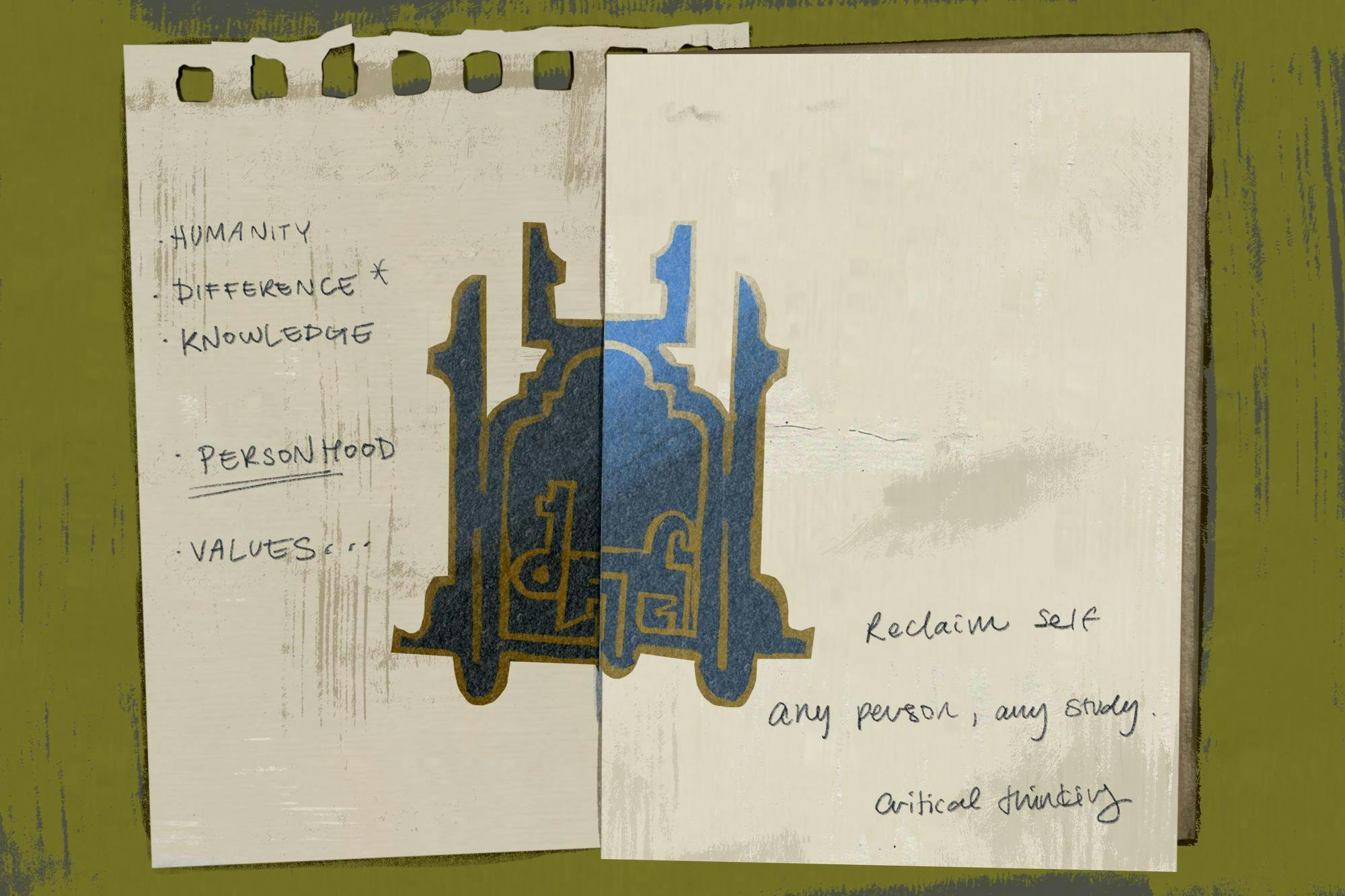
Cornell does not have peers. It is unique. While Cornell shares some similarities with other institutions of learning, its founding principles are different. Cornell’s motto is not catchy or mimicking a social media tweet. It is a simple and unpretentious statement: “I would found an institution where any person can find any study.” The words by Ezra Cornell were not uttered in Latin to create a hollow sense of mystique precisely because the majority of Americans would not understand him. The sentence is in English, the language of the people. The words are not immediately riveting unless we pause and think about them. After careful consideration, the historical significance resonates in our minds as we recall the Civil War in a “house divided” and the struggle of Indigenous peoples and African Americans for basic freedoms and human rights.
Cornell’s egalitarian impulse is contrary to other elitist institutions of learning. Cornell is both a land-grant and an endowed school. Its endowment draws from the profits of land sales. I do not wish to romanticize Cornell's founding because there is a dark history of Indigenous land dispossession that remains unaddressed and widely unacknowledged by its Board of Trustees and many alumni. Nevertheless, this institution has clearly chosen a distinctive path in a nation that has a violent history and continues to fail to come to terms with that brutality. The worst impulses of this bloodshed are manifested in schools and institutions of higher learning. It is now so commonplace that the leaders of the country, on all political sides, only give lip service, consistently betraying the parents and the youth whose lives are lost or damaged. It is not a matter of coincidence that the life of Mr. Charlie Kirk was prematurely extinguished at the very moment he was responding to questions about mass killings in a university setting. All life is precious, whether we agree with a person or not.
In this cultural milieu, Cornell represents what the American Poet Laureate, Robert Frost, would call The Road Not Taken. The last stanza of the Poem conveys it best.
I shall be telling this with a sigh
Somewhere ages and ages hence:
Two roads diverged in a wood, and I—
I took the one less traveled by,
And that has made all the difference.
The emphasis on the word “difference” is mine because Cornell’s egalitarian bequest to its students and faculty not only has historical resonances, but it also reverberates with meaning today in a world beleaguered by violence as elites seek to control the destinies of diverse peoples. Any thinking individual can discern that this is not only about the MAGA-supported tech and media oligarchy. It is also about the self-righteous and superficial woke elite, who also seek to disrupt our perception, so that we do not recognize the personhood of each other. They are both objective allies; they seek the same end: our inability to discern difference. They seek to impose upon us a way of thinking that supports their hegemony. Their actions are no longer achieved by exercising brute might upon the body; as in the Civil War, it is violence carried out upon our minds and values. The desired outcome is that we feel entrapped and unable to recognize other pathways to living meaningfully and thinking critically.
The words “any person” and “any study” are not only shields from colonization of our minds and hearts, but an orientation towards a strategic response. They are an emphatic declaration that “difference matters”! Irrespective of ethnicity, religion or sexual orientation, the person matters. No matter what scholarly undertaking we pursue, other ways of knowing, such as Indigenous Knowledge, count.
Difference is the foundation of sensory perception. Therefore, diversity is the foundation of knowledge. A person’s sensory environment is intrinsic to the ongoing process of being alive. Life is made real by its relationship with other life. It is this characteristic that unites us with other living organisms that perceive also by discerning difference. If perception were not possible, knowledge would not be possible. To corrode difference implies an alteration in our humanity.
The words “any person” and “any study” assert a pluralistic world made up of human diversity and knowledge. With this essay, I introduce my contribution as Professor Columnist to the student-led The Cornell Daily Sun, established in 1880. I will draw from Cornell‘s founding principles and will assert in my writing that difference matters.

Karim-Aly Kassam is an Opinion Columnist and professor in the Department of Natural Resources and the Environment as well as the American Indian and Indigenous Studies Program. His column Difference Matters recenters critical reflection and environmental justice in campus life at a time when people turn away from the painful truth. He can be reached at profkkassam@cornellsun.com.


