


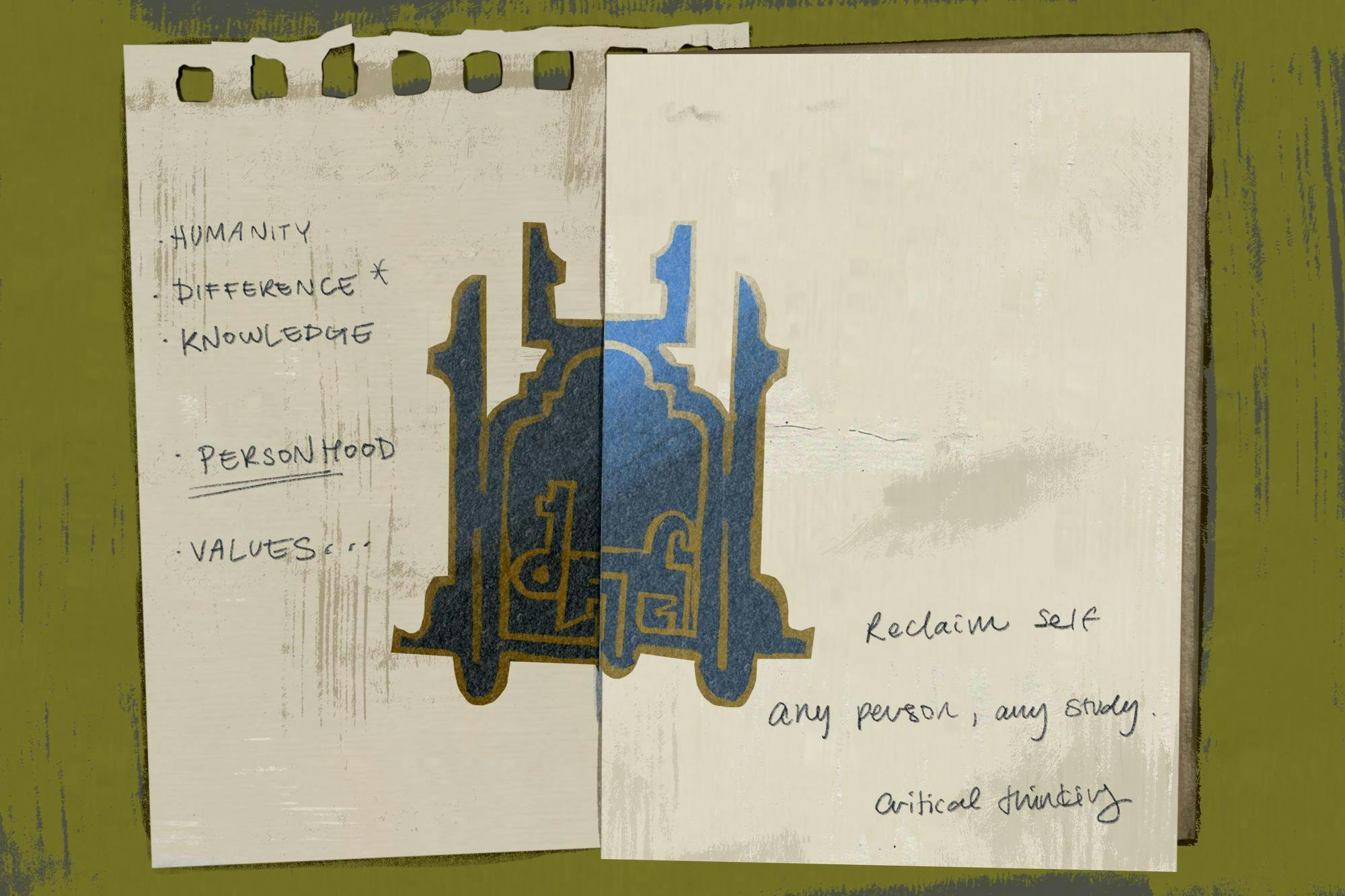
What if the Second Coming of the Messiah was at Cornell? Ezra Cornell, a Christian Quaker, offered “any person” a place to learn and teach after the brutal American Civil War which still resonates in our times.
Let us conduct a thought experiment and imagine that the Messiah chooses Cornell to reiterate his message in the turbulent beginnings of the third millennium. While arriving in a different historical time and geographical space, he chooses to retain some of his original physical characteristics like dark hair, olive skin, intense amber eyes and use of Aramaic — a semitic language like Arabic, Amharic, Tiringya, Maltese, Tigre and Hebrew — although now, he also speaks English.
How would the students and faculty at Cornell react to the Messiah? Would the deanery of the colleges of Arts and Sciences and of Agricultural and Life Sciences respond to his request for a joint appointment teaching Aramaic and environmental justice? Again, Ezra Cornell did say, “Any person … any study.” Cornell teaches more than 50 languages.
The Messiah would focus on the dignity of the person, irrespective of their ideological bent. His syllabus would challenge the notion of ‘ecosystem services’ by asking what contribution each person makes to other entities in the system, including rivers and landscapes. He might teach his students to challenge the U.S. Supreme Court decision recognizing corporations as legal persons, instead, extending the notion of personhood for trees or mountains to have legal standing. Would the deanery in the Law School oppose him? Would the business school allow him to teach their students?
He would insist that we do away with mechanistic ideas like ‘resource management’ because they limit our capacity to think and imagine other possibilities. He might argue a person is both a guardian and a servant of the planet and its living creatures. He might argue that the real mother is the Earth, and the human mother is just one reflection of that phenomena.
If he asks to speak at the Soup and Hope series in Sage Chapel to share his message, would the chaplains attend? Some haughty faculty might avoid public discourse and debate with him dismissing him as an amateur — as was done during his first fatal visit — for fear that the weaknesses in their arguments could be revealed through reasoned argumentation while their students watched.
How would the undergraduate students react? I suspect the Indigenous students, as well as the non-Indigenous Generation Z would be open. Their response would be based on their conception of what constitutes a person. In my research, Indigenous peoples have historically held the most pluralistic view of personhood. Similarly, Gen Z has a broad perspective because of the presence of LGBTQ+ persons among them. Of course, there are exceptions, but acceptance of the dignity of the person is more prevalent among our Indigenous and non-Indigenous youth today.
Given that this is a speculative thought experiment, let’s reflect on one historical source showing how Indigenous peoples place priority on the value of a person. Let us keep in mind that the word Indigenous comes from Latin, meaning a person who has emerged from the earth. It is not unlike the name Adam, which means derived from earth in Arabic, Aramaic and Hebrew.
This case is relevant today, in light of Renee Good, Alex Pretti and countless other souls whose life has been extinguished by sanctioned violence. In his work, My Life With the Eskimo, Vilhjamur Stefansson describes his encounter with the Inuit of Victoria Island in the Canadian Western Arctic during his expedition in the early 1900s.
He recounts how he was received when approaching an Inuit village. Stefansson came from immigrants and his appearance was strange to the Inuit because of their limited contact with Euromericans. As he approached a new settlement, Stefansson was asked to wait at the outskirts, while a villager would go and collect muktuk (blubber). Stefansson was then offered pieces of muktuk, a staple food. Having demonstrated that he could eat, the Inuit declared he was a person like them and Stefansson was welcomed into the Inuit community as they shared their hospitality.
This example is poignant for the current historical moment where brutal violence against an unarmed person is authorized by the government while most tenured academics remain silent in fear. The value of personhood is culturally embedded among Indigenous students and resonates with Gen-Z. In 2025, frustrated with inequality and injustice, Gene-Z toppled governments across the globe with stunning effectiveness even in New York City.
With growing acceptance of the Messiah from undergraduates seeking hope and meaning, the Board of Trustees at Cornell might become very uncomfortable with his presence on campus. Based on a tenuous allegation, it would not be long before law enforcement would be called upon by the Trustees. After all, Socrates was also executed on a trumped-up charge for corrupting the youth. The Messiah’s first visit threatened the power of the established priestly class, and Pontius Pilot, the Roman Governor, was called upon to carry out their dirty work.
However, I suspect the Cornell Police and sheriff departments from surrounding counties in upstate New York would resist harming him. They would be drawn to his message of hope. Furthermore, they would identify with the frustration of young people, because they are from the working class and have children.
Due to local law enforcement refusing to participate, members of Immigration and Customs Enforcement would be called upon. For ICE, the Messiah would easily fit the profile of an illegal immigrant.
This thought experiment reveals that putting the life of the Messiah in danger again might not be necessary. Our undergraduates already have sufficient capacity to rise up and insist upon the pluralist worth of every individual person, irrespective of their differences.
Let this be, first, a warning to establishment power brokers — the money changers outside the temple of learning; and second, a source of inspiration for young faculty and everyday citizens who dream dangerously.
The Sun is interested in publishing a broad and diverse set of content from the Cornell and greater Ithaca community. We want to hear what you have to say about this topic or any of our pieces. Here are some guidelines on how to submit. And here’s our email: opinion-editor@cornellsun.com.

Karim-Aly Kassam is an Opinion Columnist and professor in the Department of Natural Resources and the Environment as well as the American Indian and Indigenous Studies Program. His column Difference Matters recenters critical reflection and environmental justice in campus life at a time when people turn away from the painful truth. He can be reached at profkkassam@cornellsun.com.


