


The Tree of Peace embodies the resolution of conflict and the symbol of the Great Law of Peace, which ushered in an Age of Pluralism, uniting five warring nations into what became the Haudenosaunee Confederacy. Each leaf of the Eastern White Pine has five needles representing the Kanien'kehá:ka (Mohawk), Onᐱyoteʔa∙ká (Oneida), Onoñda'gega' (Onondaga), Gayogo̱hó:nǫ' (Cayuga), and Onödowa'ga' (Seneca) Nations. Subsequently, the Tuscarora were also welcomed into this federation. This event is a historical manifestation of sophisticated diplomacy that precedes the United States or the European Union. The Great Law of Peace is not a dogmatic blueprint but instead an evolving and dynamic set of principles that inform trade relations, stewardship of forests and waters, mutual respect among diverse peoples, and guidance for individual behavior. It is an achievement that rivals what the Europeans have tried but often failed to achieve. This pluralistic peace agreement has sustained itself to the present day, despite a tragic history of cultural genocide and dispossession, because of its ethical and environmental imperative. Arguably, it is the inspiration for the pluralist declaration on the Great Seal of the United States, E Pluribus Unum, from the many one. It is not my place to explain the sacred significance of The Tree of Peace. Rather, students and faculty can respectfully approach and learn from the Gayogo̱hó:nǫ' (Cayuga) upon whose lands Cornell is located.
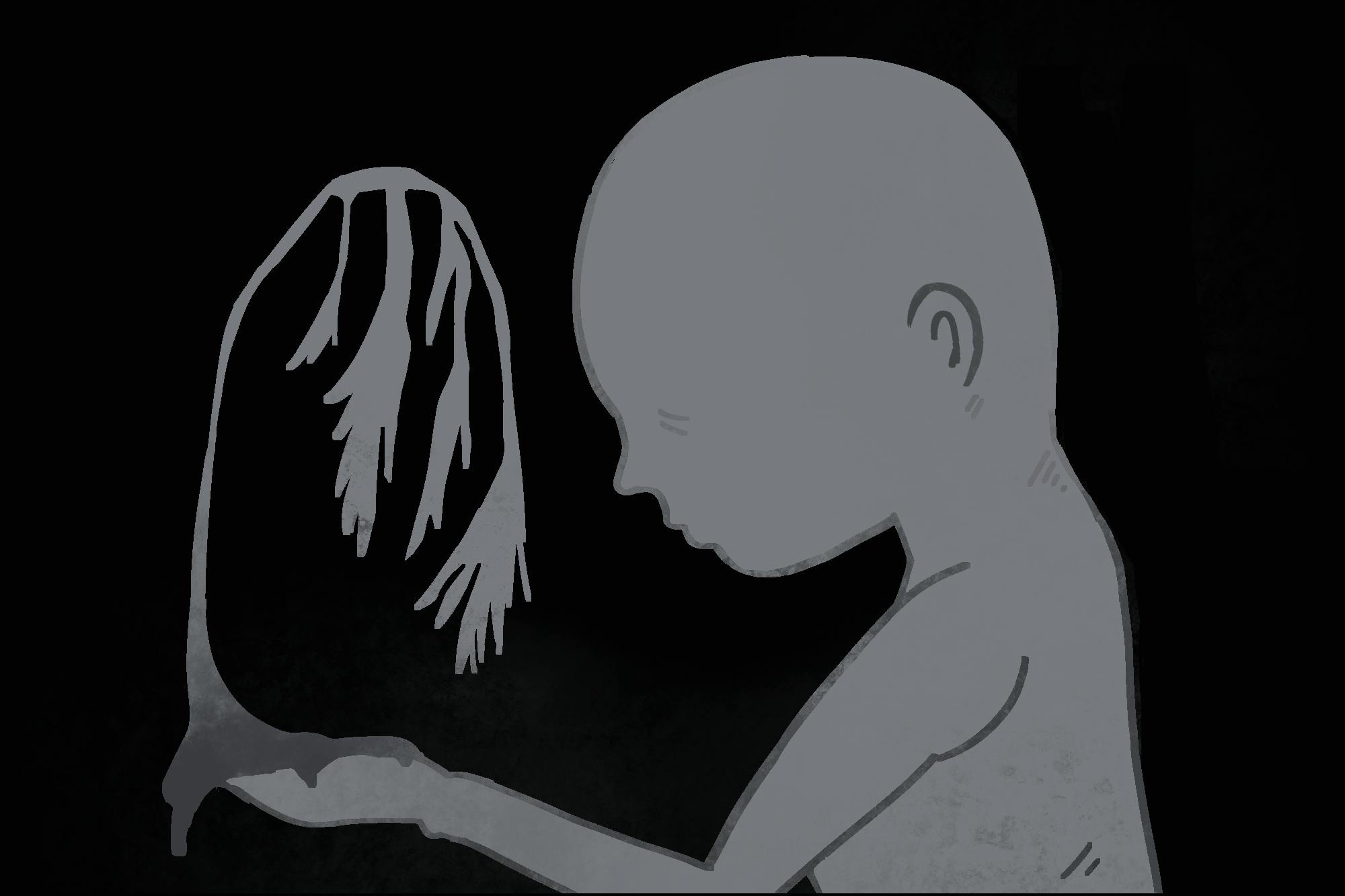
However, I can relate a poignant event at the Cornell Botanic Gardens that made me reflect on our current historical moment. Last week, with a quivering voice that reflected deep pain, the Horticulture Coordinator explained how a seedling of The Tree of Peace had died despite scrupulous care. This seedling was to be part of the first phase of a three-year exhibit entitled “Cultivating Hope: Plants and Indigenous Knowledge.” This living exhibit is a collaboration between Indigenous communities, students from those diverse communities, faculty, and the staff of the Cornell Botanic Gardens. Her demeanor was as if a parent was describing the loss of a beloved offspring. Colleagues quickly intervened, seeking to provide relief to their fellow gardener by pointing out that the immediate horizon was covered by the Eastern White Pine. But this was no consolation to her; the sorrow was both real and palpable to all present. For her, this seedling, like other plants, represented personal relations in a web of life that encompassed not only the plants but the people that made up the Botanic Gardens.
The death of a seedling of The Peace Tree unleashed the silent horror all of us present had carefully suppressed, but could mask no more. Like the dedicated gardener, we could no longer tolerate the loss of yet another living being within our midst before it reached its prime. At a time when there are barbaric wars on nearly every continent except Antarctica, “Cultivating Hope” is a tangible expression of the love of life or biophilia on our campus. There are 110 armed conflicts on our planet at present. Children are being ruthlessly killed, willfully starved to death or both simultaneously; while most powerful nations watch with indifference, uttering meaningless declarations and raking in billions in profits from the sale of weapons.
Why was this experience so heart-rending to me? Our intuition is a powerful, non-linear way of perceiving our interconnected world. Albert Einstein argued: "The most beautiful experience we can have is the mysterious. It is the fundamental emotion that stands at the cradle of true art and true science. Whoever does not know it and can no longer wonder, no longer marvel, is as good as dead, and his eyes are dimmed." Young life always generates a sense of awe as it grows from a fledgling needing care to maturity, where it gives unto new life. The grief of the untimely demise of a seedling of The Tree of Peace was not only symbolic of our current historic predicament but an intuitive recognition of our role as silent witnesses to the loss of a generation of youth among communities not unlike the Indigenous peoples of the Americas.
What we do to the land and seas, we also do to each other. It is no accident that the industrialized powers are among the largest contributors to biodiversity loss and climate change. When we retreat from protecting young life from genocide or extinction — be it humans, plants, or other creatures — we engage in "the death of birth." We erase future possibilities. The victim loses their life, never realizing their potential, and the perpetrator jettisons their humanity for the remainder of their life span; thus, eking out a hollowed existence. No one truly benefits, and the devastation is irreversible. There are some actions that cannot be corrected, and the harm remains for generations.
Are we so frightened of our Board of Trustees, whose task is to guide with wisdom, not control our scholarly freedom; wealthy alumni whom we once taught and have benefited from the privilege of education; and government funders who depend on our intellectual commitment, that we stop speaking the truth? Have our powers of observation dimmed so much that we can no longer perceive injustice? Have professors regressed into the invertebrates that we study in our labs? Again, Einstein, who lived in a time of fear and war, offers insight: "Science is international but its success is based on institutions, which are owned by nations. If therefore, we wish to promote culture we have to combine and to organize institutions with our own power and means." Driven by the energy of our students and the ethics of the insights we have amassed, surely solidarity is within reach for a community of scholars at Cornell. The Age of Pluralism, ushered in by the Haudenosaunee so long ago on the lands on which Cornell is located, calls out to us today. Our campus is literally populated with The Tree of Peace, reminding us that a culture of hope is practically achievable precisely because of our differences.

Karim-Aly Kassam is an Opinion Columnist and professor in the Department of Natural Resources and the Environment as well as the American Indian and Indigenous Studies Program. His column Difference Matters recenters critical reflection and environmental justice in campus life at a time when people turn away from the painful truth. He can be reached at profkkassam@cornellsun.com.


