My father was once ranting about his deep discomfort at open casket funerals, so naturally I sought to confirm that, in the event of his death, we should keep his casket closed. To my question he replied: “Do whatever you want. I’ll be dead!” The discomfort of knowing I will plan my father’s funeral without any input or objection from him is the same discomfort I feel at the idea of consuming posthumously published materials. While some have a desire to respect the deceased and their wishes, the other side often leaves it unsaid that the dead cannot feel your respect, and, therefore, there is no immediate or material reason to avoid consuming posthumously published work.
Last spring, Joan Didion’s trustees published Notes to John, a compilation of journal entries addressed to her husband, John Gregory Dunne, which she wrote after her therapy sessions in 1999. It is exemplary that this happens to Didion because her legacy is complete with all of the characters that make posthumous publishing so interesting — the close collaborators who chose to publish her work and her cult-like literary followers, which include people on two sides of the parasocial coin. There are those who are so obsessed with her work that they are happy to consume every last drop of her intellectual property, and there are those that feel so deeply connected to her that they feel that reading her private journal would be a legitimate transgression.
What Didion would have wanted for her unpublished papers is a catch-22. On its face, it is clear that she did not want Notes to John to be released because she did not express an intention to publish these journal entries to her literary agent or editors. This is further confirmed by her essay Last Words (1998), where she details her disgust at the posthumous editing and publishing of Ernest Hemingway’s True at First Light. While her qualms with posthumous publishing are clear, what else is made clear is Didion’s awareness of how a dead writer’s circle often mines their archives for publishable content. Her friends are correct in noting that it seems implausible that Didion would have left these journal entries to be found if she was not okay with them being read someday.
That said, such a line of thinking must be followed to its ultimate conclusion that, one day in her old age, Didion must have judged that she was near enough to death that it was time to burn her journals lest anyone ever publish them. Maybe more generously, her friends believe that she should have marked the final location for each of her thousands of pages of work. Both avenues seem ridiculous to me. I also must emphasize that Notes to John is not Didion’s work. These are her journal entries. Beyond Didion’s right to have the writings under her name be up to her own standards, Didion, like any other individual, had the right to present herself to the world on her terms. While I will not read Notes to John, the entries are said to include discussions of her relationship with her husband and her daughter and of a violent relationship that she never disclosed in her other works. Didion chose how vulnerable she wanted to be about her relationships with her husband and daughter in her memoirs My Year of Magical Thinking and Blue Nights. Notes to John includes evaluations of these aspects of her life that she did not want to divulge even when she did write about them. Were those acts of vulnerability not enough? If we all write in our journals with the awareness that our entries may end up in the hands of unintended readers, how can we ever be vulnerable with ourselves? If we aren’t able to show ourselves bare in our own journals, I doubt there is anywhere that we can truly be honest.
For all of my passionate disgust, this does not negate the reality that as violating as I feel such a publication is, Didion is no longer here to feel violated by it. When I consider how upset she would be to know her entries were published without being shaped by her, it reoccurs to me that she will never be upset over it because she is deceased. I wonder if the discomfort so many of us feel towards posthumous publishing stems from a belief that somewhere, on some other plane of existence, these writers really can feel indignant about what is being done with their intellectual property. Maybe it is just inconceivable for any of us to imagine that the meticulous control we get to exert in our lives inherently disappears after death. Yet, it does. For Didion, Hemingway, Kafka and all of us. Is that a violation? My instincts say yes, but alternatively, maybe it is meaningful that, in death, personal perceptions can evolve in ways that they cannot during life.
I admit that there isn’t any material harm in reading Notes to John. I also don’t think that there is anything that could be found in Didion’s archives that could tarnish the legacy that she created. I’ll still refrain from reading it. I choose to keep Joan Didion in my mind’s eye in the image that she intended, and I hope that whoever has to go through my cabinets will offer me the same courtesy, although they can do whatever they want. I’ll be dead!
Chloe Asack is a senior in the College of Arts and Sciences. She can be reached at casack@cornellsun.com.
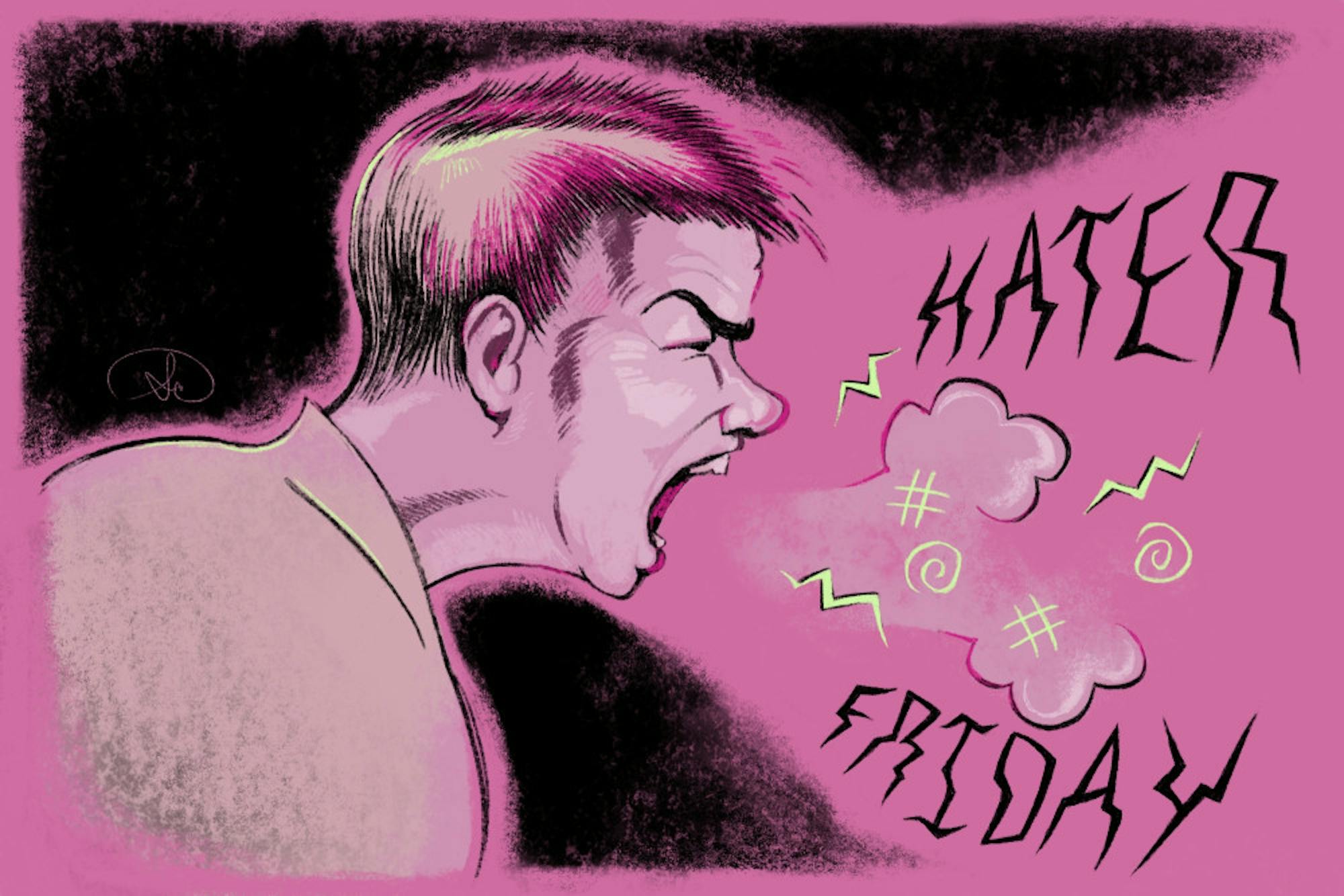
Hater Friday runs on Fridays and centers around critiquing media or culture.

Chloe Asack is a member of the Class of 2026 in the College of Arts and Sciences. She is a staff writer for the Arts & Culture department and can be reached at casack@cornellsun.com.