The tumultuous, romantic and, ultimately, short-lived relationship between Stevie Nicks and Lindsey Buckingham has been a subject of fascination since Fleetwood Mac’s rise to stardom in the 1970s. From meeting at a youth club in the late ’60s to dropping out of college together to eventually fronting one of the most influential rock bands of the ’70s, Nicks and Buckingham’s story could have been pulled straight out of a teen movie. When the pair moved to Los Angeles in late 1972, they seemed almost fated for success. “They were Mr. and Mrs. Intense,” wrote Stephen Davis in his biography of Stevie Nicks, “he in his curly locks and icy blue eyes and she in her long straight hair and her piercing gaze when you talked to her.”
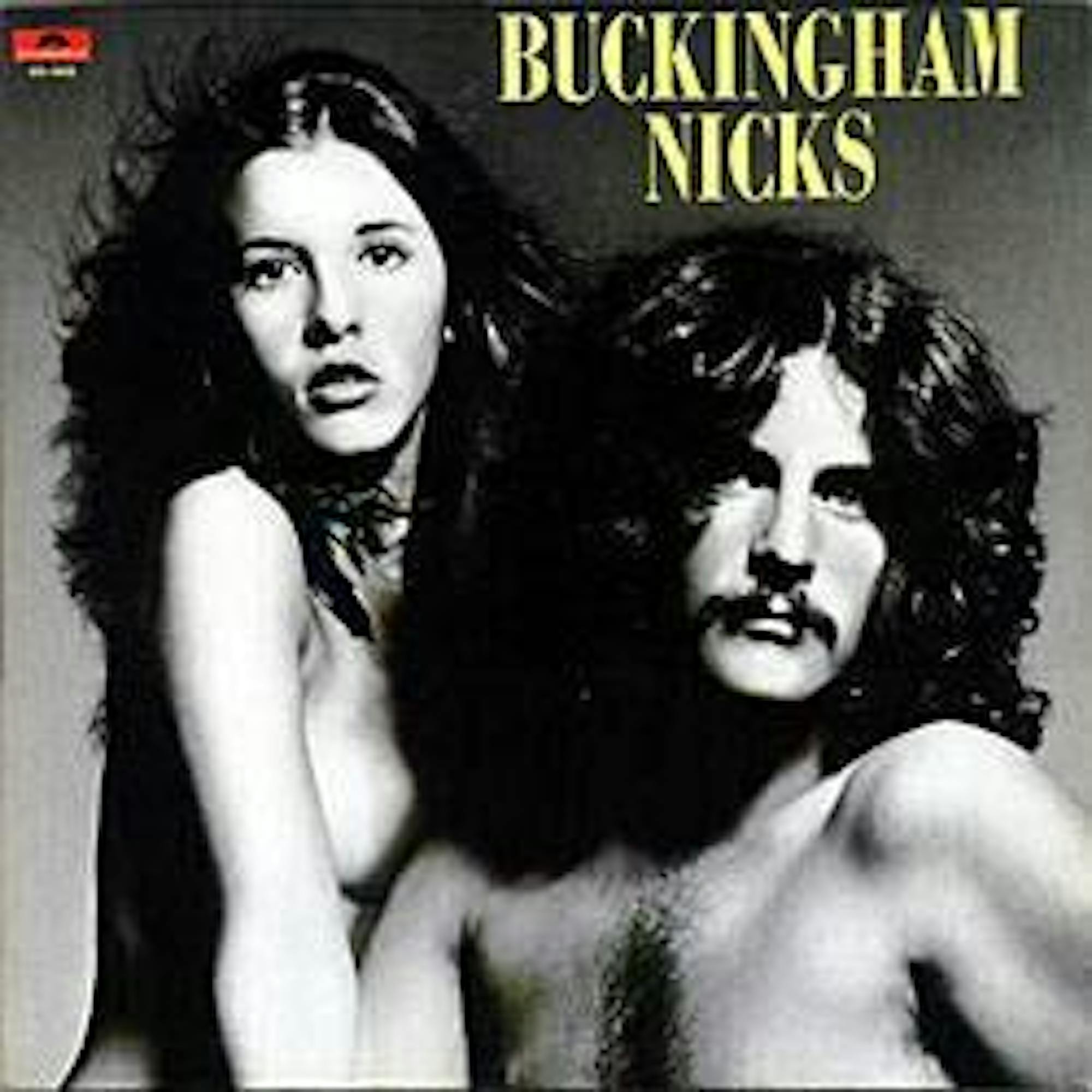
In September of 1973, Buckingham and Nicks would release what would be the first of many albums together as a folk-rock duo. Titled Buckingham Nicks, the album featured 10 folksy tracks and a topless duo portrait of Buckingham and Nicks as its cover. Yet, despite its ambition, the album flopped, and the duo was dropped by their label.
This would have been the end of their career if not for British drummer Mick Fleetwood, who, upon scouting for potential at Sound City Studios, invited Buckingham to join his English band, Fleetwood Mac.
Now, more than fifty years later, Buckingham Nicks has finally been made available in full on CD and streaming platforms. For listeners in 2025, hearing Buckingham Nicks is a strange experience — it’s impossible not to filter it through the knowledge of what came after. The duo’s sound is familiar, but the album itself feels rugged and unfinished. Stylistically, Buckingham Nicks isn’t too far a cry from Fleetwood Mac’s later releases, mainly due to Buckingham’s signature guitar work. Although the album is more folksy and less polished, Buckingham’s fingerpicked guitar lines maintain their intricacy and precision.
The opening track, “Crying in the Night,” is a strong start to the album, carried by Nick’s mystical vocals. With a strangely Rumors-esque sound, “Crying in the Night” is almost cinematic in its minor progression and steady, dedicated beat.
Where “Crying in the Night” highlights Nick’s musicality, the following track, “Stephanie,” is completely Buckingham’s. Buckingham possesses a unique ability to make one guitar sound like many more while still maintaining the clarity in his picking; it’s not hard to see why Mick Fleetwood took particular interest in him.
Though Buckingham’s talent is apparent, it’s surprising how muted Stevie remains throughout the album when compared with the stardom she would eventually bring as the face of Fleetwood Mac: “Originally … it was less apparent what Stevie had to offer,” Buckingham would go on to say. That is not to say that Nicks does not shine in the album. Her signature smoky voice — while slightly more country-ish than usual — gives a unique edge to Buckingham’s harmonies and invokes something almost haunting in the listening experience.
This chemistry is apparent in “Crystal,” a song that would later be rerecorded by Nicks alone. Here, Buckingham takes the vocal lead; as the song progresses into the chorus, Nicks’ vocals add something enchanting to the harmonies. The song itself stands out as something fully realized in a way much of the album is not, with evocative lyrics (“The crystalline knowledge of you / Drove me through the mountains”) and stripped back instrumentals.
The final song, “Frozen Love,” was the track that originally drew the attention of Mick Fleetwood, and it’s easy to see why. While slightly unpolished, the track serves as the centerpiece and finale of the album. Over 8 minutes in length, it features a combination of everything that made Buckingham and Nicks such a striking pair: dramatic guitar lines, sizzling vocals and resounding instrumental layering. The track concludes the album with a flourish.
Buckingham Nicks did not have the commercial success that would’ve launched Lindsey Buckingham and Stevie Nicks into the spotlight straight from their LA studio; while the album has its great moments, it’s uneven, unrealized and unpolished, none of which set it up well for commercial success. However, when listening to it in 2025, I realize that everything that makes Fleetwood Mac great is there. There’s something magnetic about the chemistry between Lindsey Buckingham and Stevie Nicks. There’s something there that works. So even though it may have been an unfortunate love story, there’s no doubt that what Buckingham and Nicks had together was something lasting and untouchable.
Yaelin Hough is a sophomore in the College of Arts & Sciences. She can be reached at yh2299@cornell.edu.