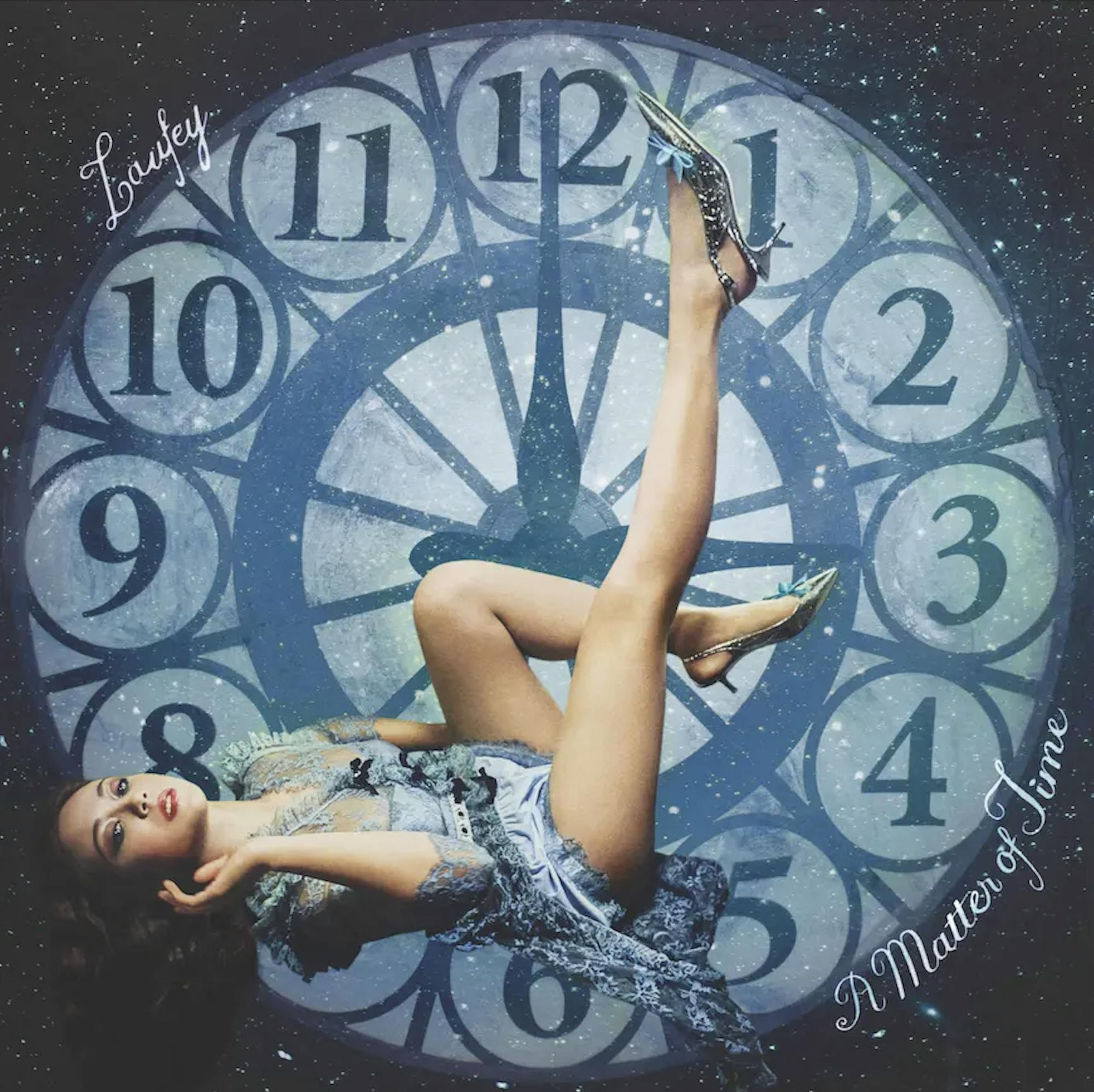
Complexity: a trait that attracts some and deters others. In the classroom, it can feel intimidating or unnecessary. In conversation, however, it makes for surprises that add interest to your day, like learning that your friend from Florida thrives on a cold Ithaca night, or that your classmate studying biology frequents the Johnson Art Museum with a sketchbook and pencil in hand. Complexity brings richness and novelty to every exchange, like a grown-up version of the lesson we all learned as children that uniqueness should be celebrated. And if you need proof beyond your kindergarten teacher of the value in complexity, you can look at — or, better yet, listen to — an artist who lives and breathes it: Laufey.
The Icelandic-Chinese composer and multi-instrumentalist (vocalist-cellist-pianist-guitarist) is the master of complexity (and hyphens), harboring musical interests in a variety of genres that lead her to compose songs that cleverly mesh jazz, pop and classical music. With a violinist mother and a jazz-loving father who regularly graced the house with recordings of Chet Baker and Ella Fitzgerald, her intimate relationship to music is familial above all. Her complex musical background is strongly reflected in her third and newest album, A Matter of Time, released on Aug. 22. Over the course of 48 minutes and 14 worthwhile tracks (plus a fifteenth bonus track released on Aug. 25), Laufey flirts with her own idiosyncrasies: true love rivaled with devastating heartbreak, quick humor existing alongside heavy life lessons and, of course, classical structuralism meeting the free qualities of jazz. Laufey’s combination of genres — a hallmark to her established sound as an artist — is especially relevant in A Matter of Time, as it allows her to musically convey (in cello solos, jazz rhythms and the occasional inclusion of bossa nova and folk) a thematic motif congruent to her lyrics, that the album is an ode to expressing yourself genuinely as you come — the more complex the better.
The album opens to a bright vocal imitation of a clocktower’s chimes, continuing into a jazzy and characteristically Laufey tune throughout the first track, “Clockwork.” The fun, upbeat groove is sustained into the second track, “Lover Girl,” which stands as one of my favorites of the album. With its bouncy rhythm and addictive clapping breaks, the song invites the listener to get up from their desk, throw their pen aside, clap their hands together and dance, to really interact with the layered music that is being presented. The lyrics poke fun at her self-diagnosed condition as a romantic, that being someone so interested in pursuing love condemns her to foolish and embarrassing spells of emotion. While it can seem critical at times (“The independent lady in me’s nowhere to be found”) the groovy beat is too contagious for the lyrics to not be interpreted in a playful way, as if Laufey is sarcastically celebrating the awkward moments and starry-eyed fun that are inherent in this “curse” of being a “lover girl.” The moving orchestral strings incorporated as a backdrop for the jazzier, bossa nova content that dominates in upbeat rhythm and enunciation, create an aurally engaging contrast that beautifully mimics the emotional complexity of the lyrics.
After the lovestruck haze of the first two tracks, Laufey dramatically switches tones for her next couple songs, touching on varying themes of heavier content, like the pressure for feminine perfection (“Snow White”) platonic heartbreak (“Castle in Hollywood”) and the uncertainties and instabilities of life that make it hard to let another person into your world (“Carousel”). Critiquing the social expectation for girls to fit a certain physical standard, Laufey’s disapproving lyrics in “Snow White” are especially resonant: “A woman’s best currency’s her body, not her brain.” Paired with the song’s melodic orchestral shaping and ascending/descending plucked bassline, Laufey has constructed a musically, lyrically, emotionally and socially rich masterpiece.
Splitting the album in half is the “Cuckoo Ballet Interlude,” an elegant orchestral interlude that expands on established melodies and is ornamented with a cello solo that acts as a tribute to her classical background. This commitment to honoring her authentic self is apparent throughout A Matter of Time and is further amplified in “Forget-Me-Not,” as Laufey sings in both English and Icelandic of her sentimental wish to not be forgotten by her homeland.
Often throughout the album, Laufey spontaneously modifies the genre or theme from song to song. Tracks 12 (“Mr. Eclectic”) and 13 (“Clean Air”) especially highlight this quick shift. In the former, she sings sarcastically of men who put on games to gain the favor of women in another bossa nova-esque piece. One of my favorite lyrics showcasing her dry humor is “Talking ‘bout some dead composer, You’re just a stoner patronizing me.” However, track 13, which immediately follows, takes a turn to a genre more akin to folk, with a guitar lightly plucking and lyrics like “Sweeter pastures, wait for me like a lover.”
Even as she ends the album, the complexity continues in “Sabotage,” a diverse piece combining Laufey’s calm vocals and beautiful orchestral melodies with unexpected lyrics that position herself as the saboteur of her relationships and sudden loud tremolos that add an eerie feeling to the song. Although it is a chaotic ending that doesn’t seem to honor the self-appreciating tone of the album, it is a shocking new sound of Laufey’s that may serve to throw listeners off-guard and highlight what has already become so clear throughout A Matter of Time — Laufey can create multifaceted and unexpected art. A couple days after the initial release of the album, “Seems Like Old Times” was added as a bonus track to end the album. Listening to its chill jazz and gentle lyrics, “Sabotage” seems resolved, almost like an older version of Laufey is looking back at her life and remembering what it was to be young, emotional and — most importantly — herself.
Hazel Tjaden is a sophomore in the College of Arts and Sciences. She can be reached at hlt43@cornell.edu.

Hazel Tjaden is a member of the Class of 2028 in the College of Arts and Sciences. She is an assistant arts editor for the 144th Editorial Board and can be reached at htjaden@cornellsun.com.