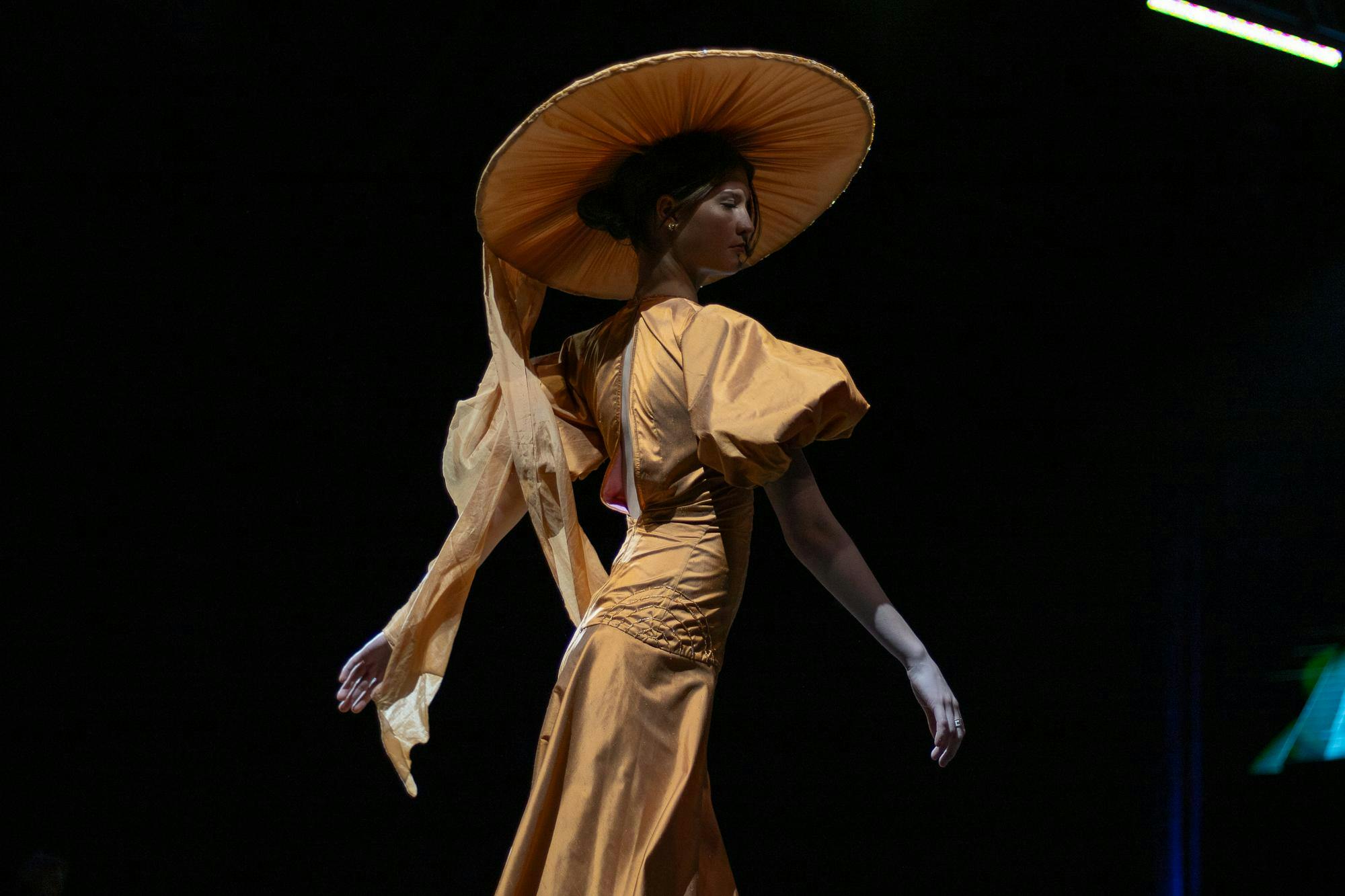
In between hastened treks across campus in the frenzy to get to class, for a brief moment you may slow down and take a look around. It's nearly impossible not to spot a Goyard purse, a colorful Onitsuka Tiger sneaker or even the student athletes’ signature red bags. Despite the acceptance of these established trends integrated into Cornell fashion, the representation of global trends mixed with students’ personal style brings something unique to our campus.
Although it's hard to believe that life could have ever been so different, Cornell harbors a fascinating history surrounding expression and fashion. And you better believe that the students of the 20th century had their own form of flair when it came to their wardrobe choices.
In the late 1890s and early 1900s, Cornell had strict rules that emphasized school pride. Wearing high school insignia was forbidden, and freshmen in particular were burdened with the harshest, and often most embarrassing, restrictions. Until the 1950s, men had to wear beanies everywhere they went, Dr. Green, an Associate Professor in the Department of Fiber Science and Apparel Design, shared. These aren’t the cool skater beanies you may think of, slouched and loose; these were tight circular caps (that originally only came in gray, but in later years came in red), and there was really no good way to style them. These less-than-fashionable head pieces signified students’ first-year status and were, to say the least, not enjoyed by those burdened with sporting them. Our Cornell’s archives show that in some years, first-year men had other rules that regularly changed, such as “no galoshes with buckles” or “no mustaches.”
Just five years after Cornell's creation, women were admitted to learn alongside their male peers. For these new students, strict dress codes involving dresses were imposed. This formal dress coincided with the elitism expectation of a prestigious university, as well as societal norms. Professor Green explained that the rule stayed in place until the 1950s, when snow pants became acceptable. The rules were changed again in 1962 where dresses became an option in the classroom.
The mid-1900s brought with it an important moment for reform and change, with many of these restrictive dress codes debated in the Women’s Self-Government Association. According to Professor Green, the group discussed female student life, with one poignant debate being for the fight to wear bermuda shorts — for which I may argue that we all collectively decide to burn the bermuda short.
Jokes aside, this time of female liberation created a space for women students to come together. This group didn’t only work to better student life, but also participated in wardrobe rituals. During the first semester of freshman year, upperclassmen women would make the new freshman students wear a green item, ranging between scarves, caps or even pins. Once December came, they had a Hades party. Here, everyone dressed up in outlandish wear, banished the class-specific item and received the “commandments of the devil.” This fun celebratory event was a secret initiation of women into becoming official Cornellians.
During the mid-1900s, expanding freedom also introduced more complex dynamics. After the end of World War II, more people were coming to college from an unusual path. This destruction of the traditional order opened the way for exploring individuality and identity, ending the long-established dress code. But with giving any group of twenty something boys freedom, does come pranks. At this time, activities like streaking and panty raids became far too normal, and the University's concern on dress code fell to the wayside.
Each class was defined by more than just its pranksters; students also celebrated unity and upperclassmen status by coming together to design a unique class blazer in their junior year, Professor Green explained. They would once more replicate this tradition with another blazer after graduation. These class jackets were an insignia of pride and were often worn at future reunions.
Casual student dress has come a long way since Cornell’s beginning. The switch of the late 19th century Victorian period involved intricate and constricting dress — with gowns for all occasions expected of women and men in formal as well — to relaxation of general dress expectations: skirts and tops, as well as a simple shirt and trousers, became the norm only 50 years later. As Cornellians moved into the 60s and 70s and denim made its way into the mainstream, freedom to dress however one wished became a way of life — and it’s the one we know today. The next 70 years led to shoulder pads, the Y2K scene and now into a place of athleisure and global influence.
It's easy as a modern student to scoff at the chosen outfits of our predecessors, but the truth is, there are a lot more similarities than you may believe. We may know our Canada Gooses to be the “cool” winter coat, but 100 years ago, people were showing off their raccoon coats with the same level of enthusiasm and trend adherence.
No matter the year, students are the same. We all operate in this environment of excitement relating to the hottest trends and the chicest fashions.
Stories of student life are often told within the seams, sharing secrets of those that came before them — students who were not too different from us. Cornell’s dedication to inclusivity of all different countries and genders is reflected in a way of dress that celebrates individuality and cultural traditions. Next time you are putting on your Urban Outfitters corset, think of those who were expected to wear the garment, though theirs was definitely a lot different than yours.
Jess Agran is a junior in the College of Human Ecology. She can be reached at jba76@cornell.edu.