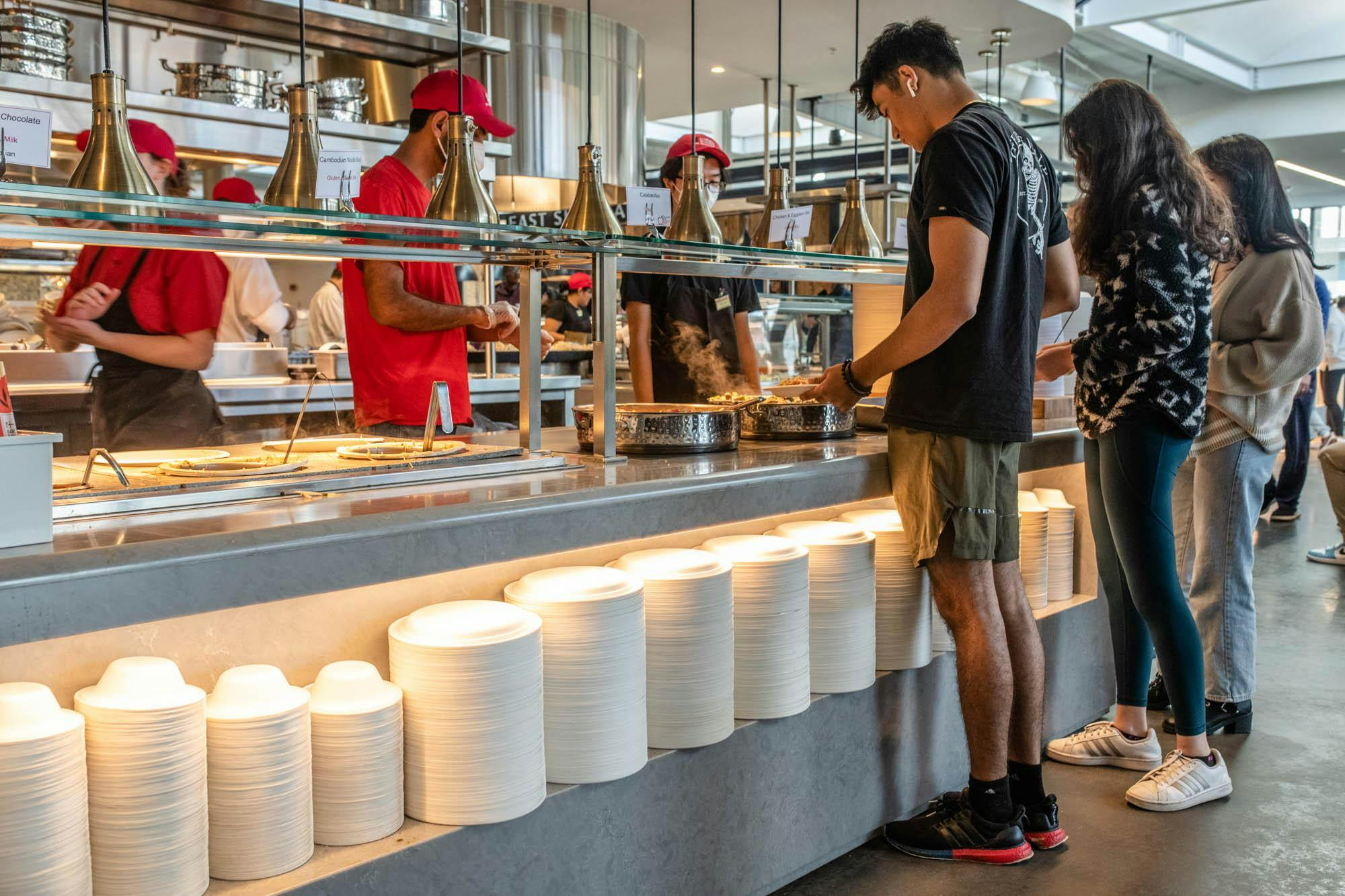
It was an uneventful Monday dinner at Morrison Dining. My phone was in my hand as I ruminated on some nameless Canvas assignment. That’s when I heard a song I’ve only listened to in the car with my parents on one of their old CDs.
At first, I was completely shocked. When has Morrison Dining ever played “All My Life” by K-Ci and JoJo? Then another song came on, this time by The Penguins. As I walked out of the dining hall, I checked my phone, and that’s when it clicked. In the midst of the onslaught of assignments pending on Canvas, I completely missed the transition from January to February. The dining hall was playing music for Black History Month.
As a freshman last year, I was completely unaware of Cornell Dining’s tradition of celebrating Black History Month. I knew that Cornell University brought in a speaker to give the annual MLK Lecture, but I was pleasantly surprised that the dining halls also chose to commemorate Black History Month by incorporating the many cultures that shape Black identity in the United States into the dining hall menus. Many institutions make a hollow effort to acknowledge the importance of Black culture, which has shaped and defined the U.S. So, it was a wonderful surprise to sit in Morrison Dining and hear and see this celebration of the complexity of Black culture.
Still, Cornell Dining did much more than play music from various blues, jazz and Motown musicians that reminded me of the music played by my family back in Georgia; they also hosted themed dinners that spanned across nine dining halls on West, North and Central Campus showcasing the different cultures that make up the Black identity.
The African Diaspora is often overlooked when exploring Black culture in the United States. Although racially, we’re all classed together, different countries and cultures have unique languages, food and customs that allow for separate, developed identities to exist under this umbrella in the U.S. It was humoring to realize that this complexity was being actualized by none other than Cornell Dining. As a Black student on campus, I was really excited to see which cultures they would draw inspiration from in their dishes, and how well they would execute them.
Last February, Cornell Dining hosted nine events that showcased cuisines from different African countries, North America and the Caribbean. The first event was the Sierra Leone Night held in Risley Dining, which featured beef kabobs, sunbutter sauce and banana akara. A Jamaican-themed night was held at North Star (Appel) Dining Hall, where dining workers served oxtail stew and fried plantains. There were more events such as the Trinidad Night in Morrison Dining (which served widely loved doubles — curried chickpea flatbread sandwiches), the Somali Night in Becker House Dining, the Haitian Night at William Keeton House, the Nigerian Night at Rose House Dining, the Kenyan Night at Cook House Dining and the Creole Soul Food at Okenshields.
As a Black student who is a lifelong Georgia resident, I was extremely curious to see what the Southern Soul Food Night held in Bethe House Dining would be serving on the menu. I was pleasantly surprised by the collard greens, macaroni cheese and candied yams. Even though the menu items leaned towards general southern food and were less specific to southern black culture, Cornell Dining did a wonderful job of celebrating different cultural experiences, while making the decent-food desert that is Ithaca feel more like home for the students and staff who celebrate Black History Month.
This year, I observed an even wider range of cultural cuisines, including Creole food, as well as dishes from Ghana, Haiti, Nigeria, Jamaica, the U.S. Virgin Islands and Ethiopia-Eritrea. Once again, these themed dinners have given way to intense discourse about which nights, and specifically which campus location, had the better-made dishes. Some argued that the events were mere spin-offs of cultural dishes that hardly compared to the real, home-cooked version. Some argued that certain dishes stood out, such as the plantains or candied yams. Regardless, what permeated these light-hearted debates was the clear effort by the Cornell Dining staff, Black Students United — an organization that serves as an overarching board for the many Black cultural organizations on campus — and the Black Student Empowerment in the Centers for Equity, Empowerment and Belonging to hold this celebration.
This ongoing collaboration between dining staff and students from different cultural backgrounds has helped make the food as authentic and home-like as possible. Last year, for example, a cohort of Jamaican students shared their thoughts on the sample dishes to be served during Jamaican night with Chef JJ Molina before the themed dining experience. It was this renewed focus on refinement and authenticity that has enabled the success of distinct cultural celebrations across eight dining halls (and counting) so far.
Personally, I feel these events are wonderful merely because they exist at all. As a member of the Black community on campus, it is clear that the effort by staff, both this February and last, is well appreciated simply because of the acknowledgement. These events also provide students with meaningful exposure to different cultures and foods, which form the backbone of the racial and ethnic identities that comprise a diverse university like Cornell.
To readers considering where to grab their meal tonight, I highly encourage you to make a worthwhile trek to North Campus: Cornell Dining’s 2026 Black History Month dinners will finally conclude with traditional southern soul food at North Star Dining Room on Feb. 25. This fun, tasty learning experience is a must-attend event — don’t make the mistake of missing out. I can’t think of a better way to close this year’s Black History Month celebrations than to share a meal that hopefully draws students on campus closer together.
Vanessa Long is a sophomore in the College of Agriculture and Life Sciences. She can be reached at vvl22@cornell.edu.