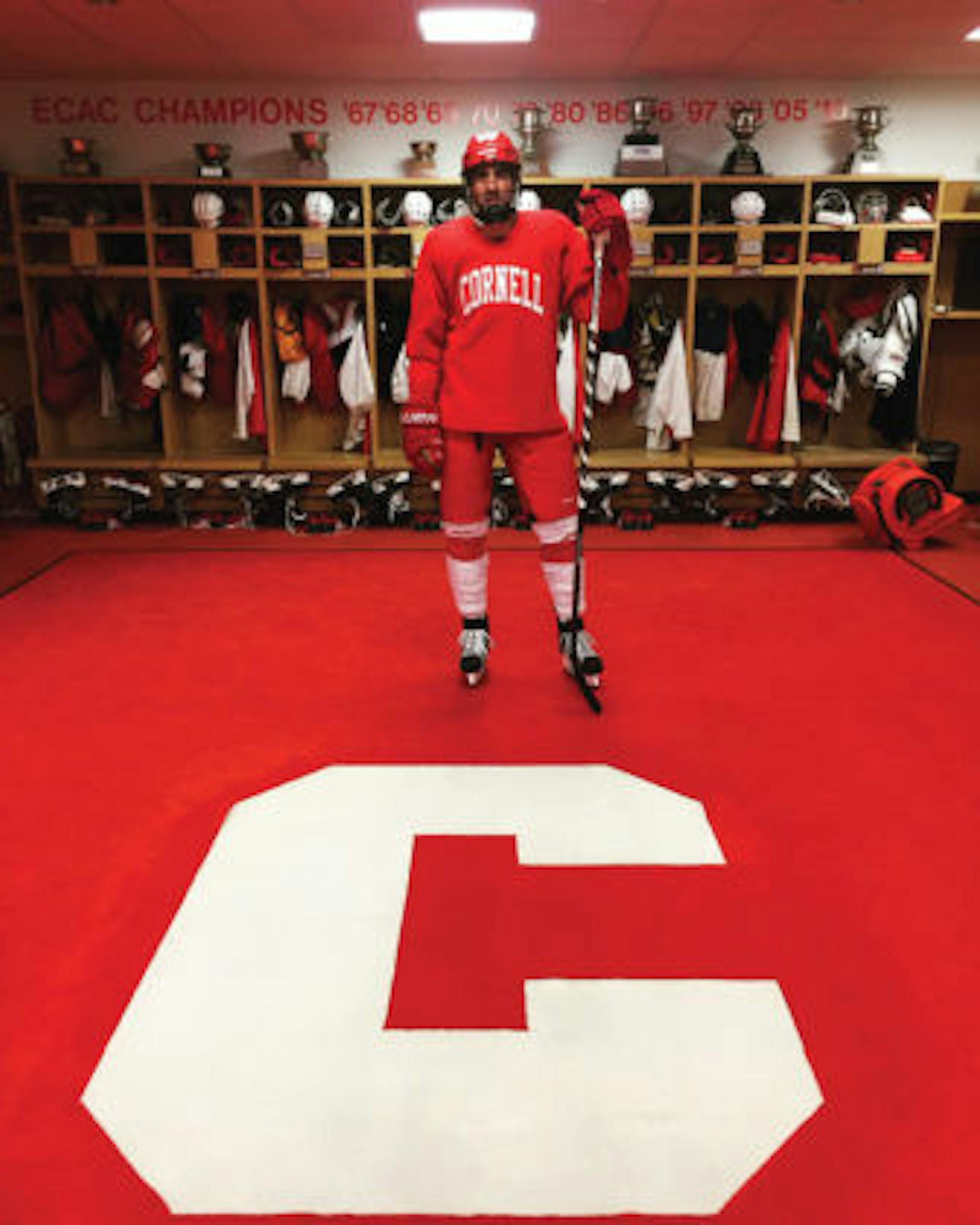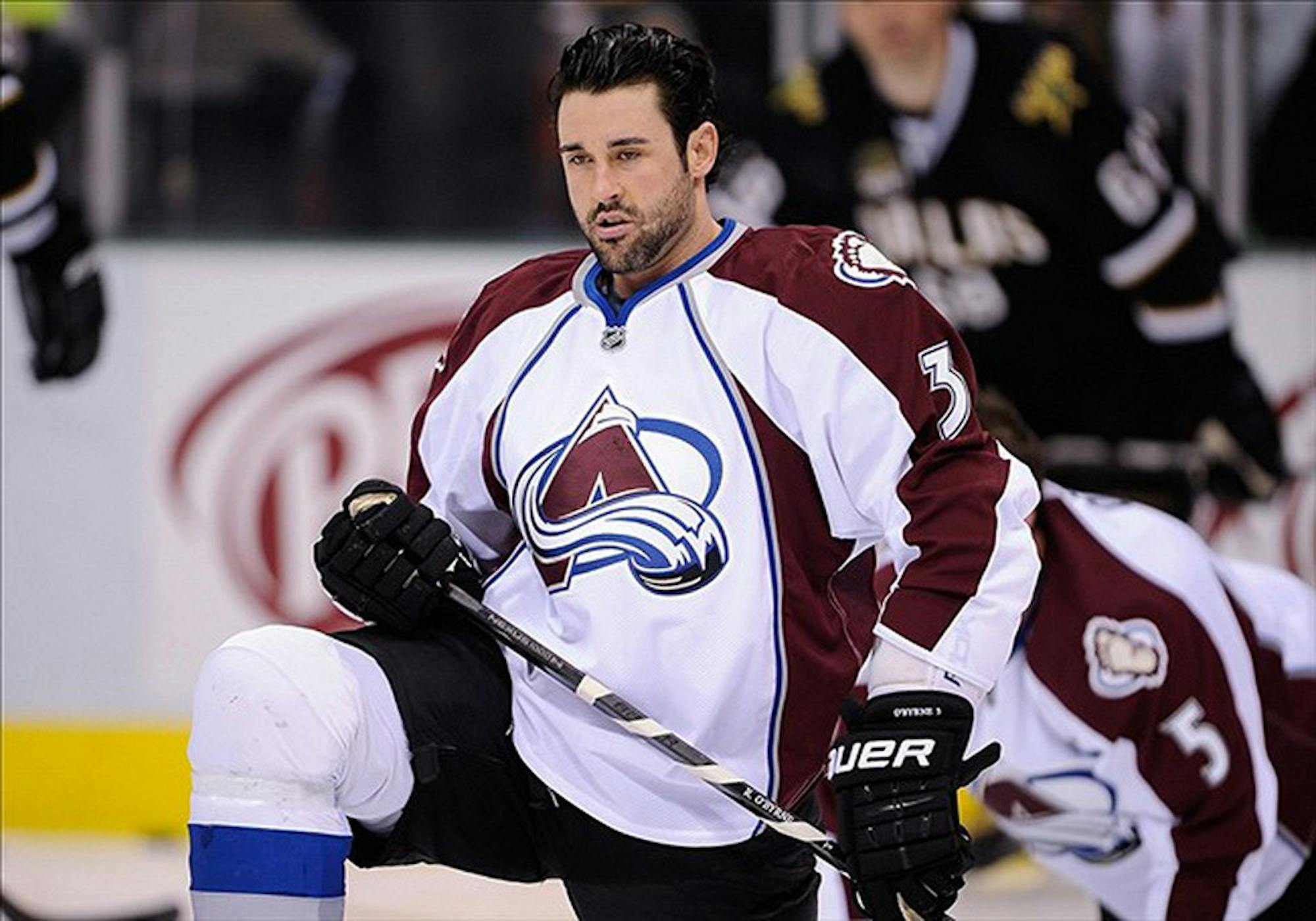
It is just another school day in Ithaca and Ryan O’Byrne '07 is sitting in class listening to a lecture on strategic management. Like many Cornell students, O’Byrne is unsure of what lies in store for him after he graduates. But, unlike many Cornell students, O’Byrne already has a career behind him: 10 years of playing professional hockey. Flashback to six years earlier and O’Byrne is sitting in a room similar to a classroom, but which serves a different purpose. On Nov. 11, 2010, while playing for the Montreal Canadiens and preparing for a highly anticipated rivalry game against the Boston Bruins, O’Byrne went through his typical pregame ritual, reading the newspaper at his locker room stall to loosen up before the game. Only appearing in three of 15 possible games that season, O’Byrne was not expecting to see the ice in Boston, but what happened next completely changed his way of life. As the team prepared for one of its biggest games of the season, O’Byrne received a phone call from Pierre Gauthier, then the general manager of the Canadiens. Gauthier told O’Byrne that he had been traded to the Colorado Avalanche, a move that he had been anticipating. “I was a healthy scratch for about a month [before being traded] and it was really tough,” he said. “I walked into coach’s office one day and … we had a good talk and I kind of insinuated that maybe it would be a good time for me to move on.” Although it was not the only time O’Byrne was traded, his departure to the Avalanche has become emblematic of his hectic life as a whole. Ever since he first picked up a pair of skates at the age of four, his goal was to make it to the NHL. But even O’Byrne knew that a backup plan would be necessary with such an ambitious dream. And upon returning to Cornell, he’s certainly found a much more predictable lifestyle than the uncertainty of professional sports. “[At Cornell I am] not always on the go [and do] not have that thought in the back of my head that maybe I’ll get traded today, or I had a bad game last night maybe I'll get sent down. Here they can’t send me down,” he joked. “So it’s been really rewarding being back here.”
What Once Was
O’Byrne’s path to the NHL started 13 years ago when he was drafted in the third round of the 2003 NHL entry-level draft by the Canadiens. For the next three years, O’Byrne played hockey for Cornell — a common move for young drafted players hoping to someday make it to the NHL. As a player for Cornell, O’Byrne quickly rose to become a dominant force on the blueline that led Cornell to two ECAC championship appearances — winning one — and two showing in the NCAA tournament. Although O’Byrne was not gifted with the silky hands or deadly accurate shot of some of his teammates and opponents, head coach Mike Schafer ’86 lauded his former player for other aspects of his play. “He really grew as a player, but he came in with all the necessary attributes — the size and the skating for his size,” Schafer reminisced. “As he was here he had some inconsistencies like everybody else does, but he started getting through those. We had a real good lineup, but as I said he was a big part of that. With his skating ability, he could play all night long.” O’Byrne decided to forgo his senior year at Cornell when he was offered a contract to play for the Canadiens’ minor league farm team. He spent one year playing for the Hamilton Bulldogs — winning the American Hockey League’s Calder Cup championship that year — before getting the nod to play in the big leagues in 2007. When O’Byrne decided to sign his contract, Schafer knew he was losing one of his biggest leaders both on and off the ice. Apart from his playing ability, O’Byrne was named an alternate captain as a junior, meaning a captaincy was very plausible the next year; his lost senior year. Losing an emerging college athlete, Schafer said O’Byrne was one of the most “NHL-ready” players he has seen to come through the program in his 22-year tenure at the helm of Cornell men’s hockey.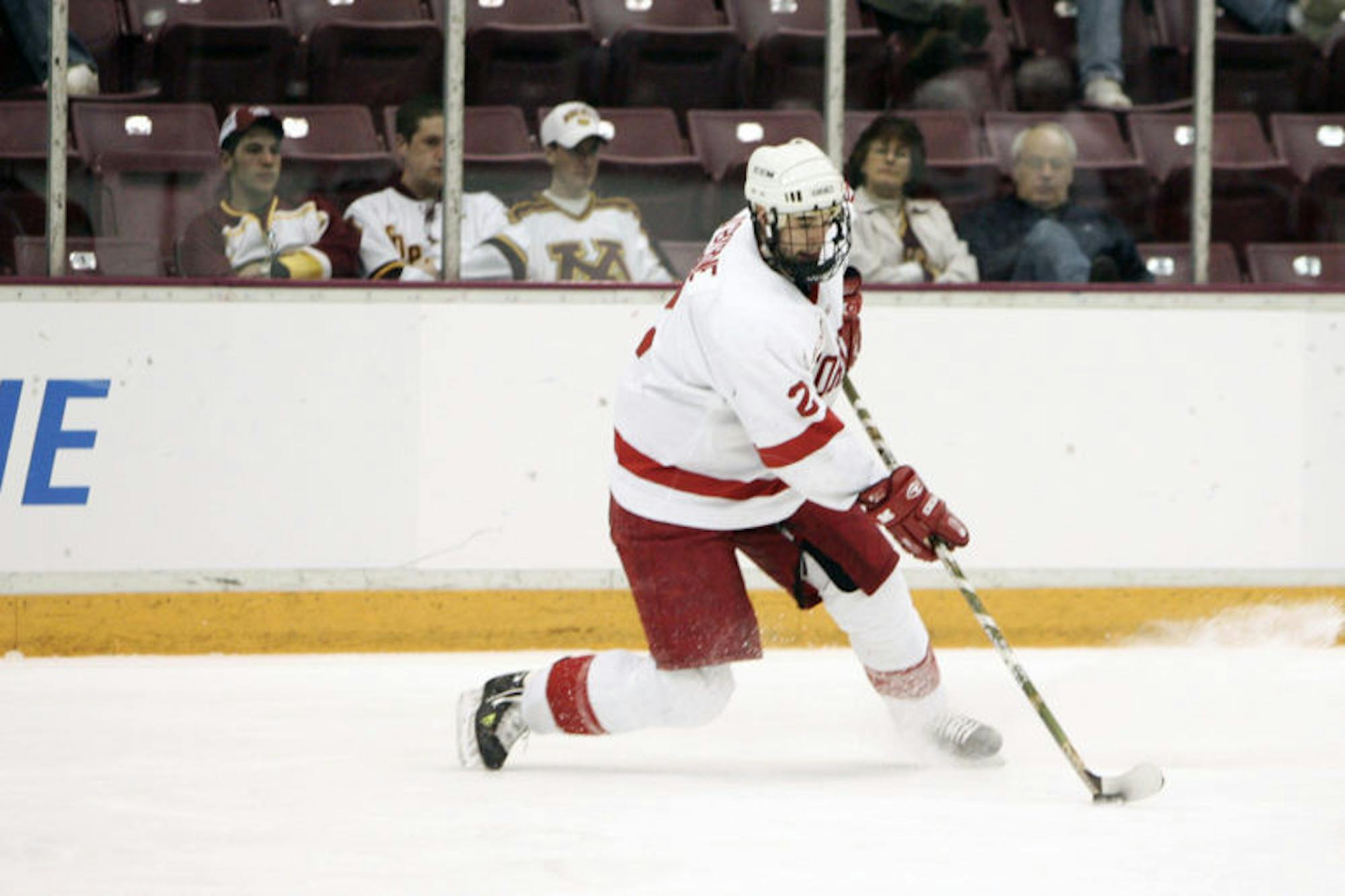
An Outspoken Advocate
After making the choice to leave a sport he had always loved, O’Byrne had to find something to fill the void practices, games and constant flights to different cities used to fill. While O’Byrne has been lucky enough to locate his path so quickly — choosing to finish his degree to pursue a second career — other retired athletes have not been quite so fortunate. In 2011, then-Nashville Predator Wade Belak retired from professional hockey after 14 years in the game when he was demoted to the AHL and sustained a pelvis injury. Just five months later, after a battle with depression, he committed suicide in a Toronto apartment. Following Belak’s death, O’Byrne was one of the players at the forefront of the mental health discussion within the league. “I think this will be a big eye-opener for everybody that mental illness isn’t something to be ashamed about,” he told CTV News in 2011. “If you’re feeling down for whatever reason, just talk about it with somebody.” According to HELIX magazine — a science publication from Northwestern University — athletes who step away from their game have a clear tendency to fall into this pattern of depression. O’Byrne said this was a problem he tackled from the very beginning. “The best advice I've heard is that once you start in the NHL you start thinking about what you're going to do afterwards right away so you get prepared for that transition,” he continued to tell CTV News. And that’s exactly what he did.Familiar Face in a Familiar Place
O’Byrne’s days of dealing out bruising hits and trading punches is now in the past. Over the summer, the British Columbia native announced he would return to Ithaca to finish what he started in the fall of 2003: earning a Cornell degree.