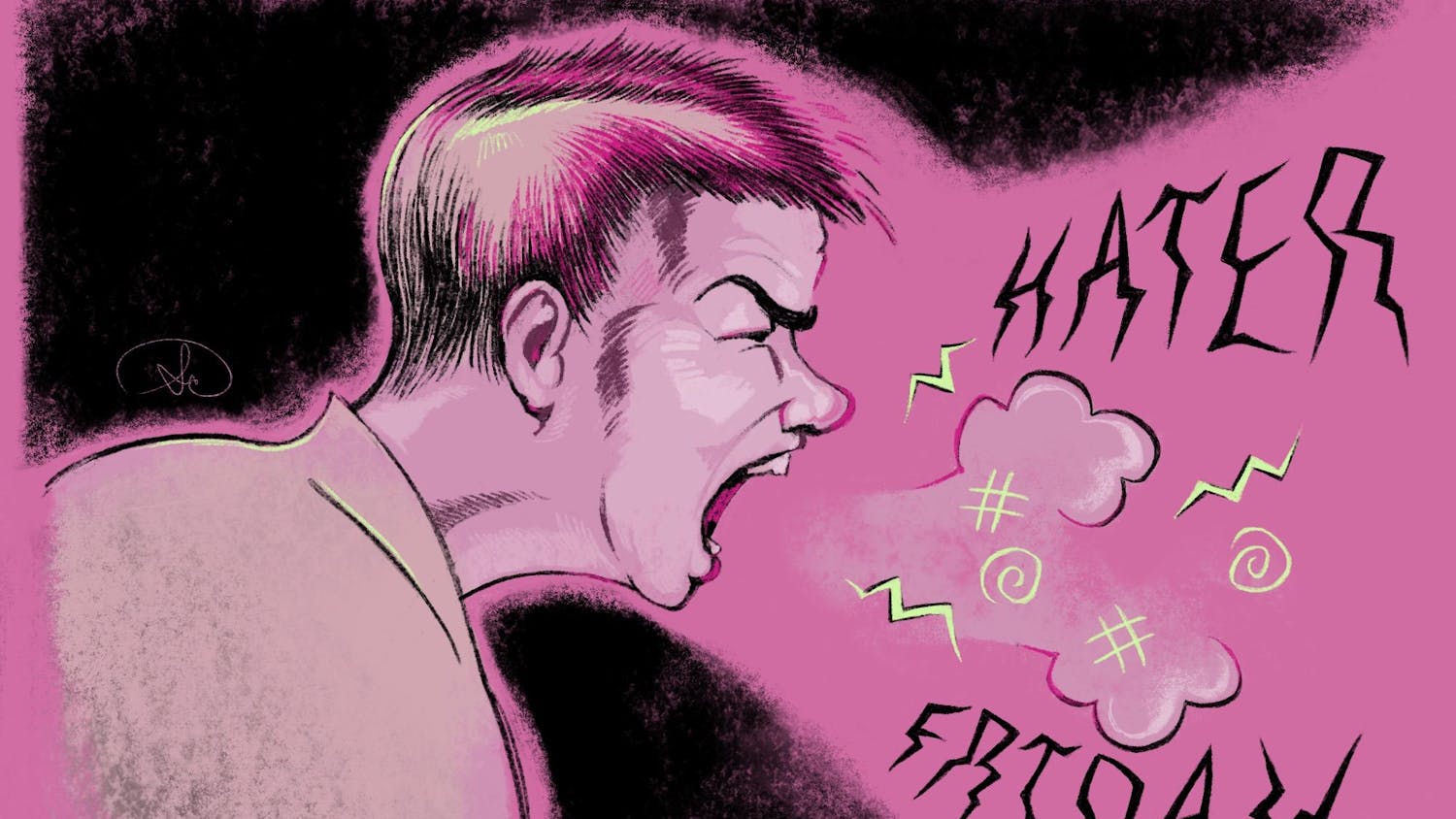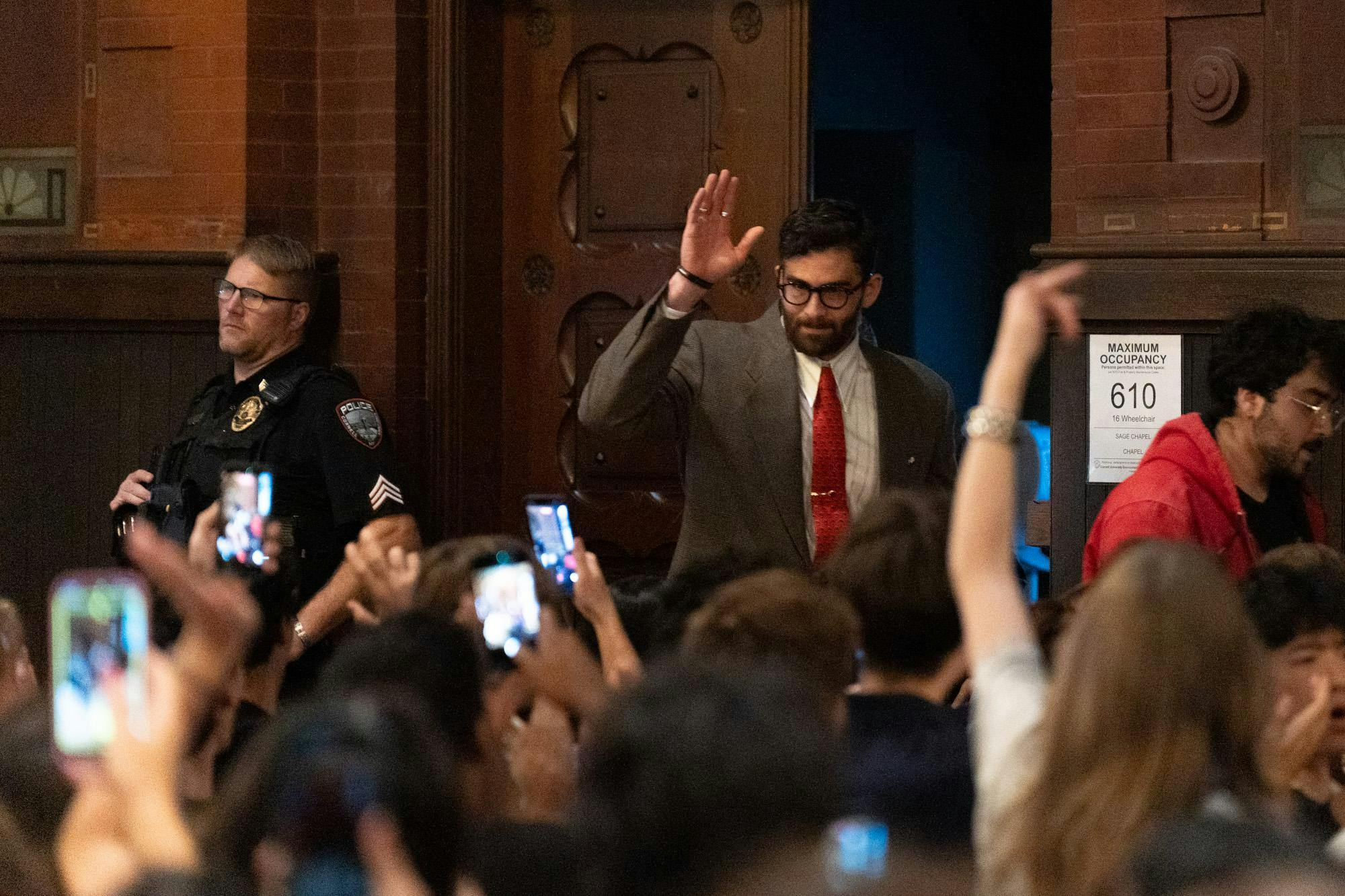
On Sept. 24, Hasan Piker visited Cornell’s campus to talk to students about an array of issues: the conflict in the Middle East, the massive shift our political sphere is undergoing and most importantly, the role of young people amid these changes. Speaking to a packed Sage Chapel, Piker was invited onto campus by the Students Not Bombs campaign, a collective initiative by Cornell Young Democratic Socialists of America, Students for Justice in Palestine and Jewish Voice for Peace. Despite the controversy, Piker’s presence on campus starkly underscored the need for greater protection and empowerment of all voices.
Piker began his speech with a series of jokes, a necessary evil to offset the lingering resentment demonstrated by Cornellians for Israel and Cornell Hillel, even if it only undermines the gravity of his speech. From mentioning his Cornell tie to taking easy shots at Fox News, Piker acted almost like a stand-up comedian, checking the audience to see if they were fans or strangers. Following his short set, however, Piker spoke about the palpable shift towards populism in our politics, as people have tired of establishment politicians continuing the same rhetoric. He cited New York City Mayor Zohran Mamdani as a key example, along with many other Democratic Socialists of America candidates winning primary elections across the country.
With this, a chant of “DSA” erupted throughout the audience, assuring the speaker that this audience was in fact his and illustrating the organization’s growing popularity. Throughout the night, Hasan framed both Republicans and Democrats as increasingly threatened by youth-led populism, declaring that “no matter how much they slander, smear and tell people we are wrong, we know we carry the moral majority on our side.” Both an overly absolutist statement and a strong rallying cry, Piker once more demonstrated the charisma and gravitas that gave him such a platform, continuing that “history will not reflect kindly on those who have opposed us, and we will make these changes happen.”
In a parallel line of thought, the streamer discussed how our country’s systems and institutions at large seem designed for inequality, spending billions on defense and weapons, destroying schools and lives in other countries rather than helping those in the United States. Though the structure of his speech seemed to fragment as he tried to tie all of his points together, it was still an idea that should resonate in the campus community.
Despite the University's immense wealth, it almost never gives back to the community it has overtaken. Rather, students often take for granted the firm grip Cornell has on Ithaca, even resenting the city for not having more of it. Ithaca suffers from a growing homelessness problem, as well as rampant issues with infrastructure, from homes to roads. Rather than providing assistance, Cornell and its largely wealthy community are allowed to isolate themselves by design, reflecting how the 1% functions within the rest of our nation. Instead, Cornell receives large swathes of money from the U.S. government to work in defense, further fueling such inequality and violence.
However, it is not just faculty and staff who perpetuate this, as students often remain complicit in the wrongdoing the Cornell administration commits, or even support its actions to silence voices. For example, although Hasan was repeatedly reprimanded for his visit on campus, a former IDF soldier, Sam Fried, has been brought to campus as a guest speaker. Piker questioned whether student safety and well-being are what truly matters to the administration, a sentiment that should be gaining traction especially with the ongoing lawsuit and Chi Phi rape case finally gaining visibility. Hasan juxtaposed the pushback against him specifically with Fried, using it to exemplify the need to protect all people and empower all voices.
Under that same logic, he expounded upon his experience at University of California, Los Angeles and interacting with student encampments in 2024, detailing that in spite of their structure, discipline and inclusivity, media outlets still painted them as sloppily put together and dangerous. Though he partially seems to be relating this to himself and his portrayal in the media, it still rings true for a variety of farther-left causes, such as the Free-Palestine movement or national issues like healthcare. It especially relates to what many activist groups are facing within Cornell’s community, with many students being suspended just for protesting. With this, Piker emphasized the importance of youth-based work, from media infrastructure to local organizations like the kind that brought him to campus.
Closing with Cornell still at the core of his words, Piker reminded the audience that a university is meant to be a place of learning to improve the world and develop peace. It is not a place that should do things like recruit for Immigration and Customs Enforcement, perpetuating systemic issues and cycles of violence. Stepping out beyond talking points he would deliver on Twitch, Hasan spoke to the audience as students and the next generation, not just his fans, urging them not to waste the education they are receiving.
So should we condemn Hasan Piker, as many across both sides of the aisle have? Disregarding how polarizing he may be, and the fact that his role as a political influencer and commentator is to essentially deliver propaganda, his underlying message rings true. Students do not need permission to participate in causes they support, and those who attempt to silence them often have a track record of listening only after it’s too late. As Piker said, “If it didn’t work, they wouldn’t try to stop you from doing it.”
Aarav Bavishi is a member of the Class of 2029 in the Brooks School of Public Policy. He is a staff writer for the Arts & Culture department and can be reached at arb438@cornell.edu.