Editor's Note: This article references sexual assault.
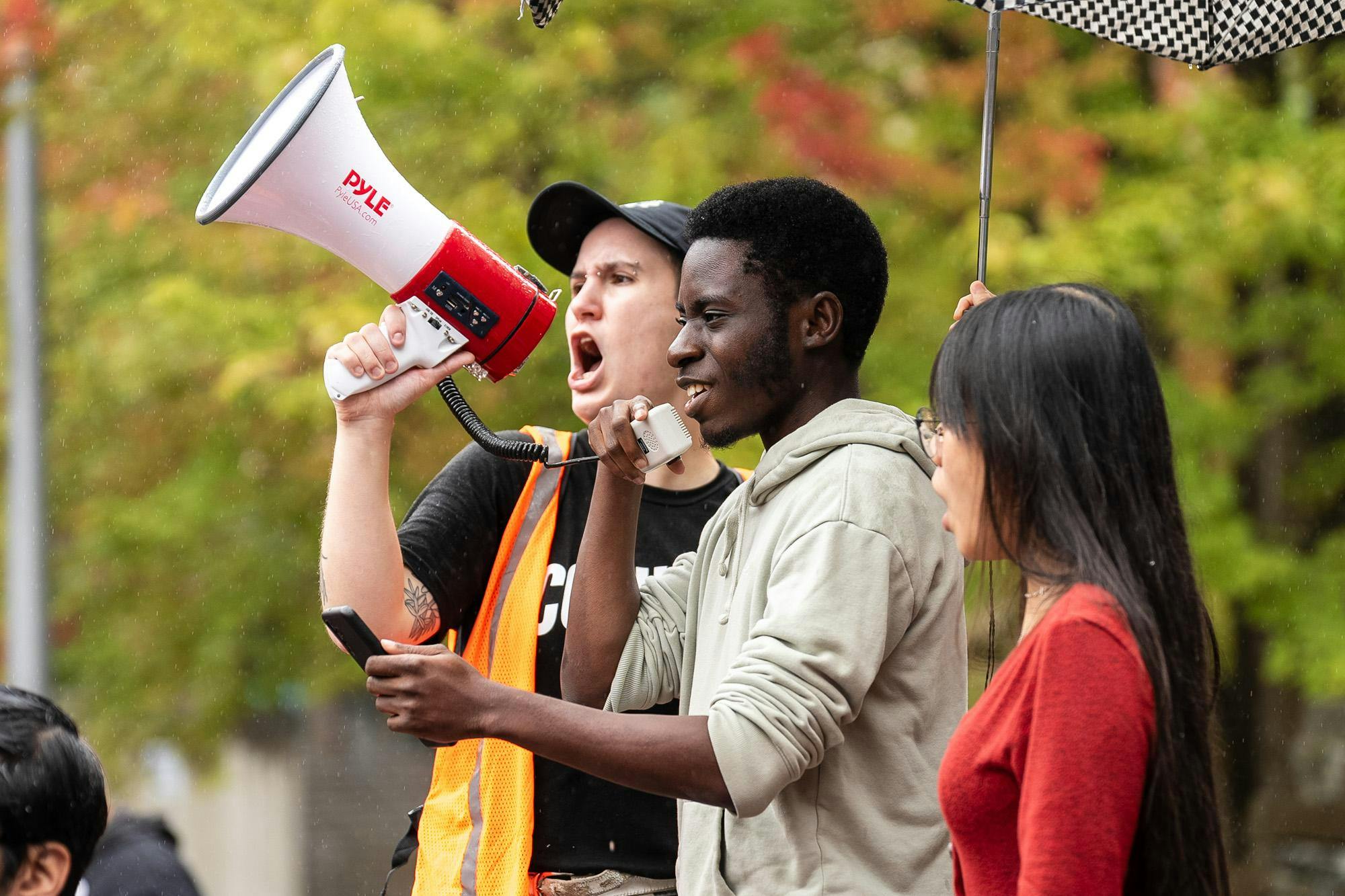
Outrage has traversed the nation in light of the alleged gang rape at Chi Phi. Students and faculty are appalled that the community they belong to could be complicit in failing to properly investigate such a horrific crime. A combination of anger, fear and deep confusion across campus has left members of our community demanding accountability and transparency from Cornell University. On Oct. 5 on Ho Plaza at 4:30 p.m., 20 student organizations will host the “Justice for Survivors” protest to ensure that these demands are heard.
The upcoming protest is an opportunity for students to hold our administration accountable. To funnel frustration into action. To rally behind Jane Doe and victims of sexual violence. To condemn the deplorable behavior alleged to have circulated in the Chi Phi fraternity brothers’ group chat. To make it known that Cornell students do not align themselves with an institution that dismisses complaints and coddles the accused.
Given the national attention Jane Doe’s case has received, the protest expects a significant turnout of students. Though for many international students, attending the protest creates unease as it may affect their standing in the Student and Exchange Visitor Information System. If suspended, students could be in violation of F-1 visa regulations, resulting in their student-visas being revoked and requiring them to leave the country. Last year, Momodu Taal, an international graduate student, faced deportation after his involvement in an Israel-Palestine Protest. The University’s relations with student protesters has unjustly left international students feeling as though they must jeopardize their college education to fight for what they believe in.
The University’s reprimands towards international student protesters weighs heavily on Borun Li ’29, a student from China, and his decision to attend the upcoming protest. Li states, “I think this definitely makes me very scared. I might lose my degree. I might lose my legal status to stay in the state. I might lose my right to study in Cornell."
It is shameful that international students do not share the same security that their American peers feel under the First Amendment. In moments like these, it is increasingly evident that the University’s policies and harsher consequences for international students effectively constrains the range of voices represented on campus.
Ahead of the upcoming protest, there are still ways for international students to participate. Professor Joseph Margulies, government, has shared some guidance on how international students can safely protest based on the counsel of his colleagues who have aided international students through the disciplinary process for protesting.
For one, students can either leave behind their devices or turn off their locations and Wi-Fi. Law enforcement possesses technology to track cellphone use, which can be used to see who attends protests. It’s also advisable to keep distance from CUPD during the actual protest. CUPD can charge protesters for unwanted touching and battery on a law enforcement officer. Additionally, under Section G of the Student Code of Conduct, CUPD may have grounds to say that student protesters are being obstructive or disruptive if entrances are blocked or students enter campus buildings.
Grace Sun ’29, a student from China who is planning on attending the protest, admits that student interactions with CUPD make her “a little nervous” about participating. Reflecting on her concerns, she contemplates: “Would CUPD be trying to acting against us? Because Cornell doesn’t have a good reputation.”
Though cameras are posted around campus, wearing bland clothing and omitting any identifiable accessories can make students less identifiable. Students looking to be especially cautious may choose to wear a mask or avoid speaking into any megaphones.
Students can also familiarize themselves with the Expressive Activity Policy under the Student Code of Conduct to ensure that they are abiding by the University’s rules regarding protesting.
None of this is to say that international students should make their presence or voices any less seen or heard. Students can and should still attend the protest. These precautions are just a way for students to feel more secure.
Cornell’s previous actions against student protesters, such as the Pathways to Peace protest and career fair arrests and their suspension of international student protesters, reflect a university whose prowess does not lie in advancing diverse perspectives, but in muzzling those who have the courage to speak out against abuse and injustice — all so they may shelter the reputation of the Ivy League name. As much as it is the responsibility of a university to protect the free expression of its student body, a university also owes it to all those who come forward with claims of sexual assault to fully investigate and punish the perpetrators if warranted. The protest on Oct. 5 is how we, as students, can demonstrate that we will not tolerate an institution that inadequately upholds this responsibility.
Katherine Istomin is a member of the class of 2029 in the College of Arts and Sciences. She is the social media editor for the 144th Editorial Board and can be reached at kistomin@cornellsun.com.

Ava Betnar is a member of the Class of 2029 in the College of Human Ecology. She is an assistant lifestyle editor on the 144th Editorial Board and can be reached at abetnar@cornellsun.com.