Editor’s note: This article references sexual violence.
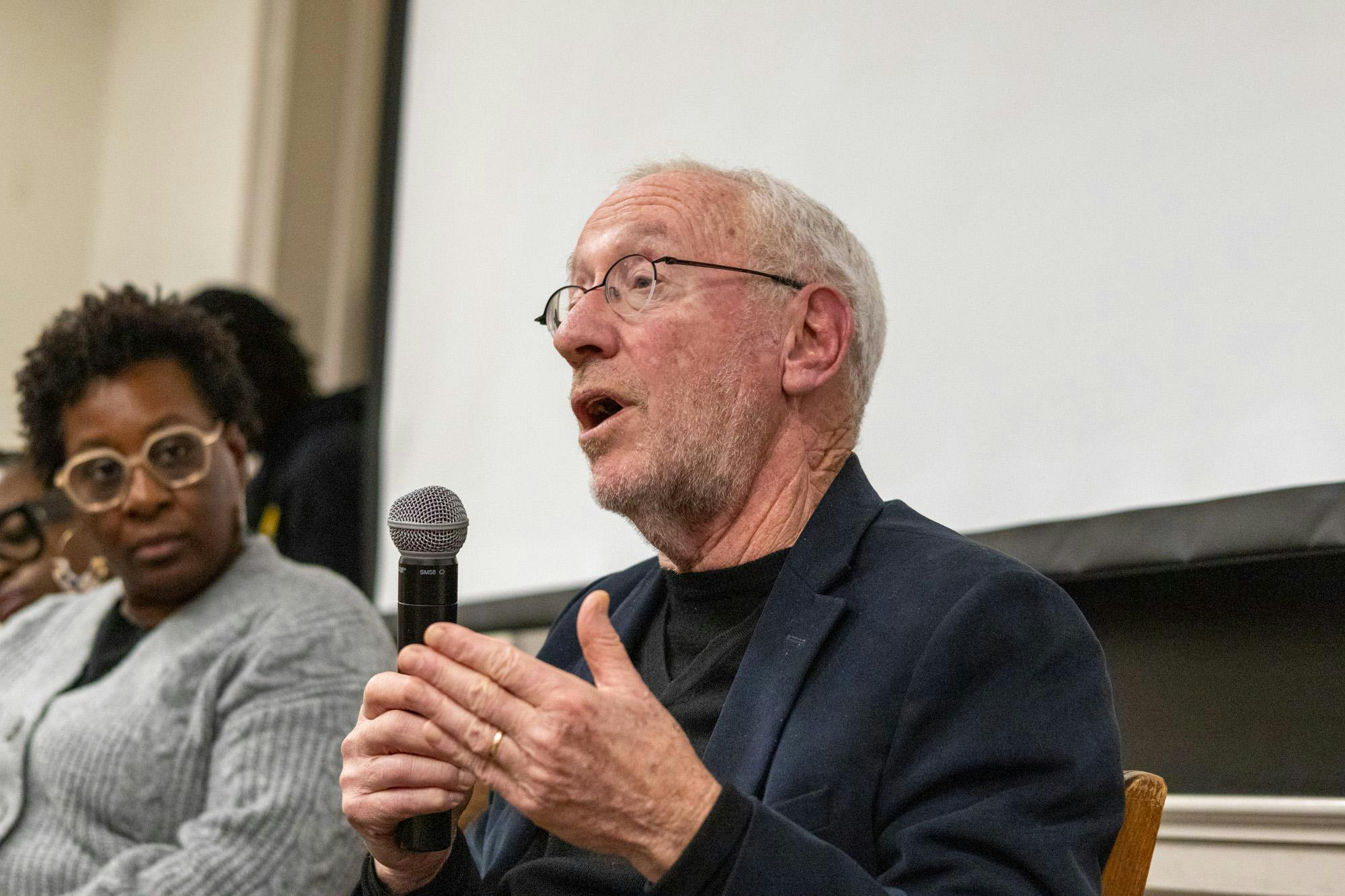
Cornell President Michael Kotlikoff and Ryan Lombardi, vice president for student and campus life, fielded questions from the Graduate and Professional Student Assembly regarding the University’s handling of the alleged 2024 Chi Phi gang rape during a Monday meeting.
GPSA members confronted Kotlikoff and Lombardi over concerns that the University is not doing enough to address sexual misconduct in campus culture and did not adequately handle Jane Doe’s case in 2024.
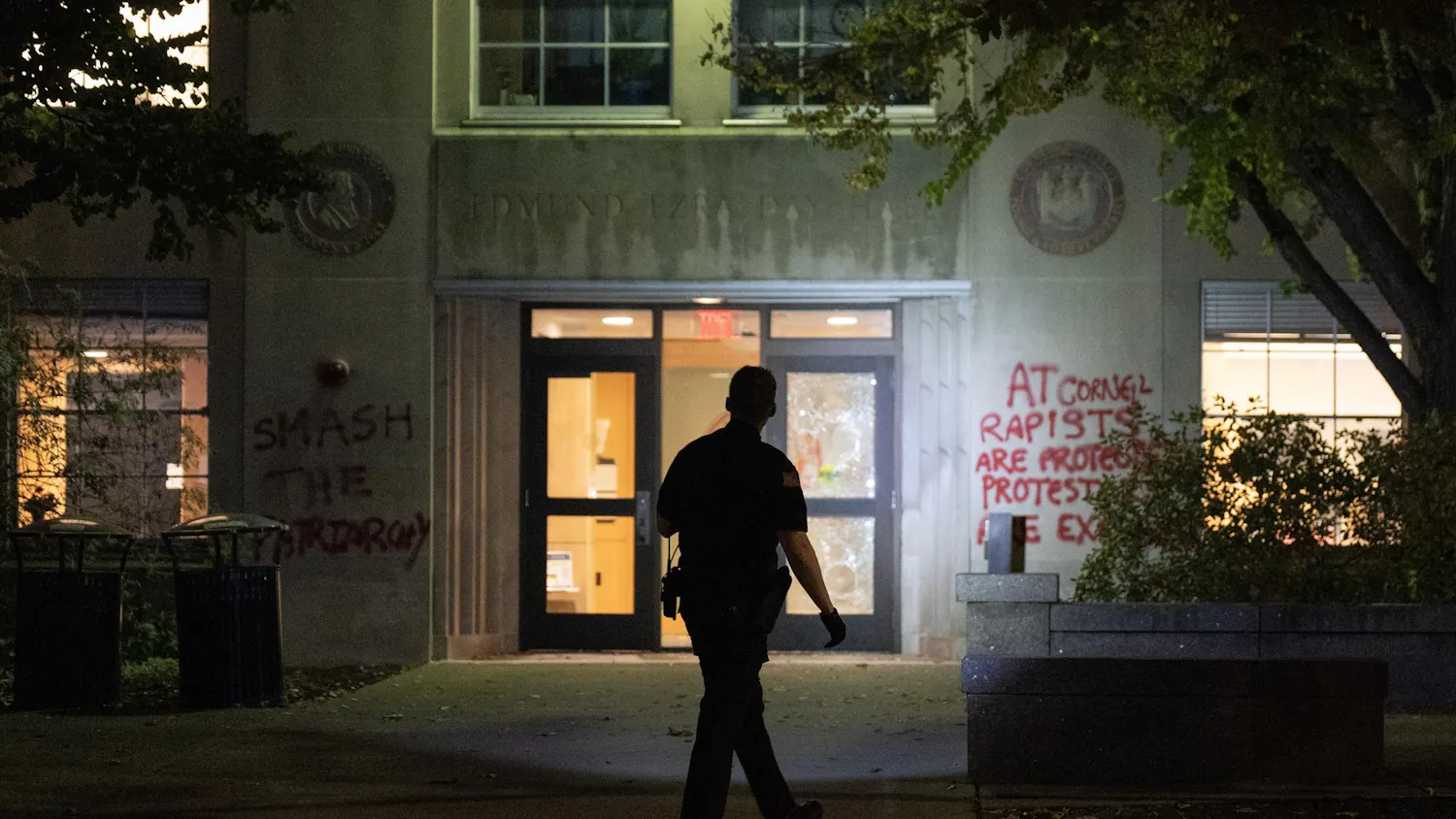
Kotlikoff and Lombardi’s appearance comes after a former Cornell student, identifying as Jane Doe, filed a Sept. 14 lawsuit alleging that she was sexually assaulted and gang raped at Cornell’s Chi Phi fraternity house in 2024. This case and details about the University’s investigation have since sparked national outrage and heightened media attention on campus.
“We’re not the only students that have questions,” Sierra Van Rossam M.B.A. ’28 told Kotlikoff. “The student body is looking to Cornell for a response and direction.”
Kotlikoff alluded to plans to hear from the broader student body, explaining that he has initiated conversations with student leaders and that he and Lombardi plan to hold a town hall to hear directly from students.
Van Rossem asked when the University could expect “a true response and action from Cornell,” to which Kotlikoff replied that he had been “pretty clear” about what the University was doing.
“We’re not hiding anything at Cornell,” Kotlikoff said. “You will hear proposals from us going forward around what we’re going to do to try and improve this culture and address this problem.”
When asked about the University’s Title IX Office and its procedures, Kotlikoff explained that the University is bound by federal law, and that its processes are “trauma-informed” — processes Kotlikoff said the University utilized for Jane Doe.
He added that the Title IX process is designed so that survivors can choose to pursue a confidential University investigation, involve local law enforcement or “as Jane Doe did in this case, do both.”
Kotlikoff noted that the University plans to collect data about sexual assault on campus. He added that the data the University currently has from the Survey of Sexual Assault and Related Misconduct is “not a comprehensive data survey,” given that it had a low response rate.
Kotlikoff directly addressed a question from Mark Mitri M.Eng. ’29, who asked what the benefits of having Greek Life on campus were, pointing to a “throughline” of sexual violence in the Greek Life system.
While Kotlikoff acknowledged that sexual misconduct can be “associated with Greek Life,” he told Mitri that there would be “less oversight than under the Greek system” if private parties “with overdrinking and risky behavior” were the norm.
“This doesn’t just happen in Greek Life,” Kotlikoff said, before adding that “It is something that is associated with Greek Life…I don’t want to go into defending that.”
When a member of the GPSA characterized Title IX as a “mediocre process,” Kotlikoff disputed the characterization, stating that Cornell’s Title IX office is “very professional” and in some cases recommended the “severest sanction” that a University can impose — expulsions.
The meeting took place during the “Justice for Survivors” protest, where thousands of Cornell students, faculty and community members rallied at Ho Plaza and Day Hall in support of Jane Doe and reform around sexual misconduct rules.
Demands made and presented at Day Hall included the expulsion of all seven of the Chi Phi brothers named in Doe’s suit, a rewriting of Cornell’s sexual assault policies, an external investigation, mandatory sexual assault trainings and full compliance with New York’s Enough Is Enough law.
When a GPSA member asked Kotlikoff if he had “any reaction” to the thousands of students protesting and their demands, he told them he was hearing the concerns of many in the Cornell community.
“We’re all angry. I understand that anger,” Kotlikoff responded. “People want easy answers to this.”
The University is trying to create a safer environment, Kotlikoff emphasized, and he expressed hope that the community’s support for Jane Doe can go towards positive change.
“This passion, if appropriately channeled, can help us as a community address this issue.”
Zeinab Faraj is a member of the Class of 2028 in the College of Arts and Sciences. She is a senior editor for the 144th Editorial Board. She was a features editor and an assistant sports editor on the 143rd Editorial Board and can be reached at zfaraj@cornellsun.com.

Atticus Johnson is a member of the Class of 2028 in the College of Arts and Sciences. He is a news editor for the 144th Editorial Board and can be reached at ajohnson@cornellsun.com.