


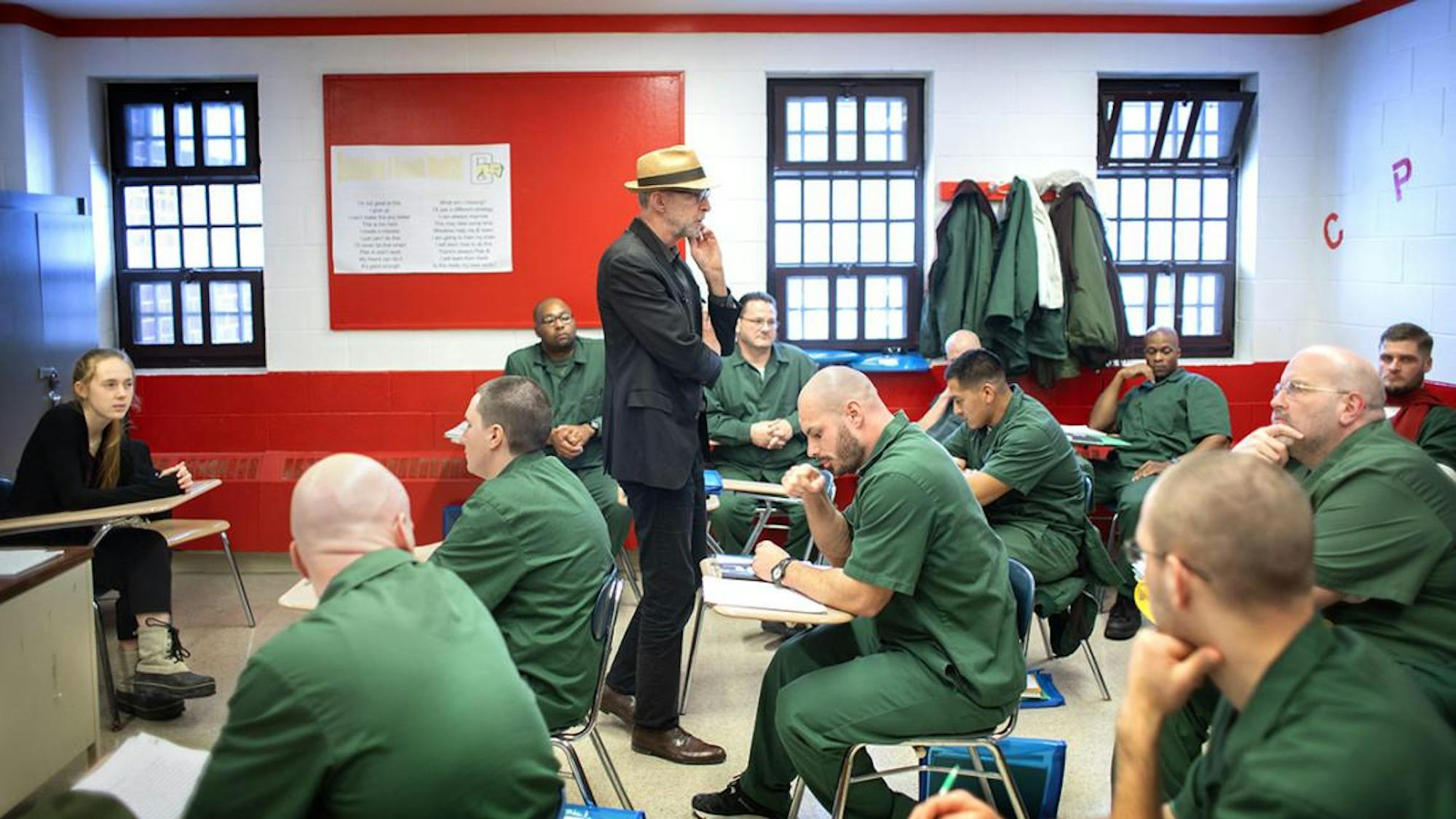
Cornell will become the first Ivy League university to offer a degree to incarcerated students when the Cornell Prison Education Program launches its Bachelor of Professional Studies program at Cayuga Correctional Facility in Fall 2027.
The program, offered through a partnership with Cornell’s School of Continuing Education, features organizations, markets, and society as the first approved major.
Its first cohort is expected to enroll 12 to 18 students, Jenna LaPietra, CPEP's director of strategic initiatives, wrote in a statement to The Sun. The program is expected to take approximately three years to complete.
Applicants must have an associate’s degree or at least 60 college credits and either reside at Cayuga Correctional Facility or qualify to transfer there. The School of Continuing Education will oversee admissions and is developing an application process adapted to the prison’s paper-based environment.
The new degree expands CPEP, which was founded in 2001 by Prof. Emeritus Pete Wetherbee, literatures in English. Through its partnership with SUNY Cayuga Community College, CPEP students have earned credits toward associate’s degrees, with advanced students being able to earn Cornell’s certificate in liberal arts.
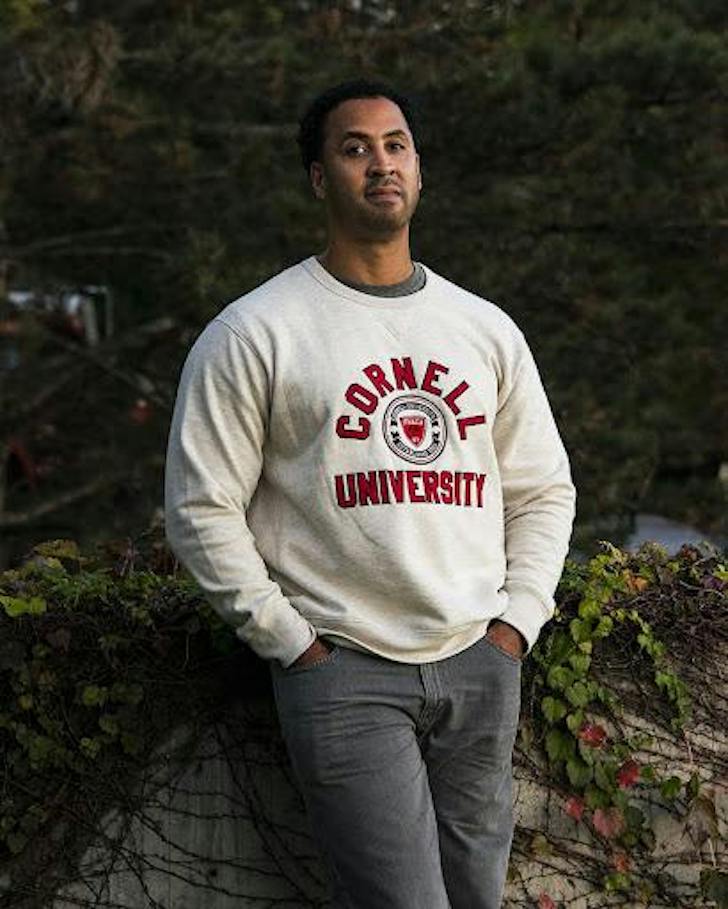
For former CPEP student Darnell Epps, the addition of a bachelor’s degree program for inmates is “especially meaningful.”
When Epps participated in CPEP in 2016, inmates did not have an opportunity to earn a degree awarded by Cornell. After his release on parole in 2017, he earned a bachelor’s degree in government from Cornell University and a Juris Doctor from Yale Law School.
“There are extraordinarily talented, intellectually curious and ambitious people sitting in prison classrooms who have made mistakes, sometimes very serious ones, but whose mistakes should not mark the outer boundary of what they are capable of becoming,” Epps wrote to The Sun.
Jodi Anderson Jr., another former participant in CPEP and director of technological innovation at the School of Industrial and Labor Relations’ Criminal Justice and Employment Initiative, told The Sun that the new bachelor's degree program would signal to people in prison that “your removal from society or incarceration isn’t a permanent exclusion.”
Anderson said he thinks Cornell offering a bachelor's degree in prison will help inmates obtain skills and connections that will ultimately help them reintegrate into their communities.
“Over 90% of those incarcerated actually return to society,” Anderson said. “One way to increase the odds of [them contributing to society] is to enable individuals to get educated.”
Participating in CPEP helped him envision a future beyond incarceration.
“I think that’s what really unlocked the opportunity in my mind that education could actually be an avenue out of not only just incarceration but also to improve my life socially, economically,” Anderson said.
Anderson entered CPEP at Auburn Correctional Facility in 2014, shortly after leaving solitary confinement. He recalled taking neuroscience, statistics, and Mandarin, with Cornell professors and teaching assistants providing additional study materials when students wanted to keep learning.
Although academically demanding, the program gave him “hope in an otherwise dark environment,” Anderson stated.
Anderson recalled watching a CPEP graduation soon after joining. Despite a snowstorm, he said, the program’s financial backer Doris Buffett arrived to celebrate roughly a dozen graduates alongside professors, legislators, and other community members.
“I didn’t know anybody cared about what was going on inside of there,” Anderson said. “Even myself, I didn’t see the true value that we could have in society.”
But seeing the amount of people who believed in the program gave Anderson belief in himself. He stated that it made him believe that “maybe there is a world outside of what I've experienced that is welcoming and accepting of someone who has turned their life around and wants to contribute to society, if given the opportunity.”
Afterward, Anderson devoted himself to the program, taking every class he could, mentoring prospective students and helping classmates with their homework.
“I just made the program my entire life,” he stated. “I really made it a part of my identity.”
Anderson graduated with his associate’s degree from CPEP in 2016.
Cornell also announced a three-year, $1.5 million grant in May 2026 from Ascendium Education Group to support Cornell’s Education Justice Tracker and the establishment of the Partnership for the Advancement of Prison Education Research. The tracker helps programs manage their students through prison transfers and release, while the consortium supports research into prison higher education.
“Cornell has long embraced the idea of ‘any person, any study,’” Epps stated. “Extending the opportunity to earn a Cornell bachelor’s degree to people who are incarcerated gives extraordinary meaning to those words.”

Christine Savino is a second-year student in the Cornell Law School. She is a senior writer for the news department and can be reached at csavino@cornellsun.com.


