


There is a particular kind of frustration that comes from knowing you are meant to do something and still being unable to figure out how to do it. You open one website, which sends you to another. You search for the right form, realize you need a document you did not know existed and eventually find yourself waiting on hold with an office that is overwhelmed with people asking the same questions.
For college students, this experience is almost an everyday routine. We navigate financial aid applications, tax forms, housing systems, health insurance, student employment paperwork and countless administrative portals. Eventually, we learn to treat frustration as part of the process. But studying public policy has made me wonder why we accept that complexity so easily.
Public administration scholars have a name for these experiences: administrative burden. Upon my research I stumbled upon two scholars, Pamela Her and Donald Moynihan. Pamela Herd is a sociologist and a professor of social policy at the University of Michigan's Ford School of Public Policy. Her research centers on topics like inequality, health, aging and policy. Her partner, Donald Moynihan, is also a public policy expert, and they often team up to explore the challenges of administrative burdens in government programs.
In their research, Herd and Moynihan describe three types of costs people encounter when interacting with public programs: learning costs, or figuring out what a program requires; compliance costs, like completing paperwork and providing documentation; and psychological costs, including the stress and frustration produced by the process. Their research also finds that these burdens can prevent eligible people from accessing services to which they are entitled to such as social welfare programs; particularly people who have fewer resources available to navigate complicated systems.
In other words, paperwork is not always just paperwork. Consider the FAFSA. Congress sought to simplify the notoriously complicated federal financial aid application, reducing a form that once contained more than 100 questions to as few as 18 for some applicants. The intention seems almost obvious: applying for financial aid should not itself require an education in federal bureaucracy.
But when the redesigned FAFSA was introduced for the 2024-25 aid cycle, simplification on paper became complicated in practice. The Government Accountability Office found that the Department of
Education identified more than 40 technical problems during the rollout. Some students could not start or complete their applications. Others encountered deleted information, erroneous messages and incorrect estimates of their federal aid eligibility. Most strikingly, 74% of calls to the department's call center went unanswered during the first five months of the rollout.
Those numbers matter because behind every unanswered call was someone waiting with a question that could influence whether or not they can afford college. Cornell students do not have to look far to understand that experience.
In 2021, The Sun reported that some admitted students committed to Cornell without having received their financial aid packages. One incoming student described repeatedly contacting the financial aid office while approaching commitment deadlines at other universities. Another said that incomplete items appeared in his financial aid portal without clear instructions for resolving them.
The following year, The Sun reported that vacancies within Cornell's Office of Financial Aid and Student Employment had contributed to delayed reviews and aid packages. At one point in 2019, 16 of the office's 33 paid positions were vacant. Cornell subsequently began restructuring the office, filling vacancies and changing its business processes and technology.
These examples are not an argument that administrators are indifferent. In fact, they demonstrate something more important: even institutions trying to provide assistance can create burdens through understaffing, complicated rules, poor technology or unclear communication. And that distinction matters.
We often judge social programs by what they promise. Is the financial aid system effective? Does housing assistance even support students? Does Medicaid help? Does a university provide emergency funding? But there is another question that deserves just as much attention: How difficult is it to actually receive these things?
Imagine two students who qualify for the same assistance. One has parents who understand financial paperwork, enough savings to absorb a delayed payment and free time during business hours to call an office. The other student works between classes, is the first person in their family navigating the process and needs the money before rent is due.
Formally, both students have access to financial aid. Practically, they do not have the same access. That is why administrative burden is ultimately an equity issue. Herd and Moynihan argue that people with fewer resources and greater needs can have more difficulty overcoming bureaucratic frictions, allowing administrative processes themselves to reinforce existing inequalities.
The problem has not disappeared at Cornell. At a Black Students United town hall this March, students raised concerns about transparency and consistency in financial aid, housing and access to student support. Administrators, meanwhile, pointed to existing processes and resource constraints.
The tension between a system existing and a person successfully navigating it is exactly where public administration matters.
Of course, some bureaucracy is necessary. Financial aid cannot simply be distributed without determining eligibility. Public agencies need safeguards against fraud, universities need documentation and rules can create consistency.
But complexity should have to justify itself. Perhaps one of the simplest tests of good public policy is not just whether we created a program with good intentions, but whether the person standing on the other side of the bureaucracy can actually use it.
A benefit someone cannot access is not much of a benefit at all.
The Cornell Daily Sun is interested in publishing a broad and diverse set of content from the Cornell and greater Ithaca community. We want to hear what you have to say about this topic or any of our pieces. Here are some guidelines on how to submit. And here’s our email: associate-editor@cornellsun.com.

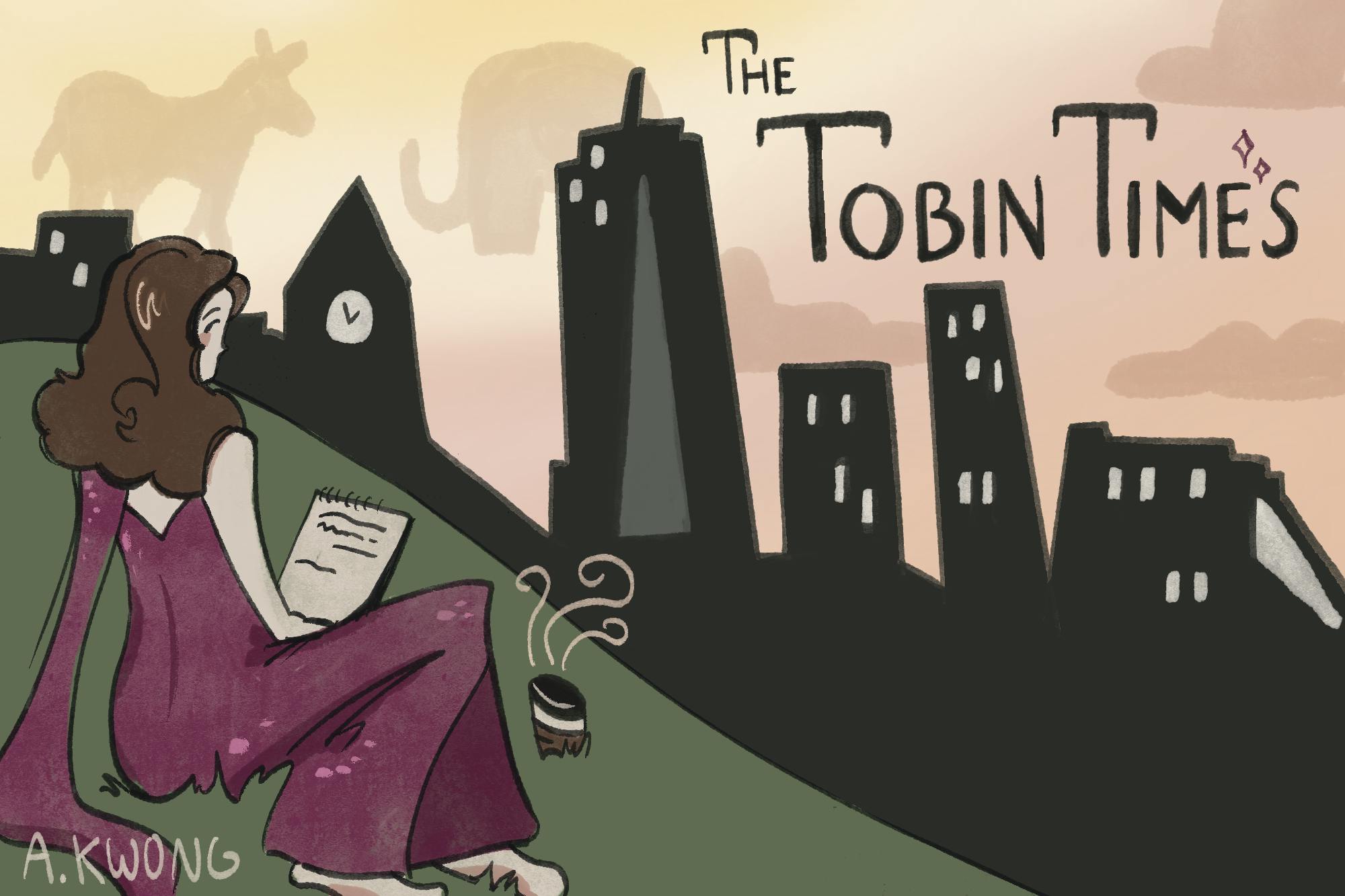
Lali Tobin MPA '27 is an Opinion Columnist and a master's student at the Jeb E. Brooks School of Public Policy. Her monthly column, The Tobin Times, explores public policy and politics through different lenses. She hopes to engage readers in hearing how politics is the most discussed topic in the media and why it is important to stay on top of current issues. She also hopes to tackle current social trends that can be connected through public policy. She can be reached at ltobin@cornellsun.com.


