


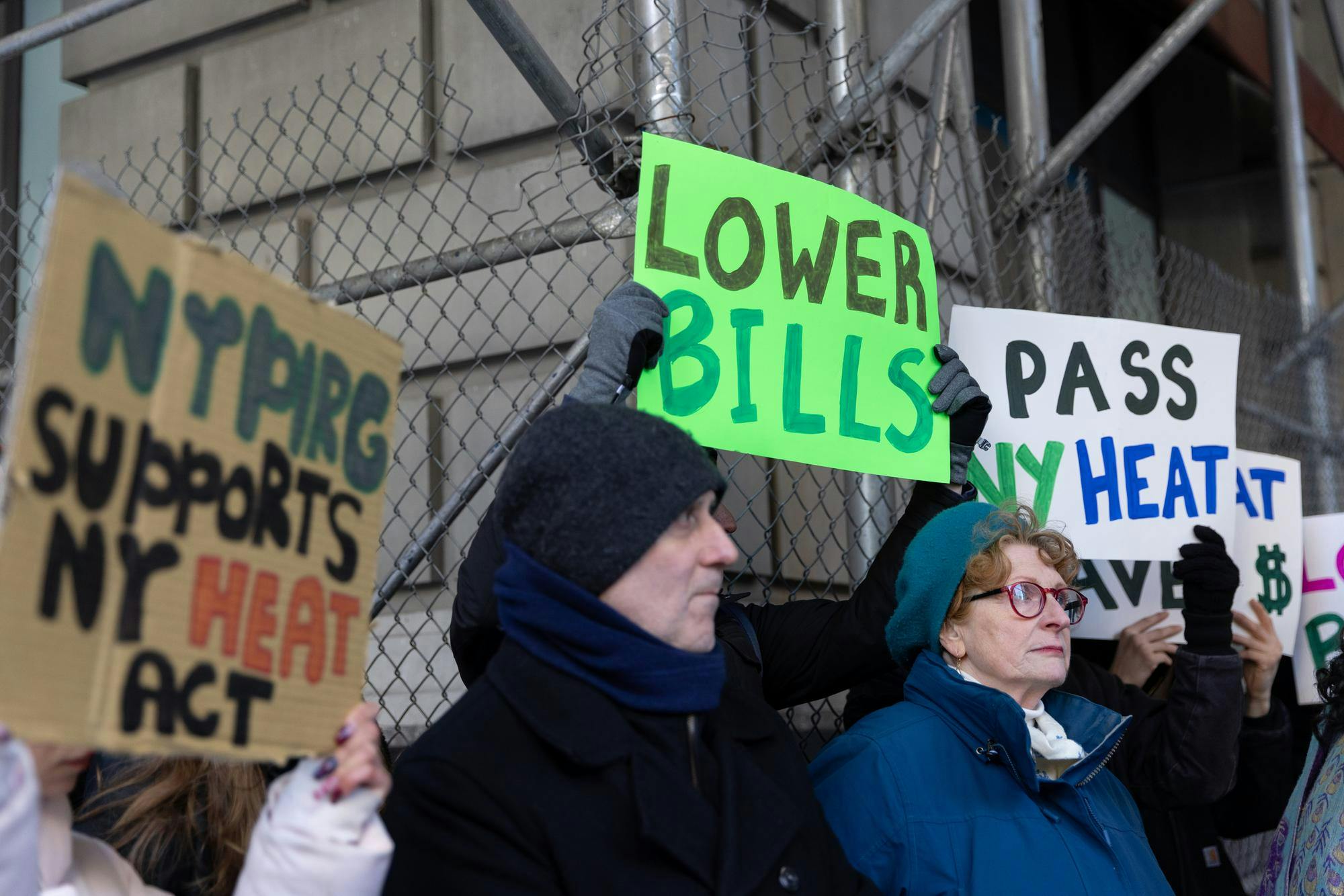
Rising utility bills have become a central campaign issue for both Rep. Josh Riley (D-N.Y.) and his Republican challenger, State Sen. Peter Oberacker (R-N.Y.), ahead of the November election for New York’s 19th congressional district.
Riley narrowly won the district in 2024, beating former Rep. Marc Molinaro (R-N.Y.) by about 2%. The seat is now a national Republican target, and President Donald Trump gave Oberacker his “Complete and Total” endorsement in a February 2026 TruthSocial post.
MAGA Majority, an initiative run by the National Republican Congressional Committee devoted to electing non-incumbent Republicans, recently removed Oberacker from its program.
Both candidates have been vocally critical of New York State Electric and Gas for billing errors and proposed rate increases during a year of unusually high utility bills for many Tompkins County residents. NYSEG is a utility company regulated by the New York Department of Public Service that services upstate New York, and it is the only provider available to upstate New Yorkers.
Oberacker has criticized NYSEG for inconsistent billing and a lack of transparency, and previously demanded a “full-scale investigation into NYS utility companies” in June 2025. He cited constituents reporting large bills and unauthorized withdrawals, saying “this isn’t just bad billing — it’s borderline criminal and we need answers.”
Oberacker introduced a “Ratepayer Bill of Rights” in April 2026, which would require itemized billing and a ban on political contributions from regulated utilities. In his proposal, Oberacker called for “transparency and accountability by the utility” and for a “utility tax holiday, to provide financial relief to New York ratepayers.”
Meanwhile, Riley has criticized NYSEG’s foreign ownership and repeatedly called for investigations into what he describes as New York’s “utility monopolies.” His campaign has collected over 5,000 survey responses from NYSEG customers reporting billing inconsistencies and steep price increases.
The two have exchanged fire over the issue.
Oberacker accused Riley of owning a stake in Spanish energy giant Iberdrola, which oversees NYSEG’s parent company Avangrid, and accepting money from lobbyists tied to Avangrid.
“I think we could sum it up in one word: hypocrite,” Oberacker said in March 2026.
Riley disputed this claim, explaining that he invests in mutual funds, and not specific stocks. His campaign subsequently released a statement later in June, saying, “Pay More Pete accepted campaign cash from utility monopolies as they were jacking up rates.”
Oberacker received funds indirectly from Iberdrola through the state pension fund and received contributions from the company. He maintains that he returned the money.
Both have authored legislation to address the rising utility costs.
Riley co-sponsored a bill capping how much NYSEG could hike utility rates in April 2026. He also introduced a bipartisan bill allowing small businesses and households to deduct taxes and state-mandated surcharges. Neither bill would definitively block the pending rate increase.
Debate comes after Tompkins County residents received utility bills that were double, and in some cases even triple, typical gas and electric prices in February 2026.
NYSEG acknowledged billing errors from February 2026 to April 2026 due to “incorrect temperature data” in a May 2026 statement and sent out corrections and one-time adjustments to affected customers.
NYSEG also filed requests to increase billing rates by about 30% in June 2025 — a move that would cost the average customer roughly $800 more in utilities annually and bring in an additional $557 million to the company. The Public Service Commission approved a fraction of rate increases temporarily in May, but has not yet announced when it will release a final decision.
“At the same time that NYSEG is asking the [Public Service Commission] for permission to raise its rates by hundreds of millions of dollars, it also has been committing billing errors that are seriously impacting my constituents’ ability to manage their household finances,” Riley said in an August statement.
Riley asked the Public Service Commission to require NYSEG to disclose exactly how many customers were affected by billing errors and how much they were overcharged in his statement.
Debates over new data centers complicate the matter further, since some residents worry they are paying for grid upgrades that power data centers and not their own homes.
The rate case remains open as voters prepare to cast their ballots in November.
Francesca Wesley is a member of the Class of 2029 in the College of Arts and Sciences. She is a contributor for the news department and can be reached at fjw48@cornell.edu.


