What do time travel, a fairy godmother, a cat in a cradle and an imaginary dragon all have in common? If you’ve read the title of this article, you already know the answer. Each belongs to an iconic song written or performed by a former Cornellian — proof that Cornell’s influence reverberates far beyond grade deflation, frostbitten treks to class during never-ending winters and the annual herds of soon-to-be shell-shocked freshman swarming Collegetown during Orientation Week. That’s right; for all the CEOs, scientists and financiers Cornell has churned out since 1865, it also spawned an impressive collection of musical artists.
“You don’t need money, don’t take fame … That’s the power of love”
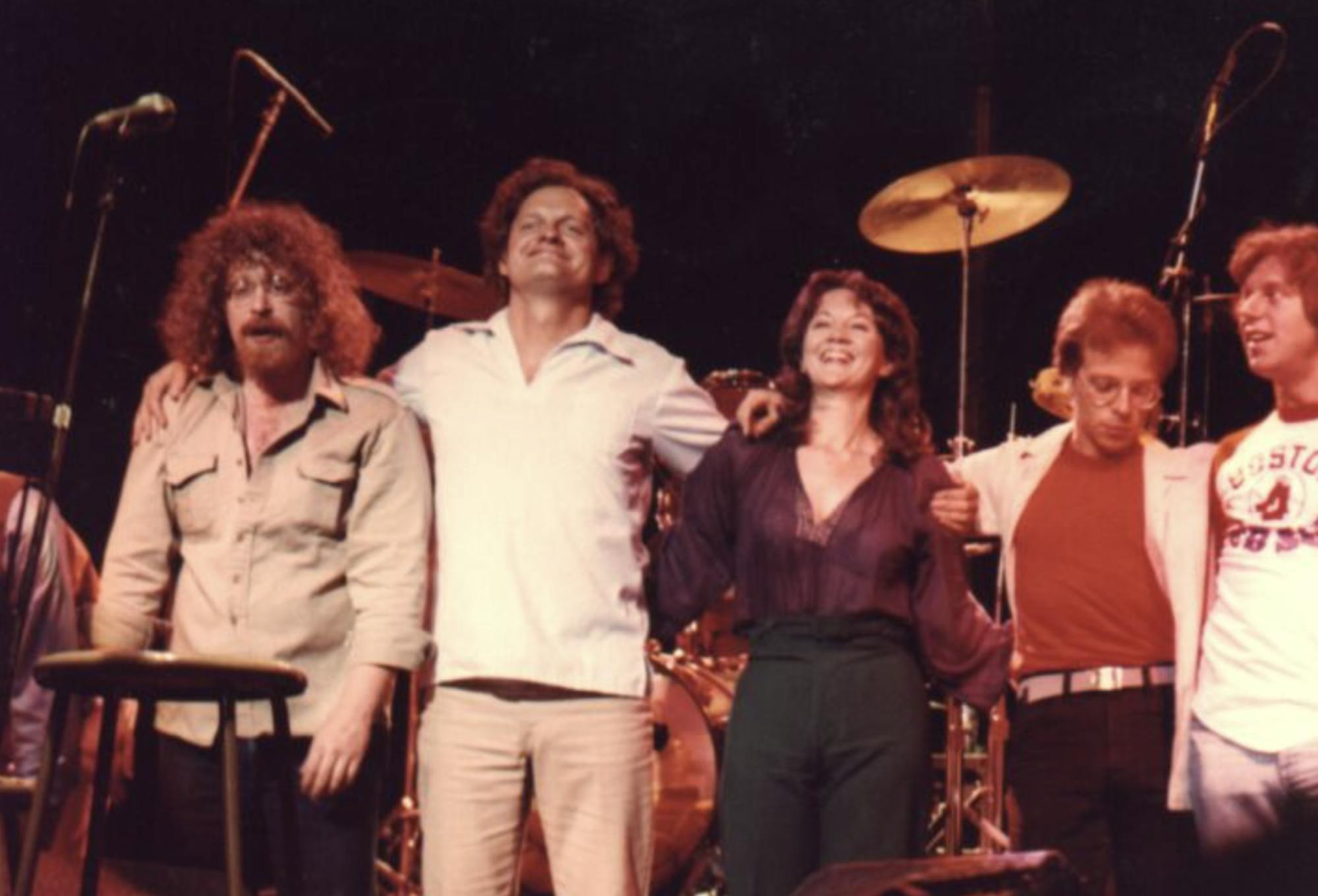
If you’ve seen Michael J. Fox’s Back to the Future trilogy, you’ve heard these abbreviated lyrics from Huey Lewis and the News’ “The Power of Love,” a song that’s not only deeply embedded in 1980s Americana but also the band’s first #1 hit on the U.S. charts. More importantly, it features a fellow Cornellian: Huey Lewis ’72 — not the News. And together with the movie-specific hit “Back in Time,” Lewis dominated the Spotify-less radio airwaves of 1985. “The Power of Love” was so popular it earned an Academy Award nomination for Best Original Song. It was also nominated for the Grammy for Record of the Year. Although he did not win, Lewis was one of the 21 stars and superstars who sang solo lines in the mega-ensemble “We Are the World” — the very song that beat his for the Grammy. So, either way, Lewis was a winner.
If you want to hear some nostalgic Big Red vibes, you can also listen to “Hip to Be Square,” “The Heart of Rock & Roll,” “I Want a New Drug” and “Stuck With You.”
“But the thingamabob that does the job is …”
If you’ve ever gone to Disneyland or watched Walt Disney’s Cinderella, you’ve most certainly heard the song famously sung by the Fairy Godmother, “Bibbidi-Bobbidi-Boo.” The song was co-written in 1948 by Mack David, a former Cornellian, who was nominated for eight Academy Awards during his career. David was a songwriting genius who worked not only with Walt Disney, but with musical legends like Ella Fitzgerald, Louis Armstrong, Count Basie and Duke Ellington. He also co-wrote “This Is It,” the iconic theme for The Bugs Bunny Show. So, the next time you watch Disney’s Alice in Wonderland and hear “The Unbirthday Song,” remember that a Cornellian helped create it.
“Little boy blue and the man on the moon …”
Next up: Harry Chapin ’64. Unlike Lewis’ pop rock and David’s whimsical tunes, Chapin is largely remembered for his deeply emotional narratives. His 1974 hit “Cat’s in the Cradle” is one of my favorite songs of all time. It’s about a father who, too busy to spend time with his son, later regrets his missed opportunities when realizes his son turned out just like him — too busy to visit him.
Chapin was nominated for two Grammys during his life but, alas, he didn’t win. To be fair, in 1975 he lost Best Pop Male Vocalist to the musical savant that is Stevie Wonder. That said, in my opinion, the depth of “Cat’s in the Cradle” gives him the edge. Listen to Wonder’s album Fulfillingness’ First Finale and judge for yourself. And yes, I might be biased because Chapin went to Cornell. However, he was also posthumously awarded a Congressional Gold Medal in 1987 for his humanitarian work in the fight against hunger and inducted into the Grammy Hall of Fame in 2011.
Aside from “Cat’s in the Cradle,” if you like folksy, narrative songs, you’ll enjoy Chapin’s music. Sadly, he died at the age of 38 when a tractor-trailer smashed into his car on the Long Island Expressway. A tragic end to a brilliant artist.
“And froclicked in the autumn mist, in a land called Honah Lee …”
“Puff the Magic Dragon,” arguably one of the most iconic folk songs of all time, began as a poem written by a 19-year-old physics major at Cornell named Leonard Lipton ’62. It was later adapted into a song by Peter Yarrow ’59, another Cornellian famous for being the “Peter” in the wildly popular 1960s trio Peter, Paul and Mary. I struggled with whether to include Yarrow in this article because he was later convicted of a very serious criminal offense. Ultimately, due to this contribution to musical history, I’ve decided to mention him and move on without much discussion.
“...I’m a 21st Century digital boy / I don’t know how to read, but I got a lot of toys.”
How about a punk rock band formed in 1980 whose lead vocalist has a Ph.D. in zoology from Cornell? Greg Graffin Ph.D. ’03 is his name, and Bad Religion is the band. The lyrics above, from their hit “21st Century (Digital Boy),” demonstrate that their songs have a lot of opinions. If you want energetic music infused with social commentary, Bad Religion is for you. One of my favorites is an intense, metaphor-filled song called “Infected.” I guess I just like hearing a guy with a Ph.D. sing about being in a toxic relationship. Graffin, like Lipton, proves that creativity and science can coexist within one brilliant mind.
Cornell and its Ithaca surroundings continue to be a vibrant hub of musical creativity. A good example of this is the Ithaca band X Ambassadors, whose song “Renegades” recently reached a billion streams. I’ll leave you with this thought: The next time you’re sitting in class, looking around you, someone in that room — even in an engineering lecture — could be the next Big Red musical legend. Or they might just turn out to be a typical Cornellian CEO of a multi-billion dollar company.
Aiden Gaddis is a member of the Class of 2027 in the College of Arts and Sciences. He is a staff writer for the Arts & Culture department and can be reached at ajg335@cornell.edu.