If you put every Cornell student in a room and forced them to agree on one thing, it would be that they did not choose the school for Ithaca’s notorious weather. Now don’t get me wrong, Ithaca has much to offer scenically: hiking trails, gorges, even a multitude of swimming and diving locations. However, when you are walking to your 8 a.m. lecture in 17 degree weather and the sun still hasn’t risen, you tend to ask yourself — why on earth would I ever choose to go to school in Upstate New York? But it’s too late. You're already here. So, I present to you a survival guide to Ithaca weather:
The O-Week Summer: When you first arrive on campus, it’s a warm 85 degrees Fahrenheit with the sun beating down on your face. Everyone is eager to spend as much time outside as humanly possible before summer inevitably ends. This is the prime time for Second Dam, Ithaca’s Farmers Market, backyard frat nights and laying around on the Arts Quad with your friends before you get real homework. This period will last just until the first to second week of classes conclude.
Convince Me it’s Fall: By this point, you are well settled into the semester and you can see the homework piling up in front of you. When you leave for class in the morning, it’s 55 degrees, allowing you to convince yourself that you can in fact wear a sweater to class. By 1 p.m., you are completely drenched in sweat, as that brisk 50-degree morning has turned into 80 degrees — the sun fully out and no breeze in sight.
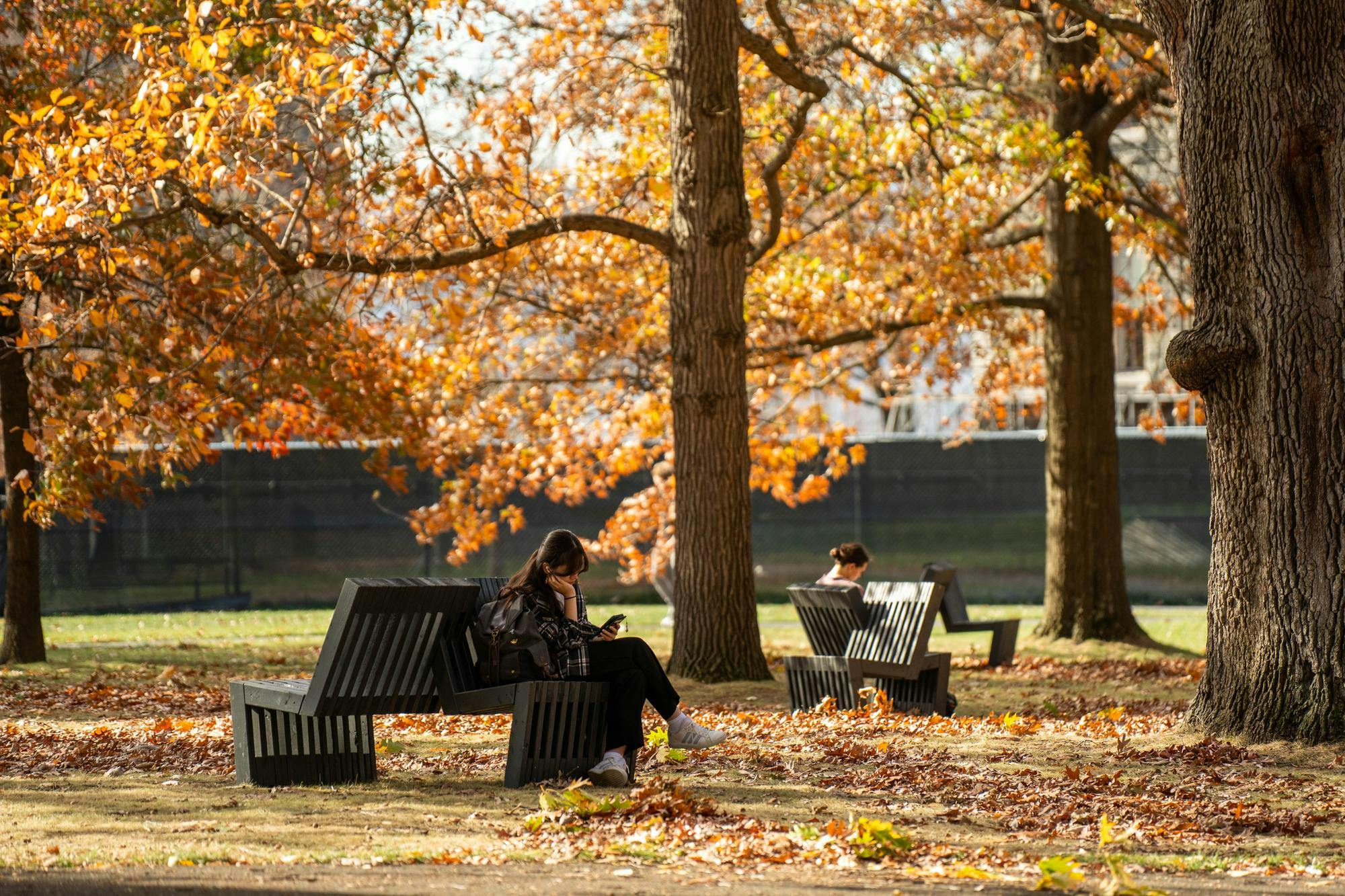
Real Fall: Genuine fall weather ironically only hits after Fall Break. The trees turn a gorgeous shade of reddish-orange, and you can finally break out your Uggs. Even though you are completely swamped with prelim season, you have to stop and appreciate the beauty of Cornell’s campus. At this point, Halloween is just around the corner, and there is a general sense of hope on campus. However, this will last about three weeks at most.
The First Snow: Snow has fallen for the first time on campus! It’s light and fluffy and you pretend that you are actually a fan of cold weather. The end of the semester just begins to creep its way into sight and the snow is an indicator of just that. You convince yourself, “It can’t really get much worse than this.”
The Actual Worst Four and a Half Months of Your Life: It has in fact gotten much worse. The beginning of finals season unleashes the most horrific weather out there. The weather app tells you it is 25 degrees out with a feels-like temperature of 12 degrees, and a wind chill that you can feel through every layer of clothing you have on. The only time you spend outside is going from class to class, bundled head to toe, and it seems as though every person on campus has purchased a Canada Goose parka. This weather genuinely feels never-ending, lasting past finals and well into the spring semester.
Fake Spring: A glimpse of hope appears! The middle of March presents us with three whole 65 to 70-degree days. The sun beats down on the Arts Quad, where the entirety of the student body seems to be gathered. The morale is high as everyone abandons homework and skips class to sunbathe, play spikeball or picnic on Libe Slope.
Winter Part Two: You may ask, “Why is it snowing in April?" Nobody actually knows, though you have to be somewhat appreciative of the fact that the weather is not nearly as bad as it was just a few weeks ago. However, you still have to be careful not to slip on the bridge walking to class, which has conveniently iced over once again.
The Final Stretch … and some Sun: Congratulations! You have made it to the end of the school year. Finals season is just around the corner, and as a parting gift, Ithaca presents you with a little bit of sun. Not too much … but just enough to get you through the final two weeks of exams.
Amina McCain is a sophomore in the College of Arts and Life Sciences. She can be reached at akm267@cornell.edu.