

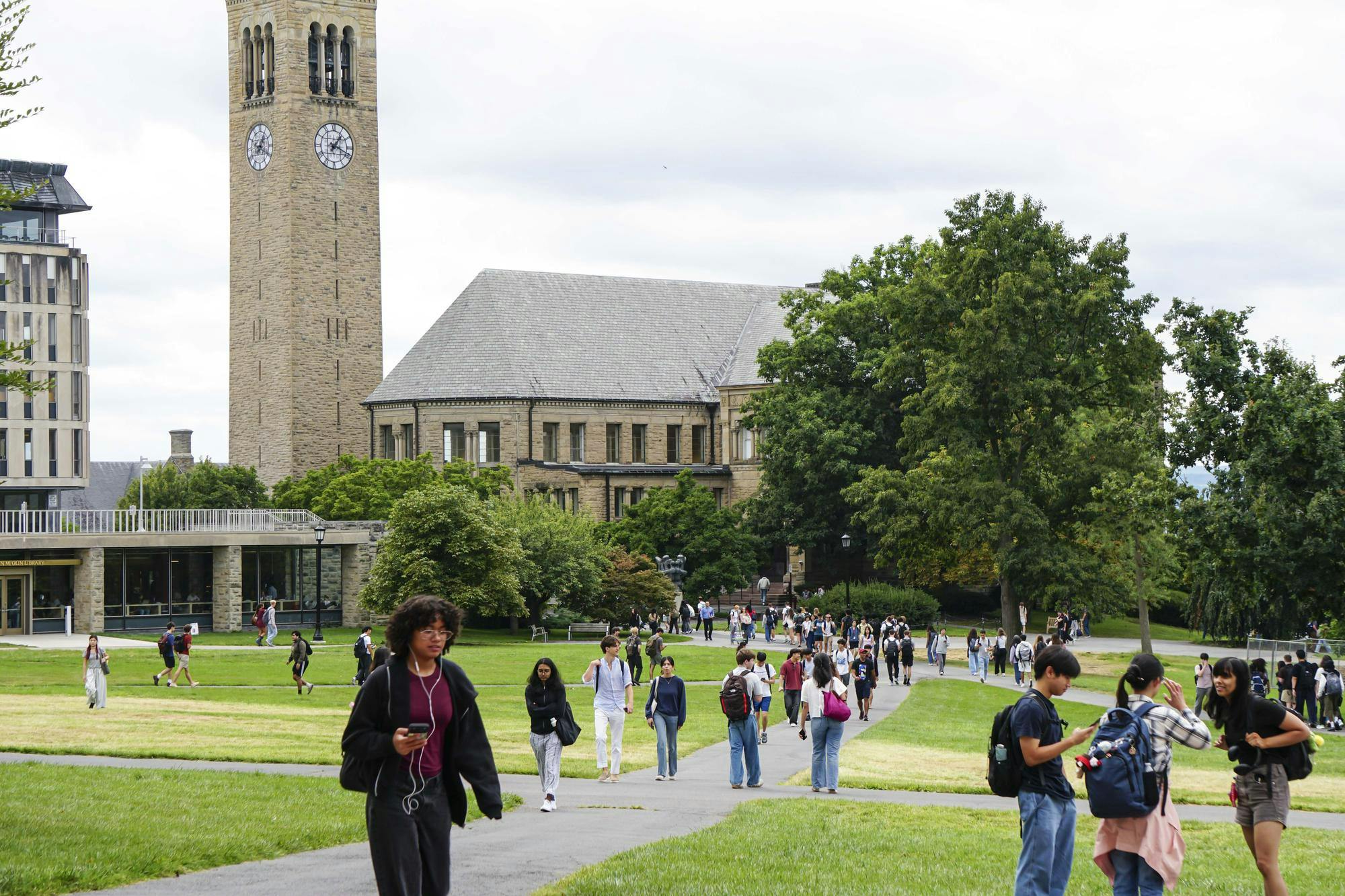
When times get tough at Cornell, academic, social and professional clubs do a lot to keep us moving forward. Whether they serve as a support system, a social outlet or a good distraction from classes, clubs mean a great deal to the student population. At a school where the workload can feel overwhelming, doing something purely because you enjoy it should not feel hard to do.
With more than 1,000 student organizations on campus, Cornell offers students an incredible range of opportunities to explore interests, meet people and build community. In many ways, there really is something for everyone. Yet, the sheer number of clubs does not mean every possible need, interest or type of community has already been covered. There is always room for new spaces, and especially ones that are casual, welcoming and centered around enjoyment rather than pressure.
The argument that Cornell’s campus can feel overly competitive and comparative rings true at times, even in the world of extracurricular activities. There is often an immediate pressure (probably carried over from high school) to join as many clubs as possible. Then, it becomes about joining the ‘best’ clubs. Eventually, the recruitment process begins to feel more selective, formal and intimidating than students might expect from an activity that is supposed to help them find community. This does not apply strictly to professional clubs. This dynamic can appear in a cappella groups, dance groups, performing arts organizations and even the occasional club that feels like it should be open-access. Therefore, I would like to make the case for more fun, casual and open-access clubs at Cornell. Sometimes, students need a place to show up, try something, meet people and enjoy themselves. Here are some clubs that I believe should exist at Cornell.
1. Cornell Sports Watchers Club
For a school with students from so many different cities, states, countries and fan bases, Cornell needs a place where people can come together and watch sports. Not play, commentate, manage or analyze sports in a highly technical way. Just watch them. Yes, Cornell already has clubs related to sports, sports business or broadcasting, but there is still room for a more social, low-pressure space where students can watch games, argue statistics and bond over being a fan. Reserve a few rooms through 25Live, find a couple of willing participants to hook up their laptops and place a large order from Domino’s or Ned’s. Split up the games by sport or team, and you’ve got a club! This club would be especially necessary during major sporting events like the Super Bowl, the Masters, MLB playoffs, the World Cup and every other event that is preferable to watch in a group setting. For students who enjoy these sports and are looking for people to watch them with, a club like this could make Cornell feel a little more like home.
2. Cornell Pottery Club
Pottery is an activity that feels like it should already be everywhere. It is relaxing, creative and exactly the kind of thing Cornell students would partake in if given the chance. I ask you to picture it: pottery on the Slope. Paint and pizza provided. Thursday at 6 p.m. Music playing. I’m there. You’re there. Half the student body is there. Pottery also has the potential to become more than just a fun activity. Students could donate finished pieces to local organizations, sell them for charity or host community-based events. Honestly, pottery goes with everything and considering Cornell students are constantly looking for ways to decompress, a pottery club would offer exactly that.
3. Cornell Casual Debate Club
Cornell students could use a space where students can have productive debates, without needing every conversation to become extremely formal. Cornell Casual Debate Club would be a place for students to debate the calmer questions: What came first, the chicken or the egg? What is the best fast food chain? Is CTB actually worth the wait? The club could also include debates about books, shows, sports, music, food, hobbies and more. But the point would not be to win in the most intense way possible, but to practice conversation, disagreement and persuasion in a setting that feels fun. Casual debate can actually be a very useful skill. It helps people learn how to explain their opinions, listen and find common ground. It gives students who may be nervous about formal debate a way to build confidence, while also creating a space where disagreement feels more low-stakes. It is about learning how to have a conversation with someone who sees the world differently and bridging across those differences.
Ultimately, it is exciting that students can have an interest, gather people around it and form a club. That is one of the best parts of a campus like Cornell. Student organizations help students find the corners of campus where they feel most like themselves.
As Cornell continues to expand its broad and active student organization culture, I hope there is also room to consider what kinds of spaces students still need.
Kaitlyn Bell is a member of the Class of 2028 in the School of Industrial and Labor Relations. She was the lifestyle editor of the 143rd Editorial Board. She can be reached at kbell@cornellsun.com.


