


Grace is like rain; it falls on every person. It does not discriminate. The art is to know when to cup one’s hands and receive its awe-inspiring insights with humility and gratitude.
At a deteriorating historical moment of unjust wars where the death of young girls and boys is celebrated as fulfillment of prophecy and scriptural destiny, where entire civilizations are threatened, some justify their silence with the excuse: ‘it’s complicated!’ They refuse to use the protections afforded by our democratic culture to call out naked injustice. Furthermore, our leaders pander to powerful vested interests and their offspring, who use our institutional pluralism to claim victimhood for feeling unwelcome. Simultaneously, these same individuals deploy tactical resources to silence any voice that speaks out. It is the proverbial case of the tail wagging the dog. Effectively demonstrating the process of descent with the emergence of a new species of humans called invertebrata ethica (ethical invertebrates). It seems reverse evolution in the third millenium is limited to one species — humans!
In this time of darkness, NASA and the crew of Artemus II gave us a gift of what it means to be in a state of grace. They shared experiences that elevated the mind and spirit of those of us who paused to watch and reflect. The majority of humanity had not conceived of the Earth setting or the Earth shining upon another astral body. This is both lyrical and factual. If the Earth can set, then the age of humanity can most assuredly also set. Alternatively, if the Earth can shine, then humanity can also rise to shine upon future generations of life. The Canadian astronaut and Artemus II Mission Specialist, Jeremy Hansen, put it literally and poetically: "The sense I had was this sense of fragility and feeling small, infinitesimally small, but yet this very powerful feeling as a human being, like as a group … I kept seeing the same thing and the same feeling, small and powerless, but yet powerful together.”
All the astronauts described the unity of humanity and all life on Earth. The word ‘individual’ cannot be defined without the existence of ‘community.’ An individual is the least divisible part of a community. For instance, a drop cannot exist without water, and a body of water, like Cayuga Lake, cannot exist without a collection of infinitesimal drops. Similarly, a grain cannot be identified without sand, and the Sahara cannot exist without a collection of small unique grains. The artist and poet William Blake described it concisely in his poem the “Auguries of Innocence”: "To see a World in a Grain of Sand. And a Heaven in a Wild flower. Hold Infinity in the palm of your hand. And Eternity in an hour." These uniquely infinitesimal signs reveal cosmic insights.
As spring is breaking out all around us with the fragrance of flowers, scent of wet soil, sound of birds and percussion of insects — all in a sensual ensemble of sight, smell and song — let us consider the relationship between grace and gift. Ezra Cornell was a Christian Quaker. He must have believed that the grace of life is the gift of knowledge; otherwise, he would not have founded an egalitarian university.
Scholars agree that Christ spoke Aramaic but the New Testament was recorded in Greek. In Christian thought, grace or its Greek equivalent χάρις (charis) precedes gift or χάρισμα (charisma). While I am not Christian, I wish to apply grace to building the gift of a unified voice against injustice, especially towards innocents. Moreover, let us in solidarity express the love of life or biophilia. Not unlike the insights of the Artemus II astronauts who were very vocal about their sense of awe and feeling of love as a direct result of their empirical observations.
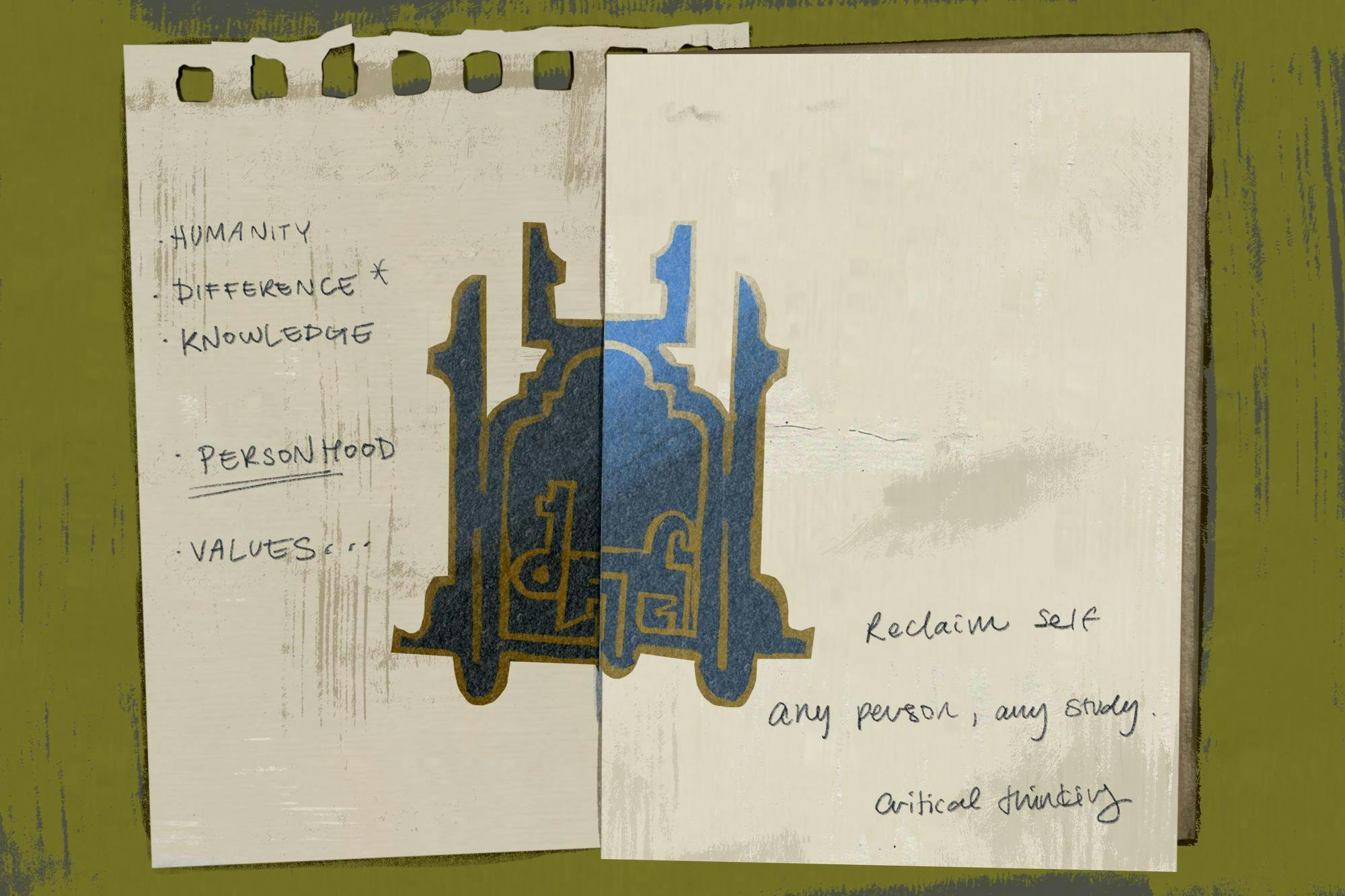
The objective of my columns has been to address undergraduate students, and to show we are not motivated by fear but something even more powerful, resilient, reliable and responsible; namely, the love of life (biophilia). This is achieved by recognizing the gift of our differences in order to construct the architecture of sustainable societies.
This will be my last column. Therefore, I would like to acknowledge The Cornell Daily Sun’s committed editorial board who have facilitated with grace the freedom to explore the gift of insight in very difficult times that may grow increasingly darker as a vacuum of destructive forces continues to gain strength. I am also grateful to President Kotlikoff who has been unwaveringly supportive especially when we disagreed. Thank you, thank you all!
The Cornell Daily Sun is interested in publishing a broad and diverse set of content from the Cornell and greater Ithaca community. We want to hear what you have to say about this topic or any of our pieces. Here are some guidelines on how to submit. And here’s our email: associate-editor@cornellsun.com.

Karim-Aly Kassam is an Opinion Columnist and professor in the Department of Natural Resources and the Environment as well as the American Indian and Indigenous Studies Program. His column Difference Matters recenters critical reflection and environmental justice in campus life at a time when people turn away from the painful truth. He can be reached at profkkassam@cornellsun.com.


