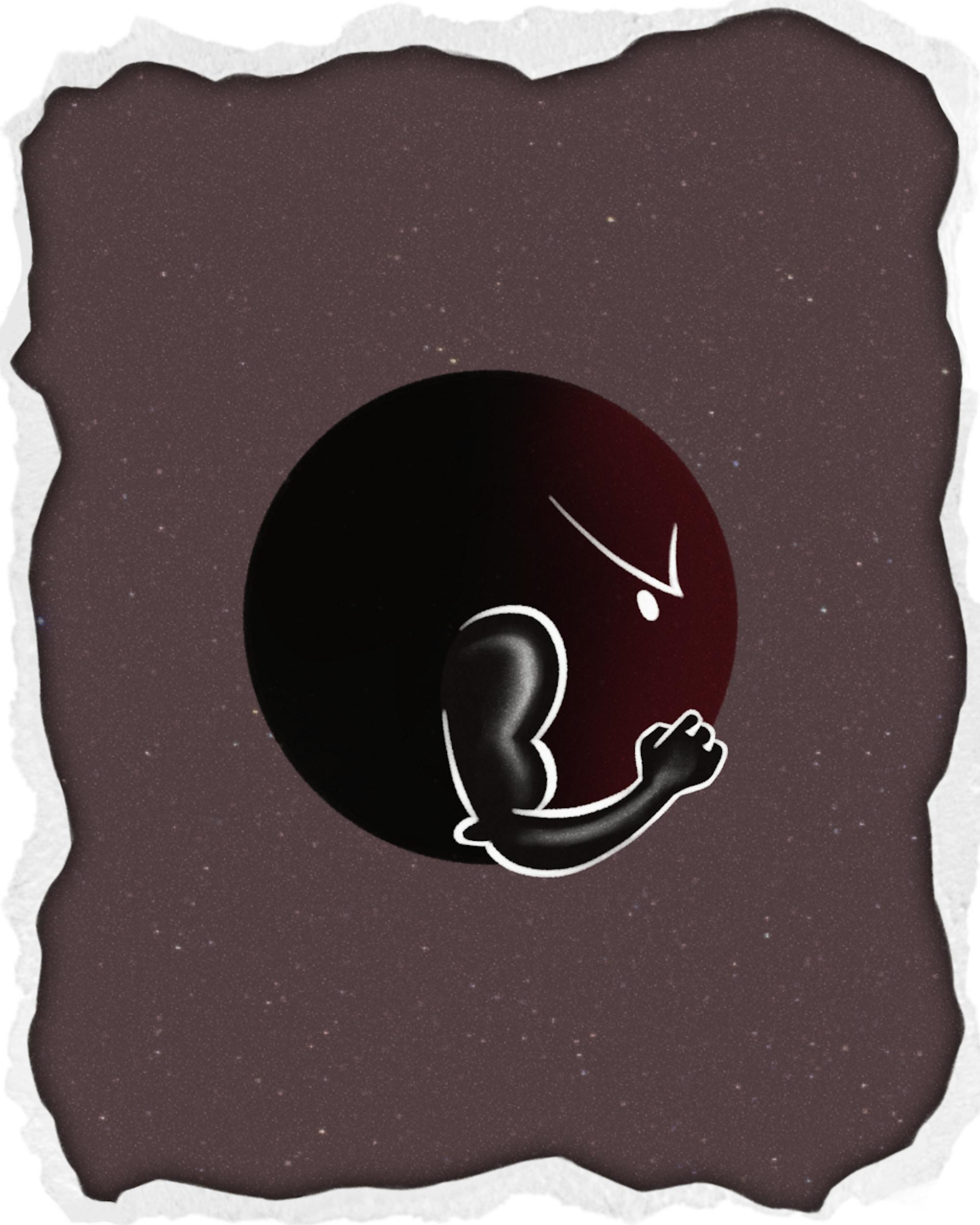
Editor's Note: This is an Eclipse piece, a special publication of two opposing opinions on the same topic. This Eclipse tackles the age-old question: To drink or not to drink? The affirmative position by Wyatt Sell can be read here.
You have everything you need to succeed.
Either you believe in that central statement or you don’t. Either you trust that you have the capability to accomplish what you want out of this life, or you require some form of poison or intoxication just to achieve simple results.
The immediate critique of this position in our society is that many professional and dignified individuals require prescribed medication. My response is that perfectly capable people are overmedicated. But for the sake of simplicity, let’s just focus on recreational substances.
With great effort put into not making this piece religious, I ask the simple question of what the goal of our lives is. The answers of family, community and love persevere. When one is surrounded by the people they love, shielded from crime and disease and studying at university, it then becomes an insult on top a blessing to think that substances would somehow better the experience. A common argument is that one does not need french fries any more than they need a beer or smoke, that we ought to “enjoy our lives”; but there is a difference between, perhaps unhealthy, nourishment and something that fundamentally alters your brain in a way that interferes with joy reception. The existence of dopamine killers like phone scrolling does not erase from the point; two wrongs don’t make a right.
If a person living under a bridge in Chicago chooses to engage in drug use, their use of said substance is not the same as when a Cornell student might use that same substance. Privileged and capable individuals don’t have the excuse of abject poverty or devastation to justify their illicit behavior. If you tell a beautiful woman that you love her and add a “but” to the sentence, then you don’t love her. Think of that woman as life. You’re insulting yourself by saying that you need to change the way your brain works in order to interact with the world in totally normal situations. If you need liquor to survive North Korean prison camps then you’re excused. But a fun event with young people in America?
The defense of the allegedly ‘lesser’ substances like alcohol and marijuana often centers on community and trust building as well as so-called ‘joy’; all of this is an illusion. If one requires poison or numbing in order to achieve trust, joy and community, then what they are achieving is nothing of the sort. It’s like drinking coffee, cracking knuckles and smoking cigarettes — the action wears a mask of elevation when in actuality it ends up being a habit that just returns people to their status quo (or worse). True trust and community requires some level of work, that’s what gives it value. Loosening up after a beer does not erase the fact that love and trust take time. In the same way that alcohol takes away the essence of a flower to make perfume, so too will it take away a person’s essence and leave them hollow; making it impossible to enjoy life for what it is.
One of the worst arguments, in particular for marijuana, is that it’s 'a different vibration,' but the same line could be said for hell. Hell is a different vibration. To put it more lightly, a single thought, string of words, piece of music or totally extraneous event can alter one’s vibration immensely. Nothing lowers your frequency (or mood, for the verbally cautious) more than thinking about your next score for what is inevitably a majority sober life regardless.
It’s true that our society lacks third spaces and bonding beyond social media, but why must the solution be to numb oneself? When faced with extremes, one must chart their own path.
You first need to agree to the principal point that doing substances makes you lose some amount of control. The frightening question is who or what fills in that gap? It’s certainly not the highest source.
The atheists may roll their eyes at the thought, but the highest source (at least rhetorically) need not mean God. The highest source could mean you at the peak of your potential. If you sincerely believe that substances bring you closer to your highest potential, then this argument is not (yet) for you.
Imagine writing a piece of music and presenting it to your friend, but then that friend needs a smoke to enjoy it. Imagine seeing someone after years without contact and them needing a drink to speak to you. The answer I get time and time again is that people don’t ‘need’ these doses and could stop if needed. But our lives are not defined by ‘what if,’ they are defined by our actions. Humanity’s wins are not always defined by supernatural Einstein capability — they are defined by action. The difficulty with sobriety is that the reward will not be such an obvious outcome, but rather an inward peace; a knowing of real fulfillment in life as it comes to you, not in numbness and false elixirs.

Leo Glasgow '26 is an Opinion Columnist and a student in the College of Arts & Sciences. The Government and China & Asia-Pacific Studies double major writes his truth about domestic and international policy as well as problems within the soul of our nation and the world. He can be reached at lglasgow@cornellsun.com