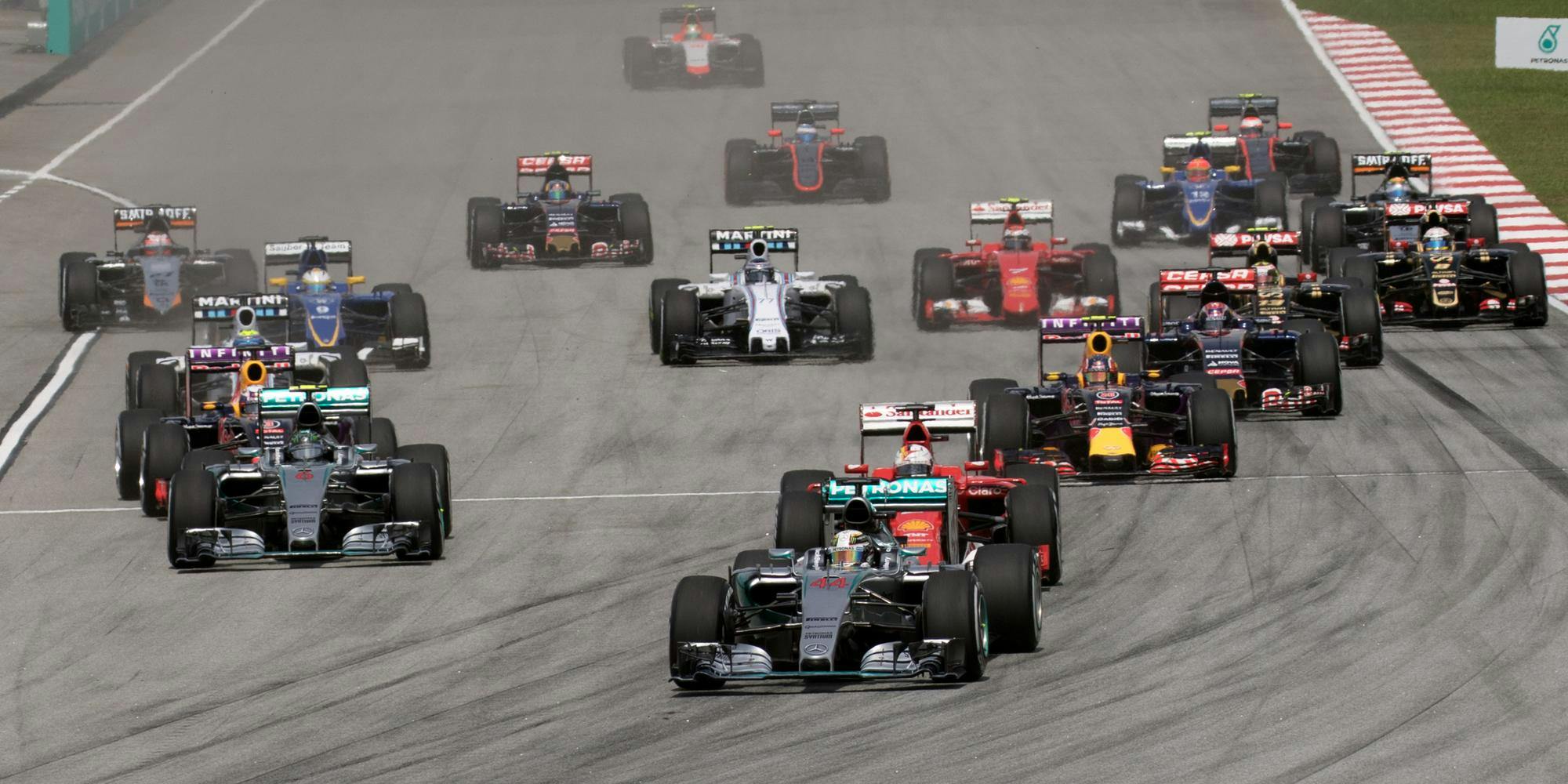
It’s lights out, and away we go!
Melbourne, Australia, hosted the first race of the 2026 Formula 1 Season on March 8. On the opposite side of the world, millions of Americans spent their Saturday night watching. With coverage on its new American home, AppleTV, we watched as two United-States-based teams left the starting line in Haas and Cadillac. During the race, British driver George Russell took the win as hometown favorite Oscar Piastri crashed before he could even get to the starting line. 10 years ago, however, the concept of an American spending their weekend tuning into the race festivities was unheard of. The American sports audience did not suddenly start caring about tire degradation and chassis aerodynamics; rather, F1 has adapted to how Americans enjoy sports, through personalities, storylines and entertainment.
American motorsports have struggled due to their lack of a nationwide appeal. If you’re from the South, then you’re all too familiar with NASCAR, a product that does not have the most diverse appeal. IndyCar is the American equivalent of open-wheel racing, with the only cultural impact of the sport being the Indianapolis 500's bricks. An untapped market of hundreds of millions of Americans exists without a motorsport that excites and is inclusive. The rise of Formula 1 in the U.S. was a calculated approach, with many moving parts designed to enthrall spectators.
The plan began with Liberty Media's acquisition of Formula 1’s media rights. Upon doing so, the Netflix show, Drive to Survive, was developed. Formula 1 drivers went from mysterious, helmeted figures to being thrust into the spotlight with their characters on full display. While drivers such as Max Verstappen and Sebastian Vettel criticize the show for its dramatics, icons such as Alex Albon, Daniel Ricciardo and Carlos Sainz Jr. have all exploded in popularity due to their antics and personalities being broadcast.
The next step of the American plan is to get free marketing for the sport by turning Formula 1 merchandise into regular fashion. Retail giants such as PacSun and Hollister are now littered with Formula 1 merchandise. McLaren, Red Bull and Williams are not just the names of Formula 1 teams, they have also become some of the most prominent licenses in the clothing industry. People who have never even watched a race act as walking billboards, wearing a McLaren shirt despite not knowing that the team in Papaya orange won the drivers' and constructors' championships last year.
TV shows and fashion can draw in an audience to the race weekend; now, Formula 1 needs them to stay tuned in. The American investment kicked into high gear in 2016, with the introduction of Haas as an American-based constructor. In the years since, Indiana-based Cadillac has joined as a constructor, three American races dot the yearly calendar and one (albeit terrible) American driver has graced the grid. In addition to bringing Formula 1 to the U.S., the broadcast of the race weekend has also changed.
A Formula 1 race weekend comprises three practice sessions, the qualifying knockout session and the Grand Prix itself. Each of these events is broadcast worldwide, showcasing world-class racing most of the time. During the broadcast, the audience may be privy to the drama over the team radio communication systems, hearing about season-long storylines regarding the teams and drivers or seeing the celebrities and WAGs (wives and girlfriends) that grace the paddock. The coverage away from the track, focusing on personality, story and drama, seems to grow every year, especially since the integration of the American audience.
The shift of Formula 1 as a brand to bring the U.S. into the fold showcases American sports culture, which values entertainment and storytelling. Only in the U.S. will you find halftime shows, three-minute-long advertisement breaks and reality shows detailing the drama of an American sports team. The way to appeal to the widest audience is not to market the sport on the purity of the game, but more so on the spectacle. The world’s most popular sport, soccer, is a 90-minute, lower-scoring showcase of attrition and technique, which is subsequently called ‘boring’ by many Americans in favor of the football gridiron, high-flying basketball and their collegiate equivalents.
American sports are higher scoring, value highlight-reel plays and their brand is just as big off the field or court as it is on. If Formula 1 is to be a sport integrated into the American sports culture, it must be open to a shift toward what the country values in its sports. This change is not a welcome one to much of the world, or older fans of the motorsport in the States. The mystique of Formula 1, its nature as a high-class sport where the sponsors are luxury watches and the drivers are Monegasque, is being exchanged for mainstream attention. The dramatization of the season and the sport's subsequent wider appeal pose the risk of overshadowing the racing itself.
The qualms of the old guard will be had for a long time. Yet, the sport of Formula 1 maintains its essence. The racecraft has become more precise, technologically-advanced and faster. The sport itself has not changed either. Still, each weekend, the world watches on as 22 drivers line up on the grid to battle for the title of World Drivers' and Constructors' Champions. The packaging of these races may be different, but the sport is more lucrative and popular, people are more invested in the daily lives of these drivers than ever before and people feel a connection to their favorite driver beyond just who is the greatest on race day. Midfield and backmarker drivers are no longer just cars in the background; they are sometimes people’s favorite person in the lineup. The American audience values a story and its characters. The shift in Formula 1’s presentation, towards the inclusion of the U.S., is a welcome one to all those who want the sport to continue racing. Formula 1 has not lost its spark; it has merely learned how to market a story.
Brayden Rogers is a member of the Class of 2028 in the College of Arts and Sciences. He is a columnist for the Arts & Culture department and can be reached at brogers@cornellsun.com.