How do we choose to remember tragedy? Are we even capable of it when time has passed and the people who lived through it are gone? Every year on April 24, Armenians all over the world gather to remember the tragedy that took place in the year 1915, when the Ottoman government issued orders to carry out the mass deportations and killings of its Armenian citizens. In every Armenian there is a desire to remember and convey the events of this tragedy, one which the current Turkish government denies to this day.
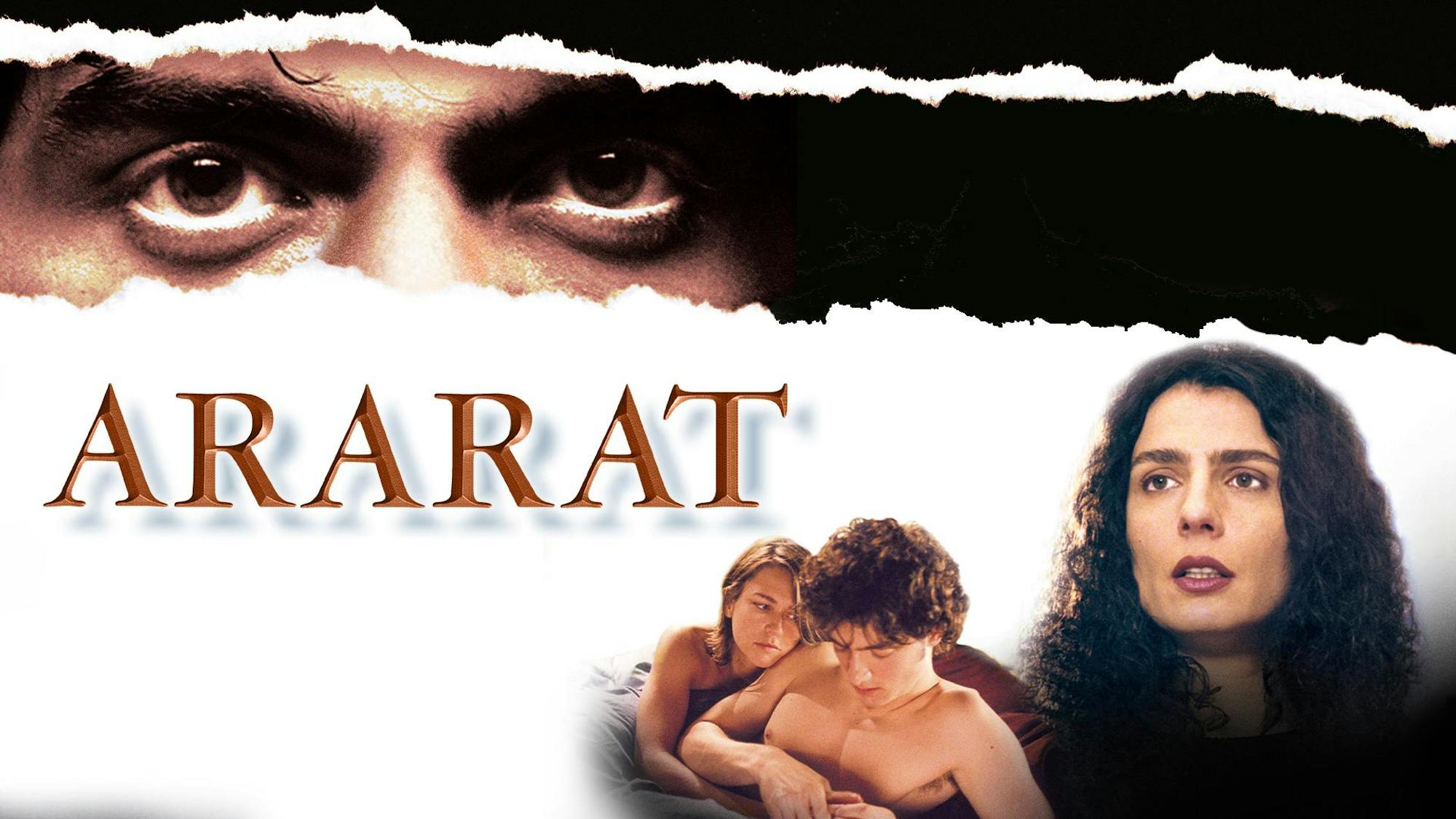
In the 2002 film Ararat, director Atom Egoyan brings together a cast of characters that are all interwoven around the creation of the metafictional film Ararat, both the title of the movie in question and the title of the movie in which it is featured.
All of these characters come together to tell the story of the Armenian people that — some 85 years later — are still trying to make sense of what happened during the Armenian Genocide, a tragedy that claimed the lives of 1.5 million people. Edward Saroyan, the fictional film director, grapples with the story that his mother told him of the Armenian Genocide. When she and her family were forced from their home, she took a single pomegranate with her and ate a seed a day, pretending it was a full meal. Now an old man, Saroyan carries pomegranate seeds with him everywhere as his ‘luck.’ Then, there is young Raffi, haunted by the ‘ghost’ of his father, who had died while attempting to kill a Turkish diplomat 15 years prior. As a result, his son is forever stuck, unable to understand what pushed his father to the edge. Ali is another character, a half Turkish actor who does not fully believe that the events of 1915 constituted a Genocide. There are even short-lived moments of the artist Arshile Gorky in his art studio, attempting to live his life after the genocide. And we are also introduced to Ani, Raffi’s mother and an art historian who is brought in as a consultant on the film-within-the-film. All of these characters overlap on the sets of the film, dealing with their own ordeals and concerns in modern day Canada but also working to bring to life the story of the 1915 Defense of Van against the Ottoman forces.
The film within Ararat has many horrible moments of torture, death and grief. Two instances stood out to me in particular. The first was when one of the Armenian boys is sent to deliver a message to American diplomats about the assault on the Armenian community at Van. The boy is captured, tortured and killed. His bloodstained and damaged pocket watch is then returned to his father, who walks, heartbroken, out of the fortifications and opens fire on the Ottoman forces. A father unable to live after the murder of his son chooses certain death over life, and he is struck down.
The second, even more gut-wrenching scene is the narrated account of a German witness who watched Armenian women be forced to dance in a circle as they were whipped, forced to undress and then eventually covered in kerosene and burned alive. Ararat may focus on the modern remembrance of the genocide, but by adding the creation of a film that focuses on those events, it forces the audience to deal viscerally with what was actually committed against the Armenian people, not just the modern day struggle to remember and understand.
One of the main aspects of the film-within-a-film is that the creators choose to directly center it around one boy — whom they decide to identify as Arshile Gorky, a very famous Armenian-American modernist painter. His most famous artwork is of him and his mother, with her hands first drawn in detail and later covered in white paint, a metaphor for the mother’s touch and gentleness he will never feel again after her death by starvation in 1919. Though Gorky’s role in the fictional movie is embellished, it reminds us just how easily he could have been that boy.
What does it matter if the little boy was not Arshile Gorky? Of the 1.5 million people killed, there may have been 1.5 million such Arshile Gorkys. We will never know; they all lie in unmarked and desecrated mass graves. None of them will write, paint or live to old age. What does it matter if you exchange one name for another? They are all part of the same tragedy. Gorky did not die during the death marches or the massacres, but a part of him did not live on. His art was forever inspired by what he had seen. As was his suicide. The year 1915 did not claim Gorky’s life, but it inspired his death. When he killed himself 33 years later, many believed it was because of what he had experienced as a child.
What Ararat hopes to convey is not just a story of a few characters but of a nation that cannot and will not forget. It grapples with understanding what happened to us all those years ago. As Edward Saroyan says, “Do you know what still causes so much pain? It’s not the people we lost or the land. It’s to know that we could be so hated.” In the end, the Armenians are an ancient civilization wracked by a modern tragedy. How does one reconcile beautiful dances and gentle music with the burnings of innocent people and the desecration of your ancient homeland?
So, this April as Armenian communities all over the world host vigils for the victims that were massacred during the Genocide, I hope you’ll think about this: When asked, “Why do the Armenians always talk about their genocide? It’s been 100 years.” I will respond with a quote by Ruben Vardanyan: "It is not death that is frightening. What is truly frightening is indifference — a state that enters us quietly and gradually, like radiation, and destroys us from within."

Lusine Boyadzhyan is a member of the Class of 2027 in the College of Arts and Sciences. She is a staff writer for the Arts & Culture department and can be reached at lboyadzhyan@cornellsun.com.