President Michael Kotlikoff issued a formal response to the Fall 2025 Student Assembly referendum on Feb. 2, acknowledging concerns but failing to implement any changes.
The referendum, communicated on Dec. 18, called for the Student Code of Conduct to apply to all Cornell community members and for the University’s judicial system to operate separately from administration.
In his response, Kotlikoff thanked the Assembly and wrote to “provide clarification” on the Student Code of Conduct’s history and revision process.
“Under federal and state law, the University — not individual constituencies or governance bodies — bears responsibility for adopting and administering policies necessary to provide a safe and appropriate educational environment,” Kotlikoff wrote.
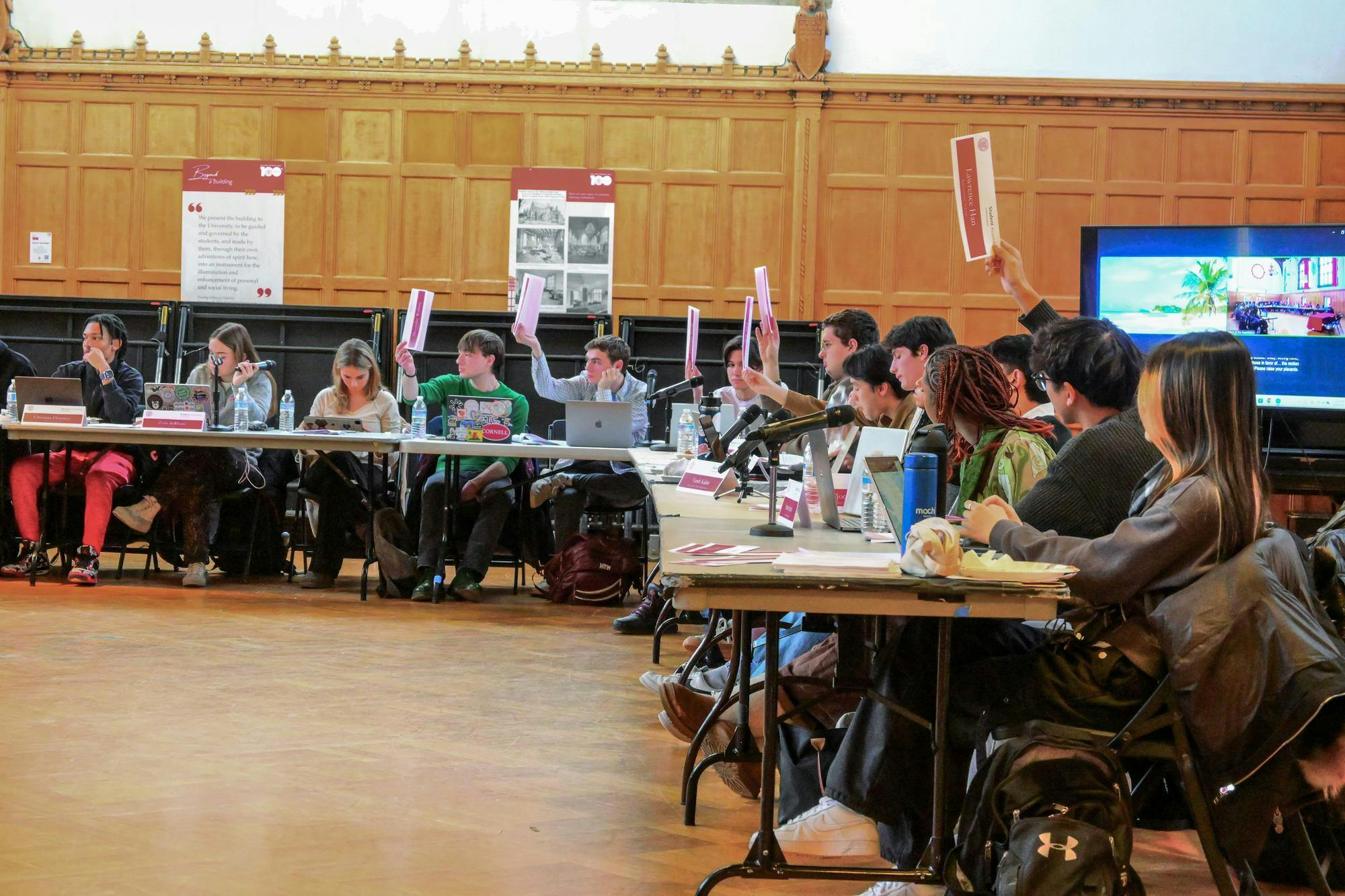
Student Assembly referendums are proposed to the Assembly when at least 3% of the undergraduate body signs on, in order to “determine community opinion regarding matters of student concern,” according to the Assembly charter.
The referendum, consisting of two yes/no questions, was met with strong support from student voters last semester, with over 90% of votes cast in favor of both questions, representing around 20% of the undergraduate body.
Question one read: “Prior to 2021, conduct was overseen by the Judicial Administrator, an office independent of Cornell University’s central administration. It is now overseen by the Office of Student Conduct and Community Standards (OSCCS). Should Cornell’s judicial system be independent of the University’s administration?”
This question followed concerns regarding the administration’s alleged overuse of temporary suspensions and subsequent delays in the judicial process for student protestors.
Question two read: “As a result of the 1969 Willard Straight Hall Takeover, the conduct of students, faculty, and staff was collectively governed under the Campus Code of Conduct. In 2021, the Student Code of Conduct replaced the Campus Code. Should Cornell University return to a community-wide Campus Code of Conduct?”
In 2021, the Campus Code of Conduct — which applied to all members of Cornell’s community — was replaced with the Student Code of Conduct. The replacement also controversially switched the authority and administration of the Code from the shared governance body, the University Assembly, to Ryan Lombardi, vice president of student and campus life.
In August, Lombardi initiated a formal review of the Student Code of Conduct, establishing a Codes and Procedures Revision Committee. Assemblies voiced concerns about members of the committee being appointed rather than elected.
In his formal response, Kotlikoff acknowledged the benefit of “broad participation” in the review process, but explained that “altering the review would violate the process embedded in the Code and delay the implementation of necessary changes.”
Kotlikoff also clarified this timeline, explaining that “the University Assembly asked the administration to lead the code revision” after two years of discussions and little progress by the U.A.
He acknowledged concerns about the Code applying only to students, writing that “the creation of a student‑specific code was intended to ensure clarity, consistency, and procedural appropriateness for student conduct matters.”
Kotlikoff did not explicitly acknowledge the first question, concerned with Cornell’s judicial system being run by University administration, in his response.
“We appreciate the continued engagement of the Student Assembly in matters of student conduct and campus climate,” Kotlikoff wrote. “The [Student Code of Conduct] was created through extensive consultation, and its review and revision continue to rely on input from across the community within the framework established by the Board of Trustees.”
Several listening sessions took place throughout the Fall 2025 and Spring 2026 semesters. Now, an open public comment period allows community members to voice their opinions on proposed revisions. Public comment opened Monday — announced in a University-wide email — and will remain open through April 20.
“We look forward to your engagement in the listening sessions and public comment phase of the review as we collectively work to ensure a fair, effective, and educational conduct system for all students,” Kotlikoff wrote.

Kate Turk is a member of the Class of 2027 in the College of Arts and Sciences. She is the assistant managing editor of the 144th board and was an assistant news editor for the 143rd Editorial Board. She can be reached at kturk@cornellsun.com.