

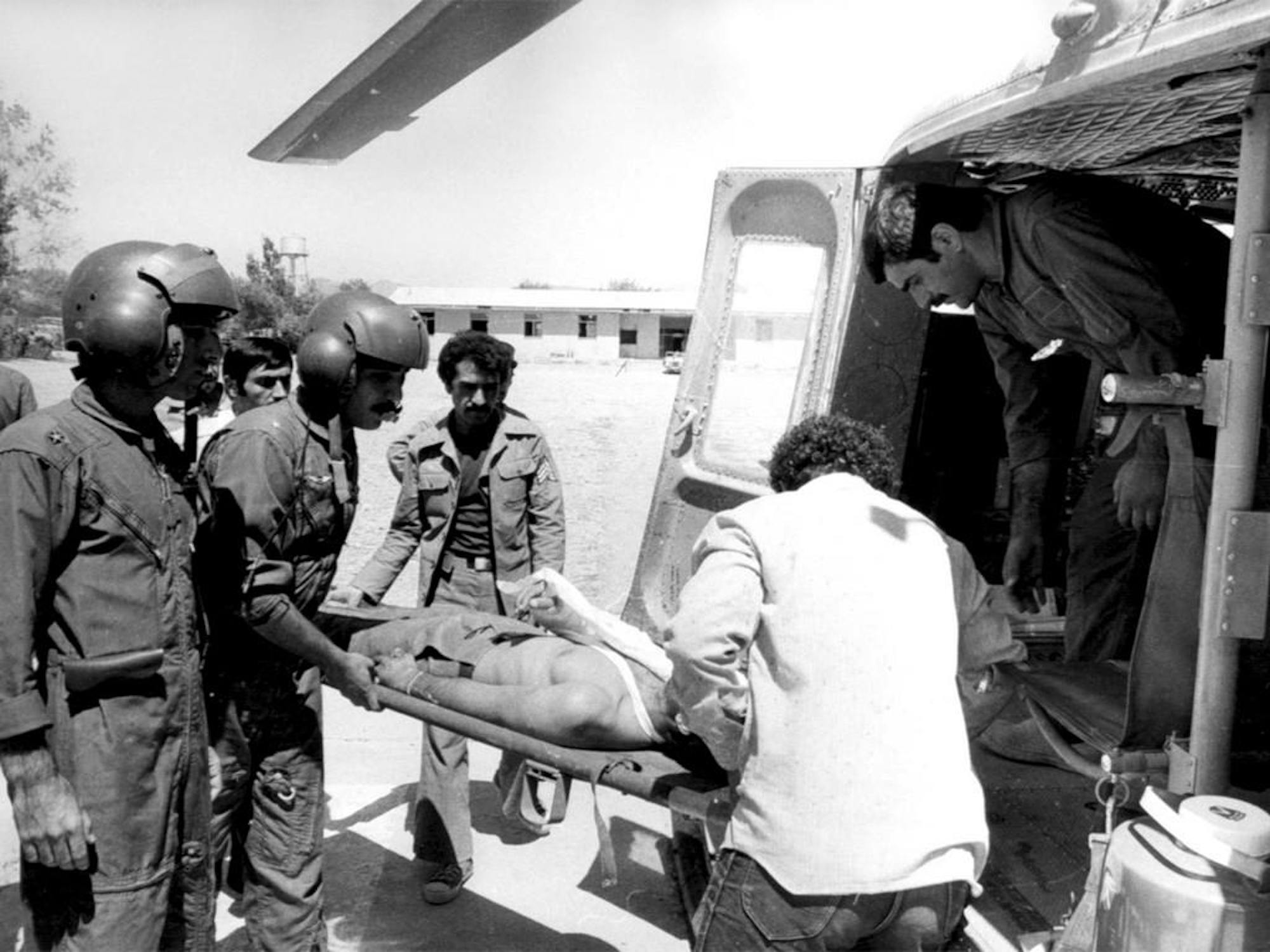
Most current college students weren’t (politically) conscious in 2003 when we went to war with Saddam Hussein and Iraq. As a two-year-old, I certainly didn’t have an opinion at the time. The United States overthrew Saddam’s regime in December 2003. But building a nation is much harder than knocking one down. We did not withdraw from Iraq until 2011. In those eight years, 4,493 American soldiers died. Tens of thousands more were injured physically or mentally, often both.
The steepest costs of war were forced upon the Iraqi people themselves, those for whom we sought “a better life.” Civilian casualties are notoriously difficult to calculate. However, a 2013 study estimated that over 400,000 excess deaths occurred from 2003 to 2011 in Iraq. More than 60% of these deaths were directly attributable to violence, the rest were associated with war-related issues such as the collapse of Iraqi civil infrastructure.
In truth, Hussein was a brutal dictator with no concern for the rule of law, an authoritarian who could not tolerate dissent and a thief who used his position as head of state to enrich himself and his family at the expense of the people. Like many nations, Iraq deserved better than the leader they got. But it’s naive to believe that’s why we killed him.
Hussein’s ruthlessness was not a problem when we supported his war of aggression against Iran. His use of chemical weapons to kill Iranians was no less reprehensible than his use of them to kill Kurds. But we allowed the former and used the latter to justify invading a sovereign nation without U.N. approval.
In the lead-up to the Iraq war, domestic dissent was marginalized: conflated with support for Hussein, or an unpatriotic lack of support for the troops. International allies who cautioned us against rash action were dismissed. Consent for the Iraq invasion was successfully manufactured so that, in 2003, 72% of Americans supported the war. Fast forward to 2021: With two decades of hindsight, millions of shattered lives and a trillion-dollar bill to taxpayers, 63% of Americans said the war with Iraq wasn’t worth fighting.
As the old saying goes, “Fool me once, shame on you. Fool me two times, you won’t fool me again.” The American people clearly remember Iraq and Afghanistan as we are dragged into war with their neighbor: only 44% support military action in Iran.
Obviously, there are differences between Iraq and Iran. For example, there is reason to believe subjugating Iran would be much more difficult. Iran is almost four times larger than Iraq, with 40 million more people. In addition, recent technological advances give Iran the ability to selectively constrict shipping through the strait of Hormuz with unmanned surface vessels and to target regional infrastructure with relatively cheap and abundant Shahed drones. This is the kind of asymmetric warfare that America struggles to counter: Consider Operation Rough Rider against the Houthis for another recent example. This means rising oil and gas prices, rising prices for shipped goods (which are inevitably passed on to the consumer) and rising food insecurity for nations which rely on the fertilizer that goes through the Strait to feed their people.
But there are also a frightening number of similarities. War with Iran will not serve America’s interests, but will further destabilize the region. This is because, like in Iraq, bombing a people or their vital infrastructure does not free them; it kills them.
We will kill people with families and professions, beloved pets and least-favorite foods. Would it surprise anyone if this kind of pain would radicalize young men and women with a long memory? Would it not radicalize ours, and make them dangerous? Prepare to hear the term “collateral damage,” as we did during the decimation of Gaza, once the Trump administration can no longer deny attacking an Iranian children’s school. How many kids has Pete “Maximum Lethality” Hegseth killed so far? How many to go?
We have now begun hostilities with Iran twice while feigning diplomatic engagement. But we have the hubris to say they are the ones incapable of diplomacy. Constitutionally this war is even worse than Iraq because it lacks any congressional authorization. Article 1 explicitly gives the power to declare war to Congress, not the President. This power was deliberately vested in the legislative branch because, as James Madison said, “the Executive is the branch of power most interested in war, and most prone to it.” Trump did not even care to make the case for this war to the American people. Our consent, our reasoned opinions and humanitarian concerns were all unnecessary to the smooth functioning of the war machine.
For some Trump voters, the Iran war came as an unwelcome surprise, likely because Trump likes to tell voters he’s anti-war. Trump called the Iraq war a “big, fat mistake” when debating Jeb Bush in 2016, asserting that “we should have never been in Iraq” because it “destabilized the Middle East.” Trump's willingness to openly disapprove of the Iraq war as a Republican candidate energized America-first voters tired of unending wars abroad. During the 2024 election, Trump campaigned on a simple promise that resonated with voters: “No new wars.” He broke that promise.
If America still has a heart to feel, a mind to think or a will to be ruled by the people — instead of a small group of warmongers — there must be swift and unmistakable political consequences. Such a project requires its own coalition of the willing. So, if this is your first forever war and you’re upset and overwhelmed, welcome. I share your disgust. If you voted for Trump because he promised to end wars, not start them, welcome. I respect your disdain for needless death. If you are an older reader who knew the Iraq war was a mistake before anyone else did; or even if you supported the Iraq war and have come to regret it, welcome. We must work together to stop this: my first forever war.
The Sun is interested in publishing a broad and diverse set of content from the Cornell and greater Ithaca community. We want to hear what you have to say about this topic or any of our pieces. Here are some guidelines on how to submit. And here’s our email: opinion-editor@cornellsun.com.
Liam Harney is a second-year student at Cornell Law School. His column Objection! discusses contemporary legal and political issues through a critical lens. He spent last summer working at the Louisiana Capital Assistance Center in New Orleans and will be spending next summer interning at the Legal Aid Society’s Criminal Appeals Division in New York City. He can be reached at ldh55@cornell.edu.


