


The rise in extremist rhetoric facing U.S. politics today shouldn’t come as a shock to anyone. We saw during Donald Trump’s first term, the general exacerbation of harmful speech displayed for the world to see. It's how he garnered attention, how Trump won the vote.
How that speech is employed, by whom and what its effects are, is what should interest us the most. As George Orwell warned, “political language is designed to make lies sound truthful and murder respectable, and to give an appearance of solidity to pure wind.”
The majority of the GOP has rallied behind one candidate and one message for the past eight years. Successive branches of political speech have festered in the media to compliment the rising demand for increasingly radical ideas. Figures like Nick Fuentes, Candace Owens and Andrew Tate provided the aggrieved consumer, sick of the ‘wokeness’ in the media, with these outlets of radicalized speech. It is here that we have fallen victim to a certain kind of rhetorical price discrimination.
Take Apple, the smartphone company, and look at its recent flagship line up. The iPhone 17 Pro Max — sold at its highest storage capacity — retails for $1,999 before tax. The iPhone 17 sits at $799. More than a 150% markup, in which the latter seems more financially digestible when placed side by side to the former. This is what economists call price discrimination.
Corporations will market and price a lineup of similar products with the same fundamental functions at staggeringly different prices. The variety of prices makes the consumer attracted to the most cost-benefitted product. The base iPhone 17, hailed by tech reviewers as the best option, was the most sold of the lineup. I’ve fallen victim to this ploy several times and walked away considerably poorer and felt utterly content with my decision. That feeling of earned satisfaction, like your iPhone and its pricing, is manufactured.
This is what political speech looks like in today's landscape. You have profanous, aggravating and insulting speech about African Americans from commentator Nick Fuentes that, in contrast, civilizes Donald Trump’s speech toward migrants. The way Trump speaks to women of the press is mellow in comparison to Andrew Tate’s conduct toward his female co-podcasters.
Trump sells the ‘mass-market’ version of speech that sounds normal or acceptable in comparison to figures like Fuentes, who sell the ‘premium’ version of speech that says the heinous parts out loud. Both versions stem from prejudice and self-glorification — same product, different packaging. The effect is that extremist ideas get normalized before people realize what they’ve bought into. Hence, what you’re really consuming is a movement for white Christian nationalism, deeply embedded in racial superiority that is strategically veiled within Trump’s messaging. As others do the dirty work for him — spreading a racist creed — Trump sits as the beneficiary of MAGA’s rhetorical dividends.
So, Trump needs to maintain his perfectly priced position. He must continue to package and sell the product of mediocre civility in a world of loud brutality. In doing so, he condones and incentivizes the radicalization of speech, a political strategy to overwhelm the system and maintain his agenda protected.
This manipulated political capital is precious in the theatre of MAGA rhetoric. The media pushes MAGA’s message through differing ranges of severity. By these varying degrees of extremism (fundamentally disseminating the same product), they deflect responsibility from Trump if things go awry. The second Trump crosses this line of civility, like posting a video of the Obamas depicted as apes — in which he becomes too overtly similar to his extremist counterparts — people no longer buy the product. In a panic, the video is quickly taken down.
MAGA preaches their gospel to a naive consumer, eager to buy into a campaign that resembles the dark, extremist videos they watch under their covers at night. Yet, in front of the world, a smile and an oscar-winning performance of civility is displayed to civilize the message and the voter who consumes it. You don’t feel wrong, you can't be terrible, you aren’t falling on the wrong side of history if the message is promoted and supported by a sitting president — the city upon a hill of pure garbage.
Victor Kempler, a philologist who analyzed everyday Nazi speech observed, “Words can be like tiny doses of arsenic: they are swallowed unnoticed, appear to have no effect, and then after a little time the toxic reaction sets in after all.” It is as such that MAGA speech becomes so pervasive, seeping a distorted reality into the mind of American morality and those willing to listen. A reality in which the shock threshold is lowered and hate floods in.
As a people we can only take so much of this rhetoric. But, before we are fatigued by its blatant hate, we’re sold a shiner, newer, ‘better priced’ idea of civility. The most dangerous political speech in America right now is not the kind that announces itself as extreme. It’s the kind that teaches the audience to stop noticing when the price keeps going up.
The Sun is interested in publishing a broad and diverse set of content from the Cornell and greater Ithaca community. We want to hear what you have to say about this topic or any of our pieces. Here are some guidelines on how to submit. And here’s our email: opinion-editor@cornellsun.com.

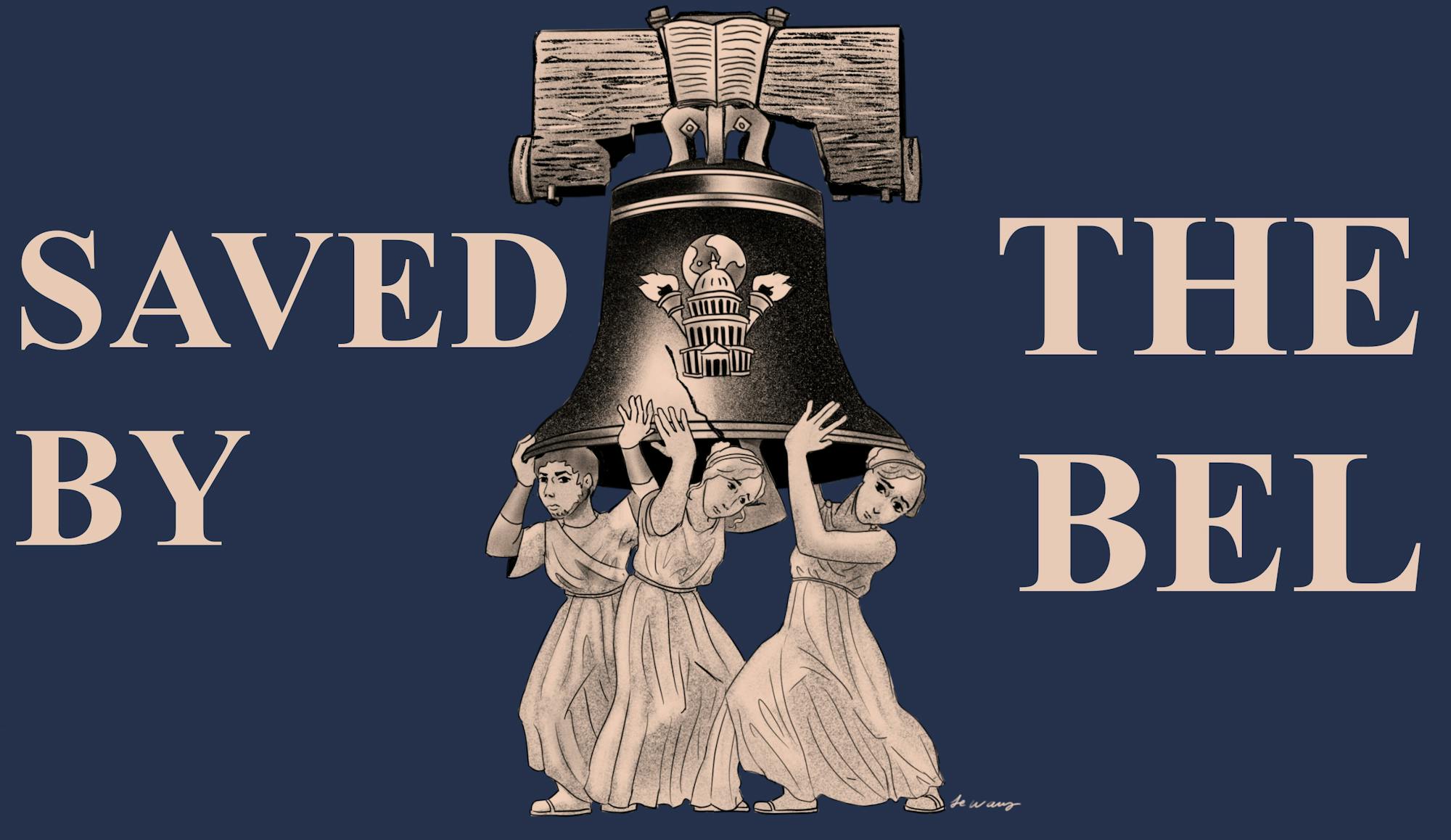
Adrian Belmonte '28 is an Opinion Columnist studying Government in the College of Arts & Sciences. Hailing from D.C. and Spain, his fortnightly column Saved By The Bel has a voice as cosmopolitan as it is candid. Belmonte takes on politics and media with clarity and a touch of wit. He can be reached at abelmonte@cornellsun.com.


