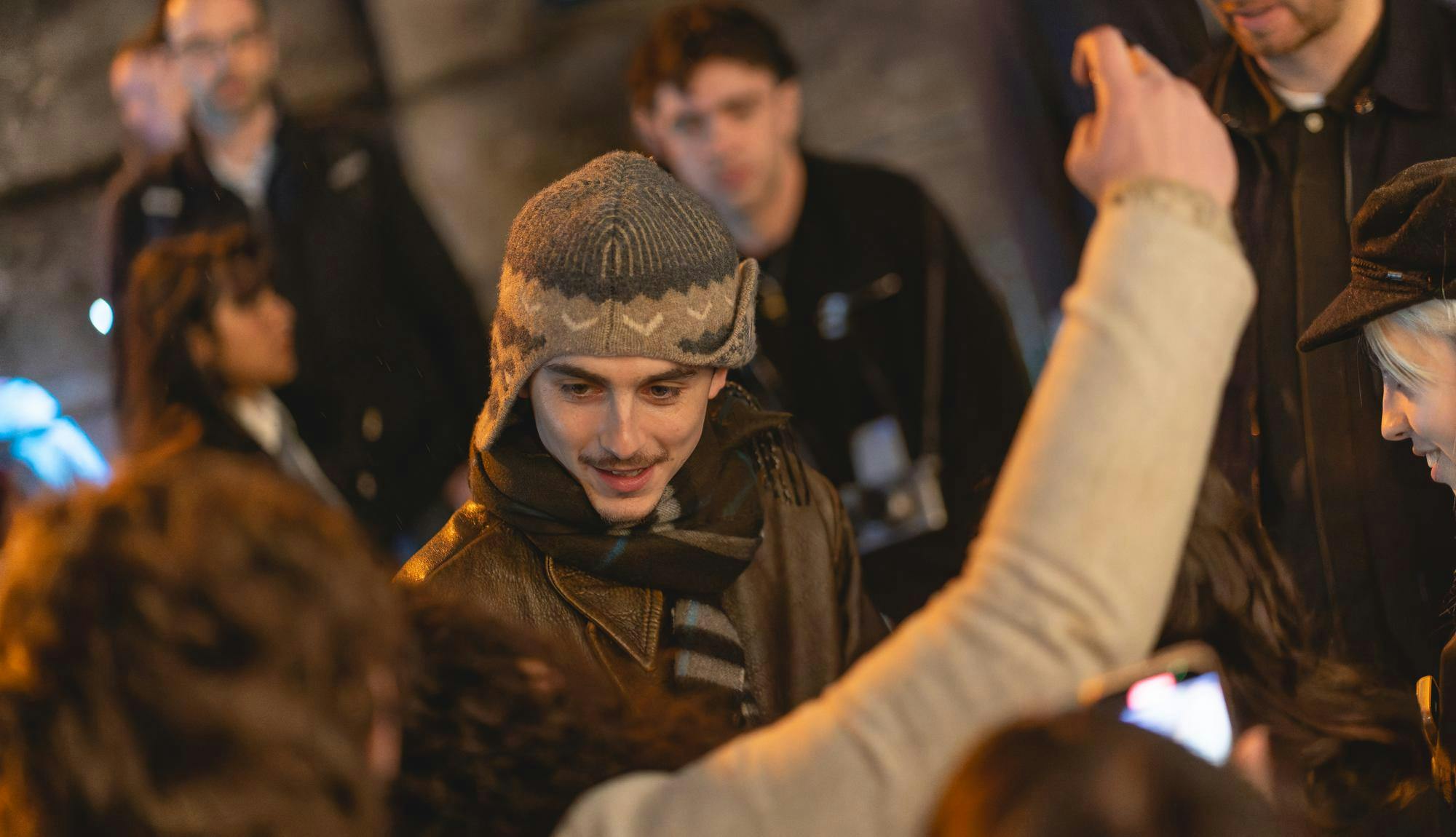
Last week, four-time Academy Award nominee Timothée Chalamet — who has publicly pledged to be remembered as “one of the greats” — broke from the centuries-old precedent of interdisciplinary artistic solidarity. In a widely circulated snippet from his conversation at a CNN and Variety Town Hall Event, Chalamet derided the relevance of the longstanding artistic specialties of opera and ballet, opining that “no one cares about th[em] anymore.” Seemingly aware of his haughtiness, he closed his statement by adding that he “just lost 14 cents in viewership.” While Chalamet’s words are certainly an insult to the lifelong dedication of classical dance and operatic performers and their supporters, he is unfortunately right about one thing: The venerated arts are dying.
Across the country, artistic expression is being curtailed by declining ticket sales, diminutive streaming royalties and a pervasive disrespect for creative endeavors that fail to reach boardroom-decided profitability benchmarks. Renowned art galleries are shuttering their doors, Disney+ is streaming AI-generated short-form content and the Metropolitan Opera, the world’s largest performing arts organization, is bleeding tens of millions as it depletes its endowment to stay afloat. Long gone are the days of reliable impresarios. To keep their lights on, arts organizations turn to one-off donations from morally dubious oligarchs seeking to improve their public image, or they turn to multi-billion-dollar corporate acquisitions spawning mass-produced cinematic content that hardly shares the craftsmanship of a fifth-grader’s iMovie project.
Sustaining a business venture in the arts has never been more difficult than it is today, and while we can blame universities’ decisions to slash funding in the humanities, criticize world leaders who rename performance centers after themselves without taking any action to further genuine creative efforts or simply attribute this problem all to capitalism, we first need to point the finger back at ourselves. We need to care about art before we can expect those with more money, more influence or more power to do so. Ask yourself: “What value do I ascribe to the arts in my own life?”
Before this can be answered, we must recognize the broader importance of artistry. Aside from serving as a vehicle for entertainment and distraction from the flatness of routine daily life, or as a vessel for subliminally communicating political dissatisfaction, art derives its primary value by preserving human history. Art captures fleeting sentiments, reactions and ideas, immortalizing them in countless forms. Art has an infinite shelf life; it persists beyond individuals, communities and civilizations. I hardly know whether the Sumerians carved into clay tablets with the hopes of cuneiform outlasting all citizens of Ancient Mesopotamia, or if Anne Frank knew her personal diary would become a staple component of American secondary education or if the Egyptians expected their pyramids to inspire such perplexity that a portion of society would assume that only aliens could create structures so grandiose. Regardless of their intentions, the truth of the matter is that these artforms have shaped and will continue to shape our understanding of the world. We know of the existence of prehistoric populations, of the depth of human emotion and of our capacity for bloodshed because of visual, written and spoken depictions of such events. Art conveys human experience, and, in a way, art has become the human experience.
So, when headlines reporting the attenuation of performance organizations and the displacement of creatives flood our inboxes, we should acknowledge the atrocity before us: We are witnessing in real-time the disassembling of the human experience. If we forgo the existence of artistic institutions, we choose to cloud our societal mirrors — we obscure our capacity to reflect and self-correct our shortcomings. And we inhibit the communication of our humanity to our posterity. After all, shouldn’t we want to be remembered for all of our sufferings, desires, jealousies, anxieties, excesses and romances? They define us.
Of course, the creation and absorption of art is no simple affair — it demands critical self reflection. And, while nobody doubts the alluring ease of living the unexamined life, we do not have the luxury of ignorance. Our timeline is vitally important to the persistence of humanity. Future generations are counting on us to evolve, problem solve and shapeshift. To do so, we must champion creative fortitude by confronting uncomfortable contradictions within ourselves, we must uplift those around us who exercise passionate self-expression and we must honor the sacrifices and experiences of our ancestors who have provided us the tools to discover, recognize, celebrate and create beauty. This is how we preserve humanity.
Once we cease seeking monetary justifications for creativity, we will find that financial investment is no longer a requisite for artistic patronage. We simply need to be comfortable sharing our experiences because somebody, somewhere, at some time will care, and that reality is worth far more than 14 cents — though Mr. Chalamet, with his $25 million net worth, may disagree.
Samuel Indermaur is a member of the Class of 2027 in the School of Industrial and Labor Relations. He can be reached at swi4@cornell.edu.
The Sun is interested in publishing a broad and diverse set of content from the Cornell and greater Ithaca community. Arts & Culture wants to hear what you have to say about the arts, our cultural moment and our creative community at large. We welcome guest pieces for our guest column, Be Our Guest. Please email arts-and-entertainment-editor@cornellsun.com.