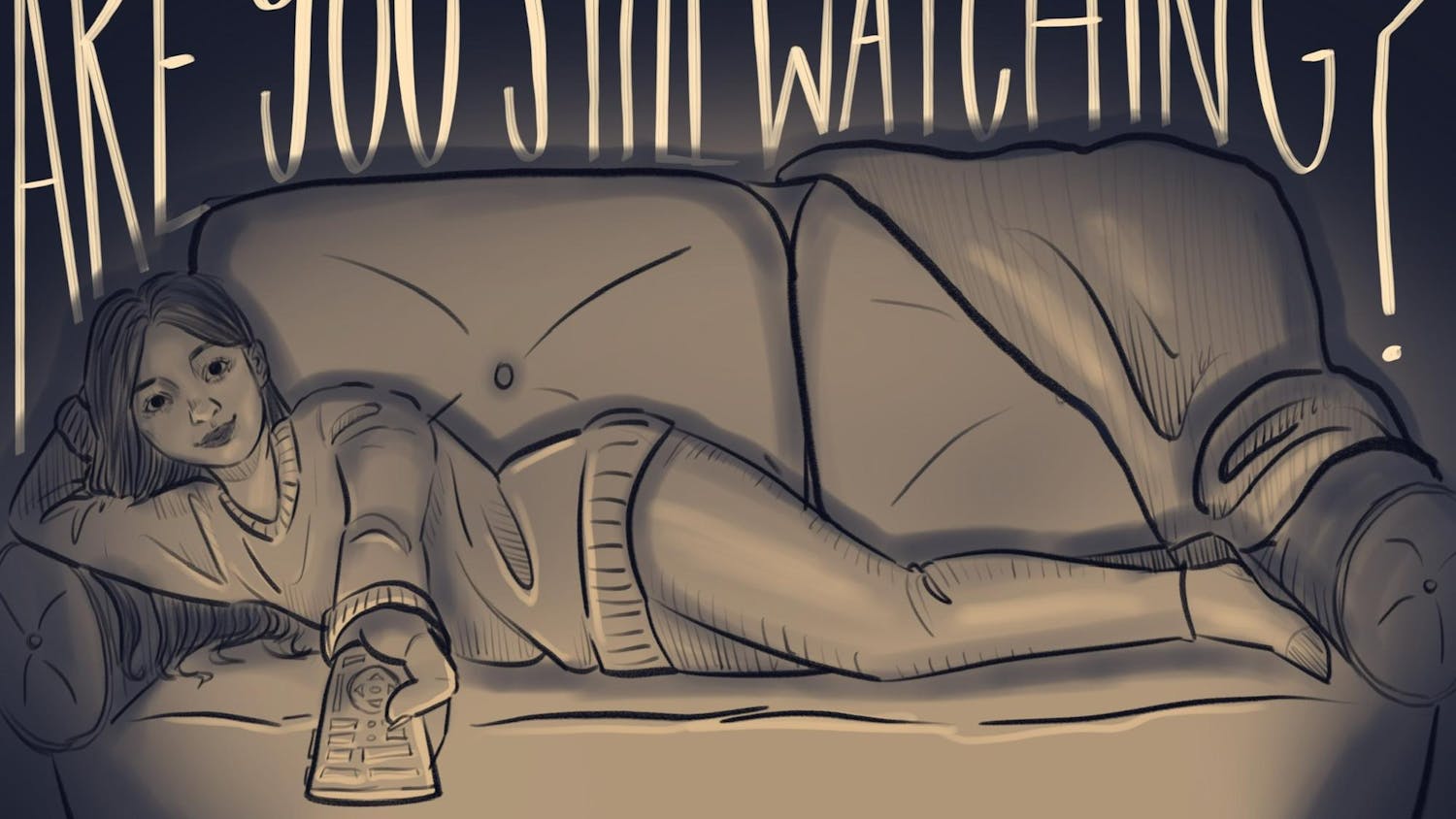
In fact … she was … the blueprint.
I’m just as guilty as every other paparazzi-crazed tabloid of the early 2000s; my choice to wear low-rise khakis with a layered Hollister button-down thermal this morning was completely Lindsay Lohan’s doing. Between the freckles, the auburn hair and the Juicy Couture, Lohan’s signature ‘gaudy necklace’ energy has officially staged a hostile takeover of my Pinterest board.
In 2004, the world belonged to her: A three-year run of cinematic perfection saw Lohan transform from the guitar-shredding rebel of Freaky Friday to the biting, mathlete-turned-plastic of Mean Girls. She defined the ‘comfort watch’ for an entire generation; the generation that still subconsciously chooses to wear pink on Wednesdays and at every minor inconvenience say Regina George’s iconic line: “and right now you’re getting on my last nerves — Switch!”
But looking back from 2026 to what I like to call the ‘Lohan Trifecta’ — between Freaky Friday, Mean Girls and the glitter-soaked chaos of Confessions of a Teenage Drama Queen — the Lohan effect goes much deeper than a catchy script: We witnessed the birth of the modern ‘It-Girl’ prototype. Every low-res paparazzi shot of her leaving the club in a baby tee was (and still is) a fashion directive that we followed with religious devotion.
Each film in the Holy Trinity of Lohan served a different purpose in our collective upbringing. It started with Freaky Friday, which somehow turned a dusty Disney trope into a high-stakes mood board for 2003. Lohan stepped onto the screen with a Fender Strat and a wardrobe that looked like she’d just raided an Avril Lavigne video. It was all choppy, bleached layers and studded belts, you know, the kind of look we’re all currently trying to buy back on Depop. She had this frantic, crackling energy that made the suburban angst feel real. Watching her match Jamie Lee Curtis beat-for-beat proved she simply refused to be just another kid on the Disney conveyor belt; she had a grounded charisma that you just can’t fake. It was the moment the child star label died and a genuine lead took over.
Then there was Confessions. If you want to know why we all spent 2004 trying to make bottle-cap necklaces and newsboy caps a thing, this is your culprit. It was 90 minutes of Lohan treating a dead-end suburb like the West End stage with enough bangles to cut off her circulation, and we bought into every second of it. It was the peak of her ‘more is more’ era, proving that we could reinvent ourselves entirely with enough confidence. Most importantly, though, we were taking notes on how to own a room while wearing every single accessory from the Claire's clearance bin.
Then came the cultural reset that still dictates our vocabulary 22 years later. Mean Girls is the crown jewel of the trifecta, but Lohan’s Cady Heron was the magnetic force that kept the whole “Plastic” world from spinning off its axis. She managed to be the jungle-freak outsider and the apex predator in the same breath, handling it with a natural personality that most actors spend a lifetime trying to find. It makes you forget that she was only 17 years old and carrying the biggest comedy of the decade on her shoulders. And I don’t know about you guys, but I don’t just check the calendar for Oct. 3 just because it's a meme … I do it because she’s the reason why my pink polo shirt feels like a status symbol, simply from watching her stand in a cafeteria line.
The fact that we continue to resurrect her looks and dissect her characters is very telling to the foundational cultural shorthand she raised us in. Taken together, her screen performances and off-screen presence contributes to her impact still remaining legible in contemporary references and revival cycles. Blonde streaks. Side bangs. A flip phone snapping shut. A cafeteria divided into factions.
It’s Lindsay Lohan’s world … and we’re just living in it.
Aima Raza is a member of the Class of 2027 in the School of Industrial and Labor Relations. She is a staff writer for the Arts & Culture department and can be reached at araza@cornellsun.com.