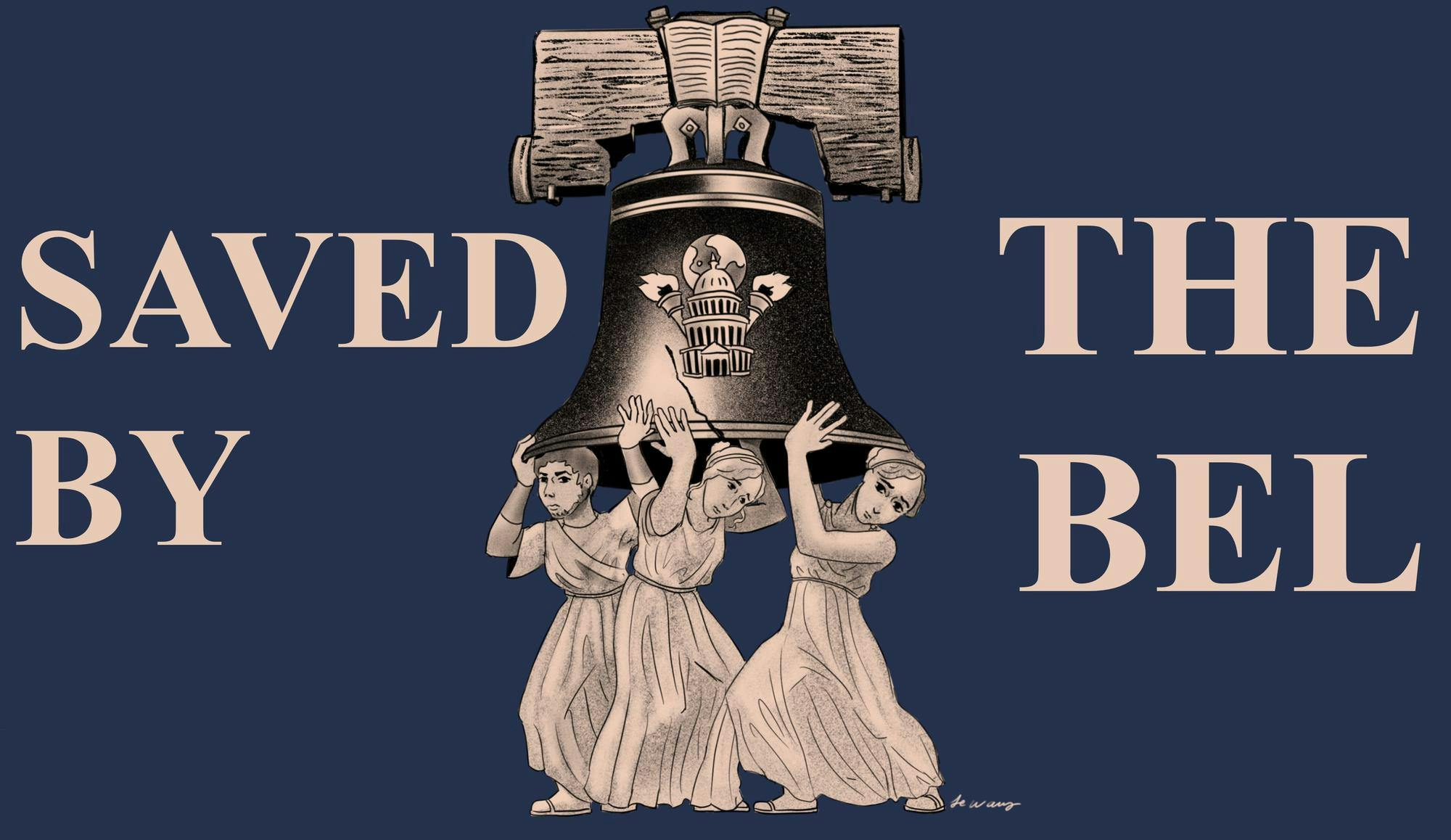
A species incapable of passing its discoveries down to future generations resembles a cell attempting to replicate without genetic instruction: existence may continue, but progress cannot. An enucleated cell lacks the information necessary to function; hence without recorded knowledge, a society lacks direction. DNA evolves by preserving what works and discarding what fails, refining itself through generations. Writing serves an analogous function for humanity. It is the mechanism through which societies accumulate knowledge, correct errors, and advance intellectually. By reading, we inherit the discoveries of our predecessors — and, crucially, gain the ability to critique and improve upon them.
I recently traveled to Egypt and visited sites dating back to 3500 B.C.E. It’s in this ancient civilization that humanity found direction. Writings and scriptures flourished and were astonishingly preserved. Yet, it’s within these same scriptures where deviations arose through time. The Ancient Egyptians believed in many Gods, whose stories and prophecies were engraved in stone or inked on papyrus taking the form of hieroglyphics. Soon enough Greek and Latin rose, and the Cross of Christ replaced the stories of Isis and Sobek. The pharaohs faded into memory, and — for better or worse — a new culture and form of writing took their place.
Flash forward some five thousand years, and the age of writing is overrun by AI models and books are no longer in papyrus, let alone print. We have turned a new page to a ‘post-literate’ society.
I first came across this concept in James Marriott’s essay The Dawn of the Post-Literate Society. Similarly, I stumbled upon an article from The Atlantic titled The Elite College Students Who Can’t Read Books. Through both pieces, my conclusions drew synchronously: we have lost touch with our ability to pass down our discoveries — we are splitting cells with no DNA. In part, however, I felt as if The Atlantic piece was far too over-encompassing, pessimistic and naïve. So, I found myself, a student at an elite university and columnist with an ever-shrinking word count, in search of answers within Cornell.
I first went to Professor Kate Navickas, the Director of Cornell Writing Center and lecturer of English Literature and Composition. Navickas is qualified, in every sense of the word, to pinpoint what reading and writing culture looks like at Cornell. She immediately pushed back against the idea of a student-driven ‘reading crisis.’ Instead, she framed institutional problems in Cornell’s rigor and pedagogy as potential drivers from student disillusionment: “The institutional pressures and the transition from high school to Cornell-level work is huge.” In order to push students in the right direction “students need to consistently be listened to and told their voice matters in terms of writing.” This may come in the form of smaller classrooms, Navickas argued, where attention to individual needs may be better assessed. Yet, Cornell’s student to faculty ratio is 9:1 with a majority of classrooms seating less than 30 students. Classrooms are small, but pressure is still large.
I agree with her: blaming a student for a disinterest in reading Crime and Punishment in its entirety is unreasonable. It is when I interviewed individual students that I found reading prowess to be an immense privilege. Students who came from households whose parents read them bedtime stories or stacked their toy-filled rooms with books, become the same students who rarely struggle to finish reading assignments along with a fantasy novel sitting on their nightstand. It's the child of a single mother, who worked late with an expired library card, that much rather focus on their consultancy club and internship applications than finishing The Iliad.
As Navickas put it, Cornell is a “culture of business” and although our reading and writing opportunities are excellent, “it does kind of stack up the responsibilities that are already on students.”
I then interviewed my own FWS professor, Amanda Weiss, a public policy methodologist. She disciplined my argument surrounding students' upbringing and their relationship to reading and writing. “Parents’ socioeconomic status, the variety of words you’re exposed to as a child — these things are strongly predictive of later school performance,” but she also pushed back, stating, “I question whether novels are necessary for the learning goals you’re describing.” At this point, we entered a discussion on sustained and engaged reading. This is an intellectual quality I find rather important, in which the Atlantic article and I converge. Neuroscientist Maryanna Wolf coined the term “deep reading,” a practice of careful and patient reading to develop critical thinking skills. Weiss argued that “[t]he cutting edge of my field is mostly in article form,” and you can still receive valuable skills from shorter forms of reading.
It’s important to emphasize that both she and I agree that “there’s no substitute for critical thought and doing your own work.” Where The Atlantic is right is in identifying the erosion of sustained, attentive reading as a real intellectual loss.
I’ve been denying the weight of AI in this argument because its implications on learning abilities are clear. They promote laziness and co-dependence, however it is a choice to use it and a mistake not to. As Weiss puts it, “We live in a world where large language models are here, and it’s not like we can roll back the clock.” Cornell students are facing important choices, and faculty are facing even bigger ones. What is most clear is that students today continue to fall victim to both the criticisms of older generations while struggling under systems of their own creations.
It is up to educational institutions to reform their curricula to address the changes in this technological age. Integrating AI into our learning tools is a double edged sword, in which the sharper side is currently cutting our abilities to adapt intellectually. Yet, we adapted to calculators, computers and we will adapt to AI. Mathematicians can still solve, writers can still write and students can still think.
Until the sword is made dull, until we relinquish our dependence and establish a model of integration, students will continue stuck between lines.
The Sun is interested in publishing a broad and diverse set of content from the Cornell and greater Ithaca community. We want to hear what you have to say about this topic or any of our pieces. Here are some guidelines on how to submit. And here’s our email: opinion-editor@cornellsun.com.

Adrian Belmonte '28 is an Opinion Columnist studying Government in the College of Arts & Sciences. Hailing from D.C. and Spain, his fortnightly column Saved By The Bel has a voice as cosmopolitan as it is candid. Belmonte takes on politics and media with clarity and a touch of wit. He can be reached at abelmonte@cornellsun.com.