Do stereotypes always go too far? Or are they, in some ways, what give a comedy its spark? These questions came to me as everyone’s favorite bingeable show, Nobody Wants This, returned for season two. We are brought back into the turbulent relationship of Rabbi Noah Roklov (Adam Brody) and Joanne Williams (Kristen Bell), a typical LA non-Jewish girl repeatedly labeled a “shiksa.” As in season one, the central conflict revolves around Joanne’s conversion process and what it means for her future with Noah.
Reviews of Nobody Wants This season two are mixed. In my opinion, one of its major improvements is the step away from a lot of the blatant stereotypes that dominated season one. Esther Rocklov, for example, was far more likeable, given more of a personality and had less of the persona as a frigid and vindictive wife. Her newfound depth paints her in a much better light. The season’s numerous scenes featuring her deeper relationship with Sasha are some of the season’s most endearing moments. The moment in episode four with Sasha on Valentine’s Day at their dance class in which she jumps for joy straight into his arms was especially heartwarming.
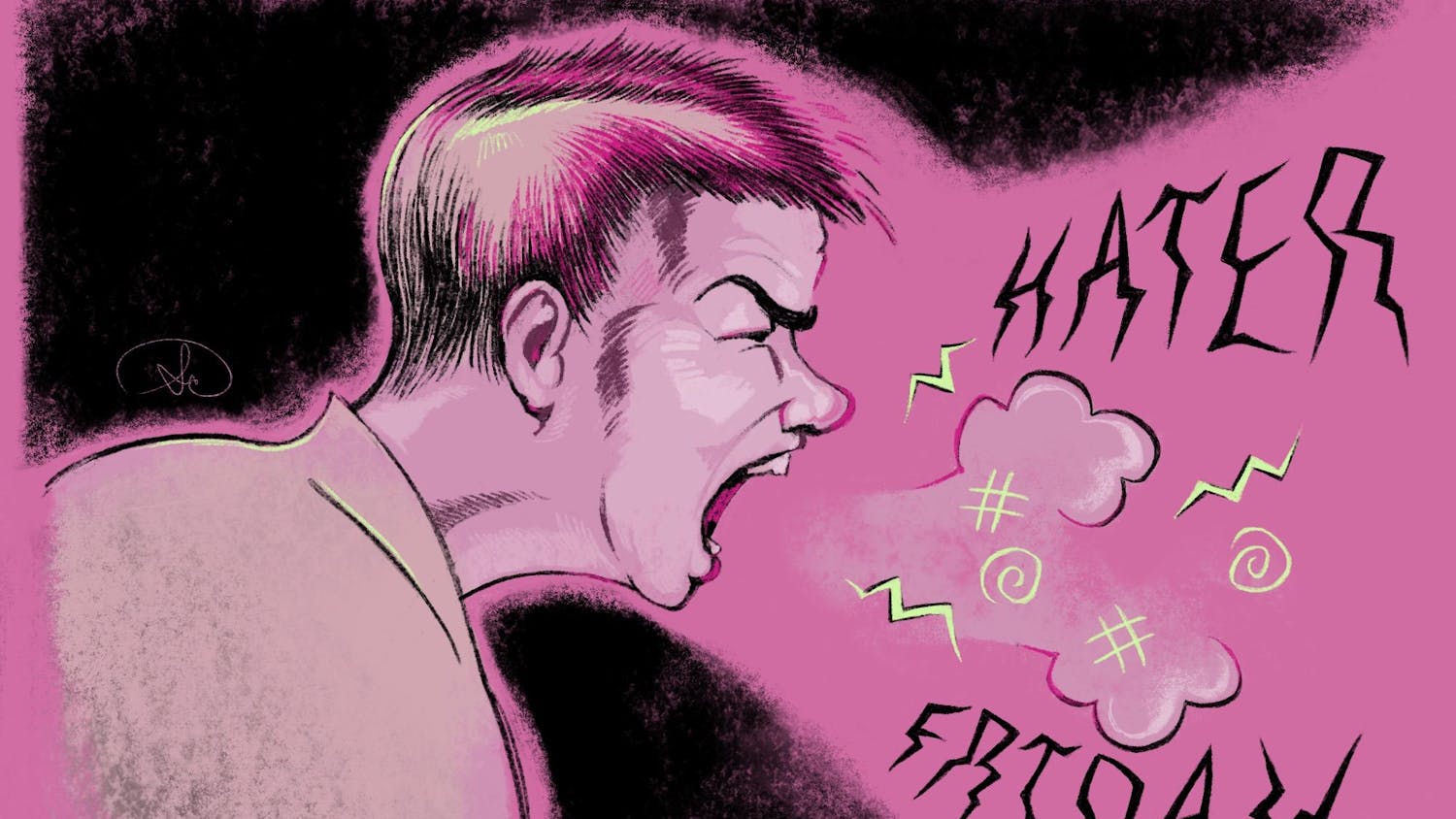
The season avoids many of the uncomfortable attempts at comedic antisemitism from season one. Moments such as, in season one, when Morgan tells Joanne that Noah looks cute and “doesn’t look Jewish,” are clearly intended as a joke, but come across rather offputting. This raises the broader question: at what point do stereotypes stop being funny and start feeling harmful?
To its credit, season two takes a more thoughtful approach to depicting Judaism. Instead of simply poking fun at Jewish tropes, it digs into genuine questions about what it means to be Jewish and how interfaith relationships complicate identity. Rather than waffling about the convenience or inconvenience of going through the conversion process, Joanne truly wants to feel the spirit of Judaism before deciding to go through the conversion process. Her deep inner debate was further emphasized through contrast with her mother’s own spiritual realization, and Joanne’s continued feeling that she was lacking that deeper connection. I was honestly impressed by Joanne’s commitment to the process, which is one major way that her character was expanded in season two beyond just a caricature of a “shiksa.”
Yet with all these improvements, I couldn’t shake the feeling that season two lacked some of the charm that made season one so addictive. Don’t get me wrong, I still thoroughly enjoyed my watching experience; I finished the whole thing in two days. However, I couldn’t help but feel a bit unfulfilled and frustrated by the end.
For one, after spending the entire season delving into the issues of Joanne’s and Noah’s relationship, the writers resolved everything in the final minutes with the very same revelations that ended season one. In the beginning of season two, their relationship seemed somewhat too perfect. They were in the honeymoon phase some might say, cooking together, hosting their first dinner party, etc. As more and more issues began to arise, it seemed to me the couple would need to take a serious look at their relationship, or it would have to end. In no way did I expect Joanne to have a sudden spiritual revelation, and for Noah to instantaneously realize that nothing mattered except his relationship with Joanne (yet again). Their issues are swept aside once more with the message that “love conquers all,” a conclusion that feels overly neat, if not outright naïve.
Ultimately, the season raises a larger creative question: does removing stereotypes make a show better, or does it dilute some of its comedic appeal? Yes, there were plenty of alarming instances when a moment of comedy may have crossed over into antisemitism in season one, but there were also flashes of comedic brilliance inspired by those very stereotypical characters. While many viewers criticized season one of Nobody Wants This for perpetuating cruel stereotypes, I cannot help but feel the show lost a piece of its humor with such a drastic shift. To be clear, I do not believe in the promotion of harmful stereotypes, but as a Jewish woman myself, lighter moments of relatable comedy present in season one added to its charm, and I found that aspect lacking in season two. So as to the question of whether stereotypes harm a show or contribute to its comedic appeal, I would say there is virtue to both. It is clear that Nobody Wants This season two attempted to strike a balance. I believe the season’s more cautious approach ultimately trades some of the show’s distinct comedic sharpness for a safer, more universally palatable tone, an exchange that will resonate differently with each viewer.
Layla Copen is a sophomore in the College of Arts and Sciences. She can be reached at lmc374@cornell.edu.
Layla Copen is a member of the Class of 2028 in the College of Arts and Sciences. She is a contributor for the Arts & Culture department and can be reached at lmc374@cornell.edu.