

By Katie Istomin
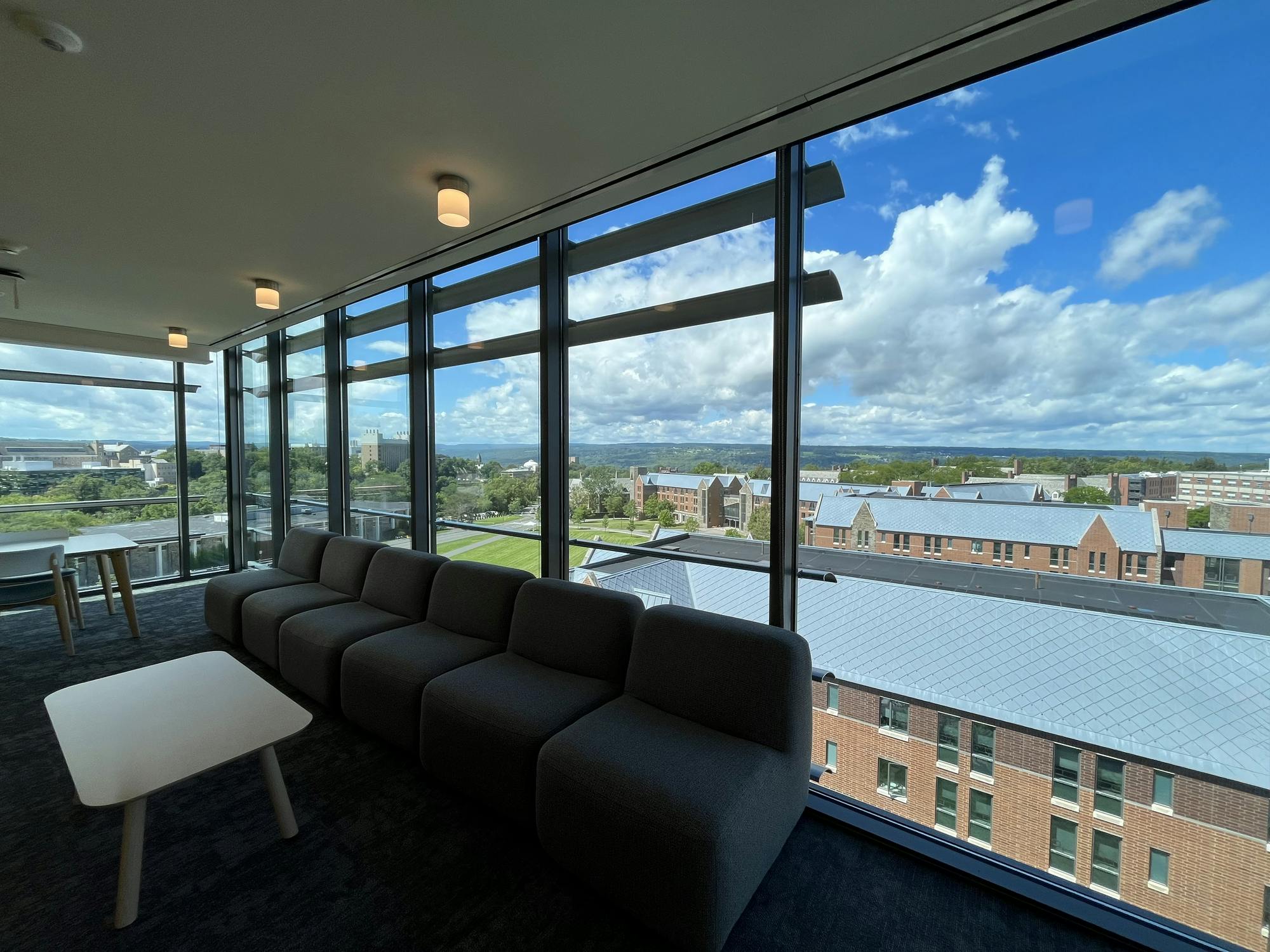
As the semester began, people came in with their bags to their dorms, establishing places of rest, socialization and study. The hallways felt like the airports we had arrived from; carts squeaking, people blindly running around and lost apparel scattered throughout the halls. But while each room was assigned, the lounges inside the building were left up for grabs. They were the shared seating area, waiting to be taken over by a family.
The first few weeks were tame — people politely asked if anyone was sitting there, headphones were always on and chatter was kept to a minimum.You could hear the soft hum of laptops and the occasional whisper, but even those were quickly exiled. Slowly though, the lounges were overrun and conquered. For me and my friends, we established a “home” on the second floor of our building, McClintock Hall.
At first, the lounges were simply quick spots to finish the occasional essay before heading out to dinner, but as the year started to go on, so did the amount of time spent in these lounges. The ten-minute stretches turned into entire evenings, and then into the kind of nights where you start to calculate how many hours of rest you’ll actually get after your time spent in the common space. Our presence lengthened and the amount of personal belongings tripled. Britas appeared on the table, limiting our amount of trips to the water fountain; a variety of snacks overtook the table in case our rumbling stomachs were heard through our headphones; a sweatshirt was hung on the back of each chair to allow for easy adjustment to any climatic change or seamless transition into a quick power nap; and tabs on the computer reached infinity as we jumped from assignment to assignment.
This phenomenon, though, was not unique to just my friend group. At some point, the lounges became an attendance sheet for the residents of Barbara McClintock hall. If someone was missing from their usual corner, you would notice it. The girl from across the hall was always studying and laughing in the kitchen with a large group,while the one downstairs was always tucked in a corner, silently enjoying the music playing in her headphones. I didn’t know their names, but I always knew where we would find them. Their location was their identity.
Soon, seating was no longer a matter of availability — it was a matter of legacy. So, if you hear a scoff as someone peaks into the lounge and sees you in their usual spot, know that to them, you’ve just committed treason. Once you’ve done three late-night study sessions in the grey chair, that is now your chair. That’s just the rules. I don’t make them. And the unspoken part is that everyone mostly agrees to follow them anyway.
Though, as we gained comfort and a sense of home, it started to get a little too comfy. The couches that were once just extra furniture to toss bags on started to look too appealing for a nap. And when that person does inevitably begin to doze off, we all do the politeful thing and lower our voices, blanketing any sound that could wake them. The whiteboard that was once filled with chemical formulas and notes was now being utilized for a large game of hangman. Each study break lengthened and “five minutes” always followed with “five more.”
So, the great migration began. Movement felt necessary if we wanted our brains to keep working. At first, we moved one lounge over. Then to the building next door. Now, we’re studying on the other side of campus. The map of our semester redrew itself. As academic fatigue sets in, you find yourself draining in focus — and sometimes it means you have to chase the “herd” onto the next spot, because we all know studying can’t stop (even though drawing pictures for Pictionary is way more fun than drawing out chemical compounds).
We start our trek in the morning, bundled up for the stinging wind and frosty air — a chai latte in one hand, the other tucked into a coat pocket, a scarf holding our ears from falling off, all sprinkled with a side of complaints about the cold. When midday rolls around, we shed our coats, wondering if they were worth it as we make our way back to the toasty libraries. But as we sit down to finish our work for the day, before we even have the chance to look up, it’s dark outside. Time flies when you’re having fun — or when you have a prelim the next day and just found out chapter 14 is on it. The sunny 50s turned into chilling 35s as our fingers jumped from key to key, anxious to make it back before the dining halls closed. We always end up sacrificing one of the deadlines — the choice between Morrison Dining or our “p-set” isn’t as difficult as it should be.
Yet, from time to time, we pass our old lounges like childhood homes. We see different faces and sometimes, if we are lucky enough, we’ll see the people we used to study with, thinking about the jokes that we would crack at 2 a.m. when everyone else was asleep. A whole miniature chapter of history flashes before us — inside jokes, shared panic, the whiteboard that still has a faint ghost of our drawing. We hope they’re doing well, and we give them a smile and wave as we make our way to the libraries. The wave is a promise: we were here together.
In a way, these lounges reflect our freshman year; they evolved as we did. The changing chairs, the shifting groups, the new favorite corners — each one a mirror held up to us. What once started as “just a place to sit” becomes something more meaningful. It becomes the background of our becoming. It embodies the laughter and memories; it has seen us at our best and at our worst. The spaces held both our pep talks and our sessions of procrastination equally, without judgment. Once new, they marked the beginnings of us finding our place here at Cornell. And even as we migrate again and again, that feeling — of claiming a corner and being claimed back — stays with us.
Katie Istomin is a first-year in the College of Arts and Sciences. She can be reached at ki227@cornell.edu.


