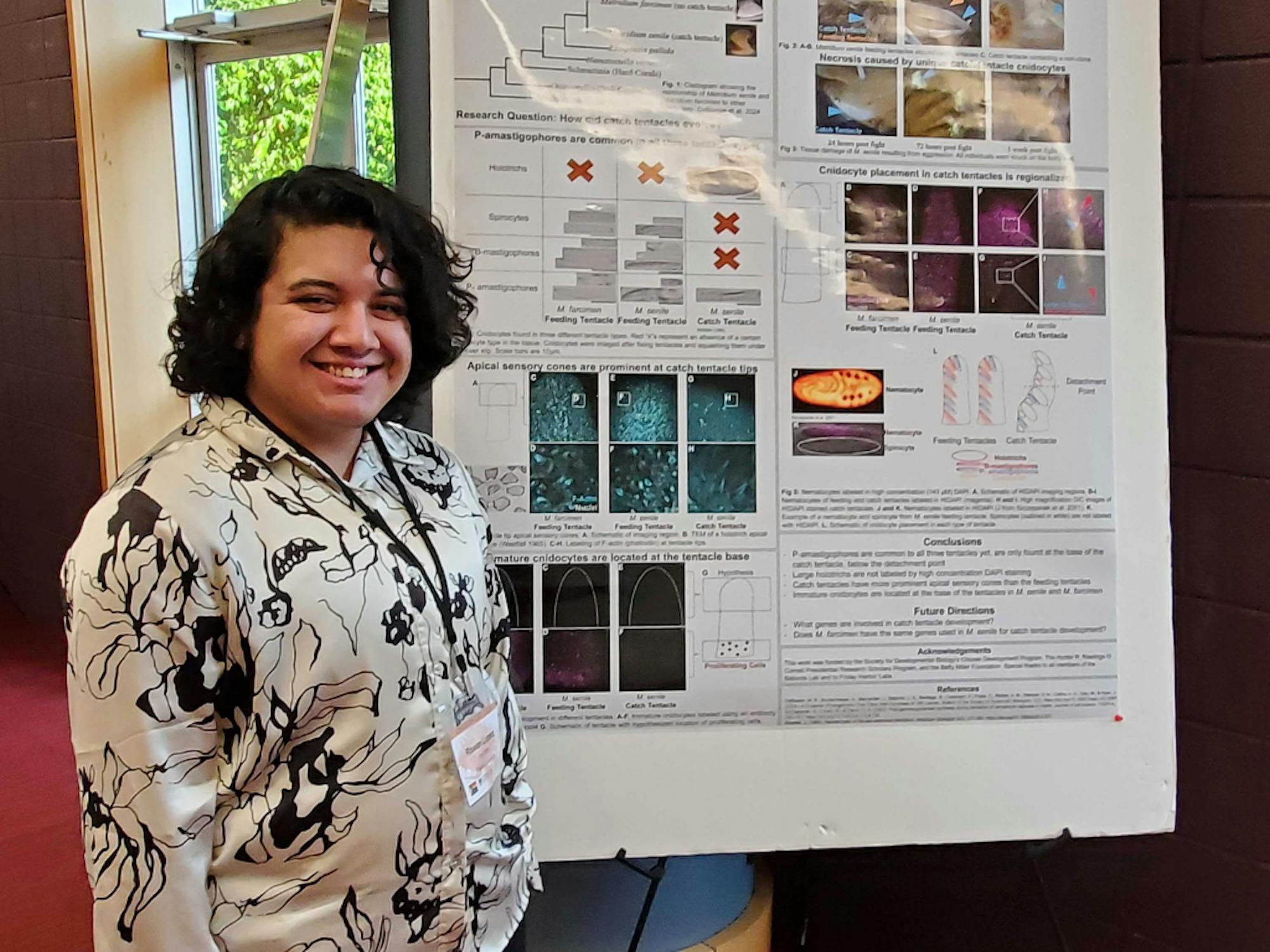
From studying anemone fights to connecting students with research opportunities, Rowan Lopez ’26 is making a difference in the world of undergraduate research at Cornell.
Lopez is a biology major conducting research on anemones in the Babonis Lab under Prof. Leslie Babonis, ecology and evolutionary biology. He also serves as the vice president of the Student Advisory Board of the Rawlings Cornell Presidential Research Scholars Program, which provides resources and funding for students who have shown interest in undergraduate research of any field.
“I love sharing my work —just getting other people, especially younger people, excited about science,” Lopez said.
The Bab Lab
Lopez joined the Babonis Lab in Fall 2023 and was the first undergraduate research assistant accepted, according to Babonis.
“I didn't know what to expect exactly, and I can tell you he has set a very high bar for other prospective students interested in the lab,” Babonis wrote to The Sun.
The Babonis Lab studies the evolution and development of cnidocytes — the special types of cells that jellyfish, anemone and coral use to sting unwanted creatures who get too close to them.
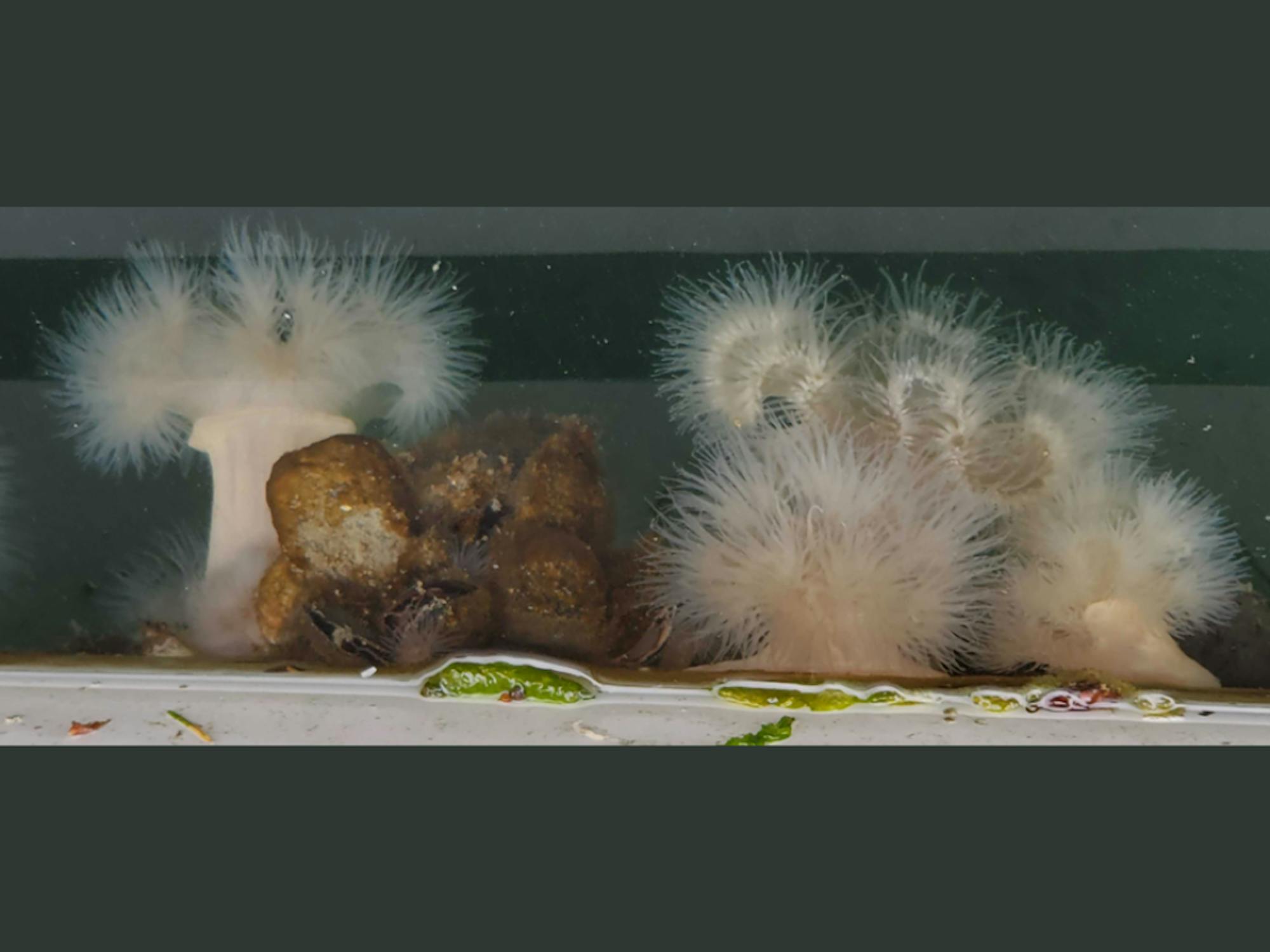
The lab raises various species of anemones for this purpose, but Lopez is currently the only lab member studying the saltwater species Metridium senile, which is unique for its ability to fight other anemones.
“They want to protect their space, of course, and so they’ve evolved this way of taking one of their normal feeding tentacles and changing that into a fighting tentacle,” Lopez said. The fighting tentacle latches onto unrelated anemones that move too close to M. senile, initiating a “fight.” It will not fight anemones it is directly related to.
During the fight, M. senile will sever its own fighting tentacle and leave it attached to the offending anemone that has intruded upon its personal space. The fighting tentacle contains a unique kind of stinging cell that kills the cells and body tissue of the intruding anemone, potentially leading to its death. No other known anemone species possesses this kind of cell.
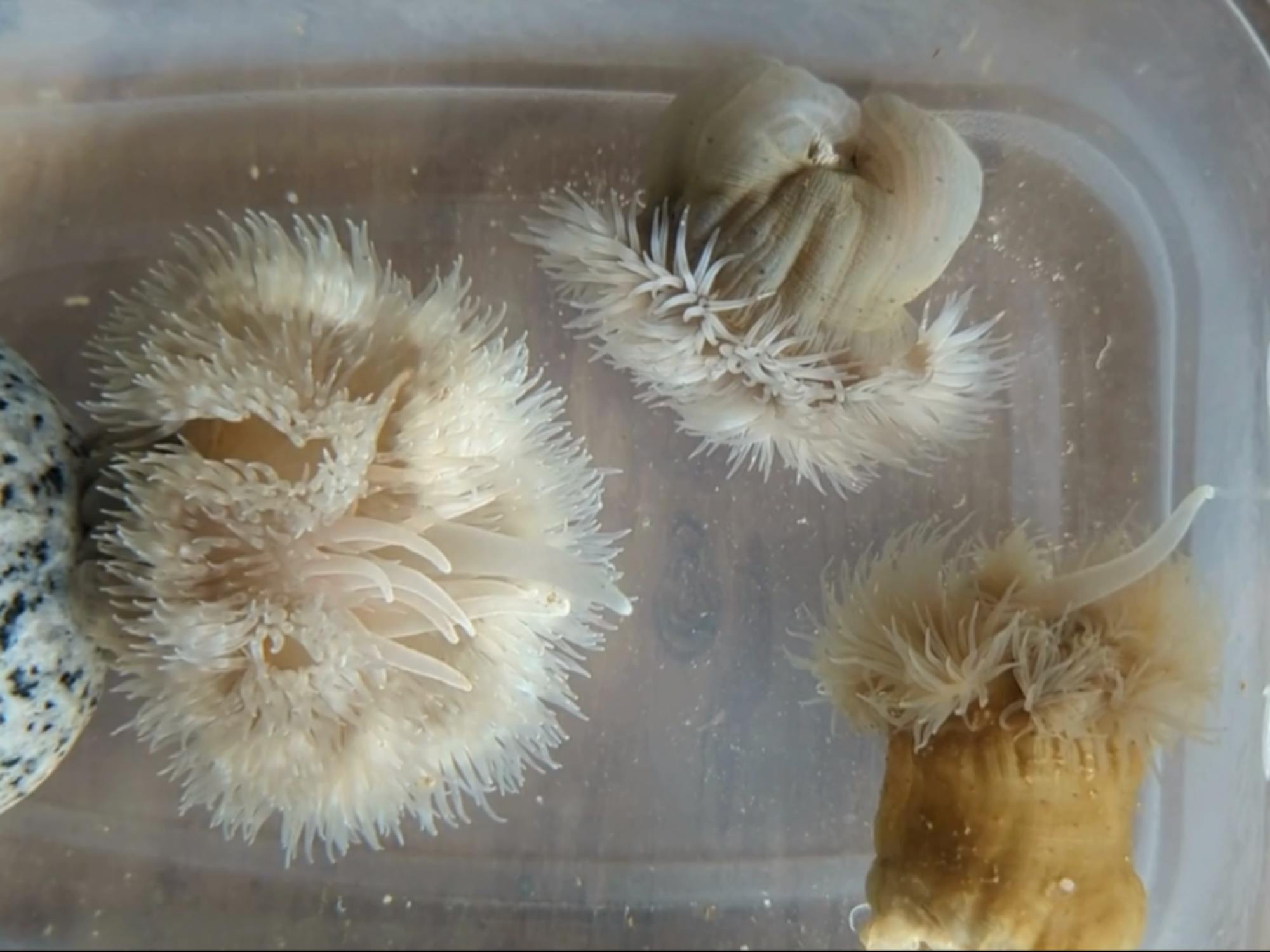
Lopez studies how the special stinging cells grow on the fighting tentacles, which do not develop elsewhere on M. senile’s body. He also compares M. senile with its sister species Metridium farcimen, which does not develop fighting tentacles, according to Lopez.
While he is working on his senior thesis summarizing his years of anemone work, Lopez has shared a sneak peek of some of his findings with The Sun — particularly that M. senile and M. farcimen seem to be using the same genes, or segments of DNA, to create two different types of stinging cells.
This is unique because in other organisms, one gene is usually linked to only one specific characteristic of the organism. But here, the genes create two types of stinging cells — not just one.
Since he is the only member of the Babonis Lab working with M. senile and M. farcimen, Lopez independently takes care of these anemones through feeding, water maintenance and tank cleaning.
As part of his research, Lopez clips off the anemones’ tentacles for tissue sampling and analysis under the microscope. The species are fast regenerators who, according to Lopez, don’t seem to mind losing a limb or two.
“We can cut off their tentacles, and at least the feeding tentacles, and they'll regrow them,” Lopez said. “They have so many that it's nothing to them. They just get a little annoyed, but they're usually fine.”
M. senile’s fighting tentacles can also be regenerated, but are usually not immediately regrown until the anemone believes it may be in danger from an unrelated intruder.
Lopez thinks that the anemones sometimes act like they have thoughts and emotions, such as annoyance at having their tentacles clipped.
“They're more personable than what you would assume just by looking at them. They're silly,” he said. He described individual anemones as having preferences for where in the tank they like to hang out, for example.
The anemones also seem to express their moods through their tentacles. They fold their tentacles in “when they get upset,” according to Lopez, and they extend their tentacles outwards when they are “happy.” He recalled one instance of an anemone enjoying the bubbler in its tank.
“It was going in a circle in the air bubbles, and it was all out and happy,” he said. “I have no idea what that was, but it was just fun watching an anemone … fully extended and just spinning around in circles.”
Though he hasn’t yet set eyes on a particular scientific journal, Lopez hopes to ultimately publish his work as the first author of a complete research paper — something that seems quite feasible, according to Babonis.
“He has developed a level of intellectual independence that rivals most graduate students I know,” Babonis wrote to The Sun.
Rawlings and Research Resources
Lopez also plans to present a poster of his research in a Rawlings Symposium at the end of the spring semester, as in addition to conducting groundbreaking research, he serves as the vice president of Rawlings.
Rawlings primarily grants scholarships to incoming freshmen who express interest in research in their college application and apply, though rising juniors may also apply. The program helps students find a research project of any subject to join and covers unpaid research positions or provides funding for research expenses.
Lopez told The Sun that as a “lower income student” he has found Rawlings useful in his own research journey and seeks to help other students obtain the same opportunities he did.
“Science is, unfortunately, very expensive, and that can close the doors for a lot of students,” Lopez said. “Rawlings helps open that a little bit more.”
Lopez is responsible for the weekly newsletter that is sent to all Rawlings students. He compiles information on research opportunities on-campus and sends reminders to program members to complete forms and program requirements when needed.
Outside of Rawlings, however, Lopez has still strived to make research accessible for his peers. Archawin Ice Kittirattanapaiboon ’28 is another Babonis Lab member who found his way into research thanks to Lopez’s advice.
“I got to meet Rowan [for the] first time when I was applying for labs in my freshman year,” Kittirattanapaiboon wrote to The Sun. “His advice (plus a bit of luck) [led] to me now being in the same lab with him.”
Lopez’s passion for promoting undergraduate research stems from his own lack of knowledge about research when applying to college, as nobody in his family had pursued research or completed college before him.
“I didn't know science could be a career choice until senior year of high school, when we were already applying to colleges,” Lopez said. “That was a bit scary, because I thought, before, all you could do with a bio[logy] degree was just be a doctor.”
On-campus involvements don’t end at research for Lopez — he also serves as an education coordinator for the Cornell Raptor Program, where he organizes the group’s outreach events for promoting wildlife conservation. Outside of academics, Lopez enjoys hanging out with the CRP’s resident golden eagle, Esther, as well as playing the flute, embroidering and reading.
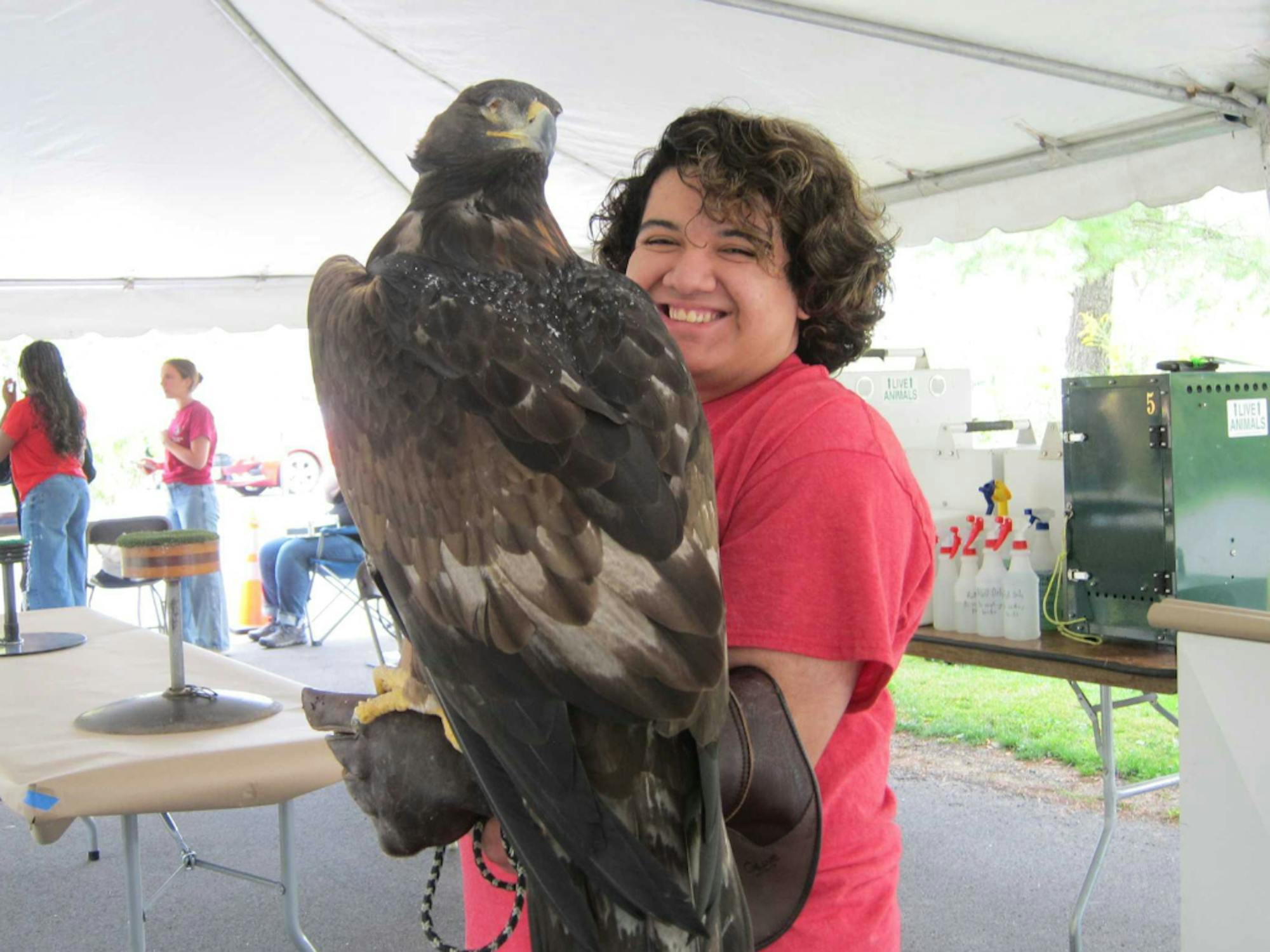
Rowan Lopez '26 with the Cornell Raptor Program's Golden Eagle, Esther. Courtesy of Hannah Rams '27, The Cornell Raptor Program
Now, as he rounds the corner on his final semester at Cornell, Lopez is considering going to graduate school to continue pursuing research in evolution and developmental biology. He looks forward to learning something new and gaining more skills, but he’ll never quite leave his anemones behind.
“I can definitely see myself eventually coming back to the anemone world and getting to mess around with them again, finding out their cool little secrets,” Lopez said.

Angelina Tang is a member of the Class of 2028 in the College of Agriculture and Life Sciences. She is a science editor for the 144th Editorial Board and was an assistant news editor for the 143rd Editorial Board. She can be reached at atang@cornellsun.com.