As a child, I was obsessed with the world of the unknown. Any book that dealt with mystery or fantasy had me hooked. I don’t know what it was about those stories, but I would lose myself completely in them. I can still picture my younger self sitting on my bed at sunset, eager to dive back into a novel. During my mystery phase, I gravitated toward series like Nancy Drew, The Secret Seven and The Hardy Boys, the very same books my mom and other relatives had loved before me.
There’s a reason the spines of children’s mystery novels keep resurfacing on family bookshelves, in thrift shops and across second-hand websites. They’re passports back to a world where kids could chase smugglers, unmask thieves and slip through secret passageways — solving mysteries the adults around them never could, all before dinner. Generations have grown up on these stories, and generations still return, not just for the thrill of the puzzles but for that peculiar, irresistible charm that always pulls you back in.
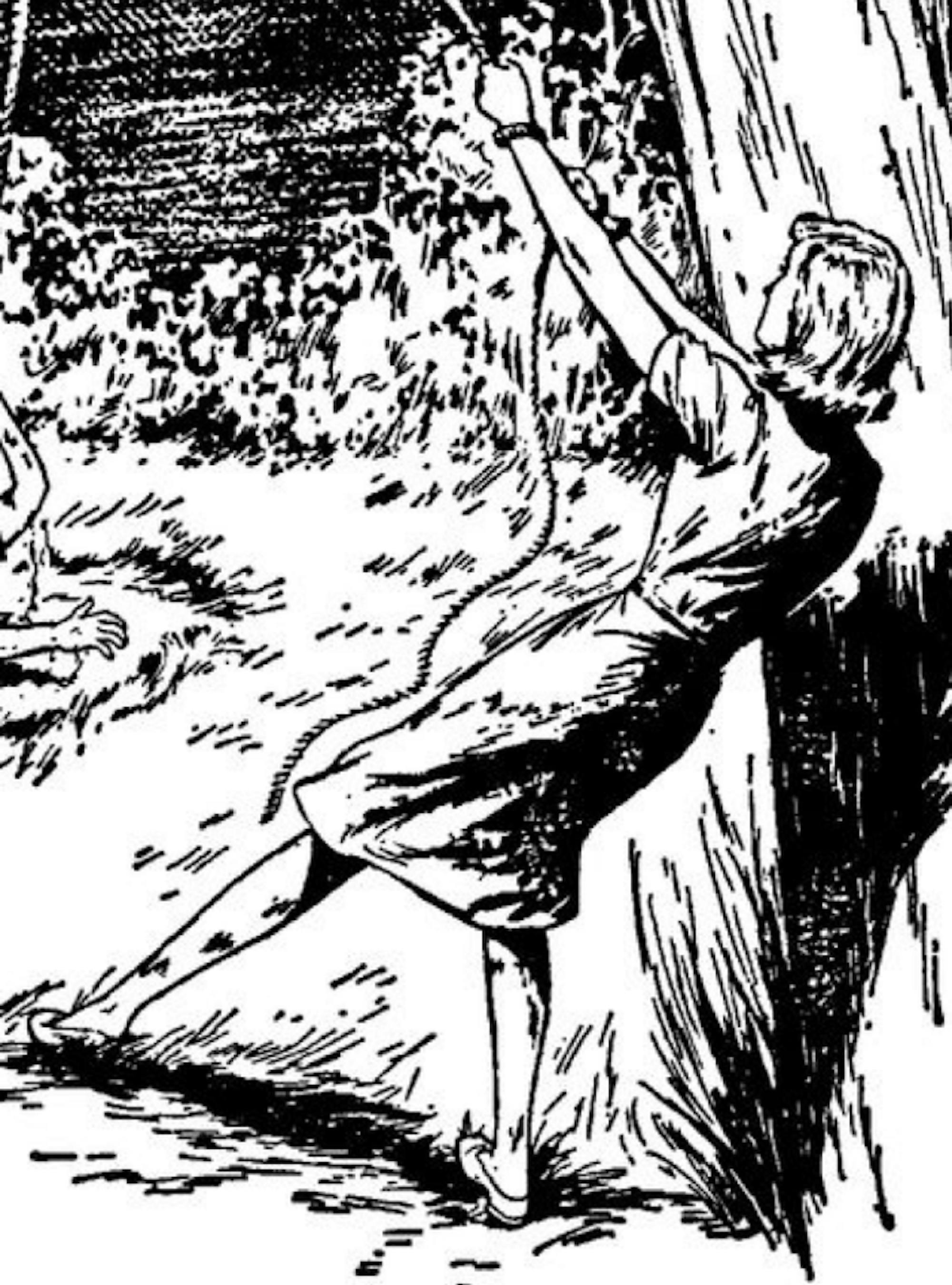
It always struck me as funny, a child reading about fictional children and teenagers doing things I could never quite imagine myself doing. At the heart of their appeal, perhaps, is a sense of freedom, one that kids eagerly latch onto in their imaginations. Nancy Drew has her own car, gifted by her father. Frank and Joe Hardy are the athletic duo darting along docks and backroads in pursuit of villains. The Secret Seven hold their clandestine meetings anywhere from a garden shed to a summer house to a treehouse. On the page, all of this felt perfectly normal. I’m sure other kids would agree, but for me their bravery and independence was intoxicating. For adults looking back, it evokes a spark of nostalgia, a bittersweet return to the boldness of childhood.
Of course, a big part of why these stories are so memorable is the strict structure they follow. First, something strange happens, a stolen artifact or a mysterious crime where the facts do not seem to add up. The police cannot solve it and warn the kids to stay out of it, but naturally, they never do. They chase the trail, stumble over a few obstacles and eventually solve the mystery. Is it the same formula every time? Yes, but it never feels stale. There is a special comfort in knowing that by the end of the book, everything will be alright, even when it seems impossible. It is a style of storytelling that offers adventure, suspense and reassurance all at once, keeping young readers turning the pages late into the evening.
Then there are the settings of these novels, which I think are just as magical as the characters themselves. You rarely see these stories in huge cities; instead, they come alive in small towns, seaside villages and schoolyards. Ordinary people, ordinary places, but with secrets waiting around every corner. An abandoned playground might hide a mysterious clue, or a usually quiet library could have a hidden door leading somewhere unexpected. That is what makes these stories so enchanting. Mystery is tucked into the everyday, teaching kids that adventure does not always need to be far away. Sometimes it is right there, waiting for you to discover it.
These books also carry a cultural weight that stretches far beyond their pages. Learning that my mom and her sisters read these stories on their own was astonishing to me, even though the books actually predate their time. They have trained generations in the language of detective fiction: the real clues that guide the way, the red herrings that lead you astray and the band of friends who always stick together no matter what.
Open one of these books and you can almost feel the thrill of tiptoeing down a hallway, peeking around corners and holding your breath as secrets wait to be uncovered. I remember reading and feeling like I couldn’t put the book down, and when I finally returned to reality, it was a sharp reminder of how the story had completely pulled me in. Each page invites you to imagine, to puzzle and to wonder what might be hiding just out of sight. You almost forget they are children, and for a moment you are right there with them, part of their world, feeling the excitement of secrets, surprises and the endless possibilities curiosity can bring. That curiosity is, in the end, one of the greatest adventures of all.
Mikayla Tetteh-Martey is a junior in the College of Agricultural Life Sciences. She can be reached at mkt62@cornell.edu.
Mikayla Tetteh-Martey is a member of the Class of 2027 in the College of Agriculture and Life Sciences. She is a staff writer for the Arts & Culture department and can be reached at mtetteh-martey@cornellsun.com.