On a hillside in Honduras, water flows through a network of concrete channels, mixing and settling until it emerges clear and drinkable. This simple yet innovative process — powered entirely by gravity — is the heart of AguaClara, a Cornell-born initiative providing sustainable water treatment to communities worldwide.
Founded in 2005 by Monroe Weber-Shirk Ph.D. ’92, AguaClara has since grown into an international collaboration serving over 100,000 people across 24 treatment plants in Honduras, Nicaragua and India. The project combines humanitarian impact with engineering research, all designed and tested by Cornell students.
“AguaClara designs sustainable, gravity-powered drinking water treatment for communities that don’t have access to clean water,” said Claire Wang ’27 an AguaClara subteam lead. “It’s amazing to be a part of something that has such a direct impact on people’s lives.”
Engineering Without Electricity
Unlike conventional systems that rely on motors and pumps, AguaClara’s plants use gravity to move water through each stage of treatment. “First, water enters an entrance tank, then moves through a flocculator, where a sticky chemical — called a coagulant — helps particles clump together,” Wang explained. “Those clumps, or flocs, then settle in a clarification tank, and what’s left is clean water that goes through a final filtration and chlorination step.”
The team’s latest research explores automated coagulant dosing control — a method that uses mathematical models to predict how dirty the incoming water is and adjusts the chemical dose accordingly.
Because the design avoids mechanical mixing, the plants use little to no electricity — a crucial advantage for rural areas without reliable power sources. “We’re trying to make water treatment that is simple and less likely to fail,” Wang said. “Our systems use locally sourced materials like concrete and PVC, so communities can easily replace parts when needed.”
AguaClara’s approach also advances environmental sustainability. Without pumps or electric mixers, its carbon footprint is significantly lower than conventional treatment plants.
From the Lab to the Hillside
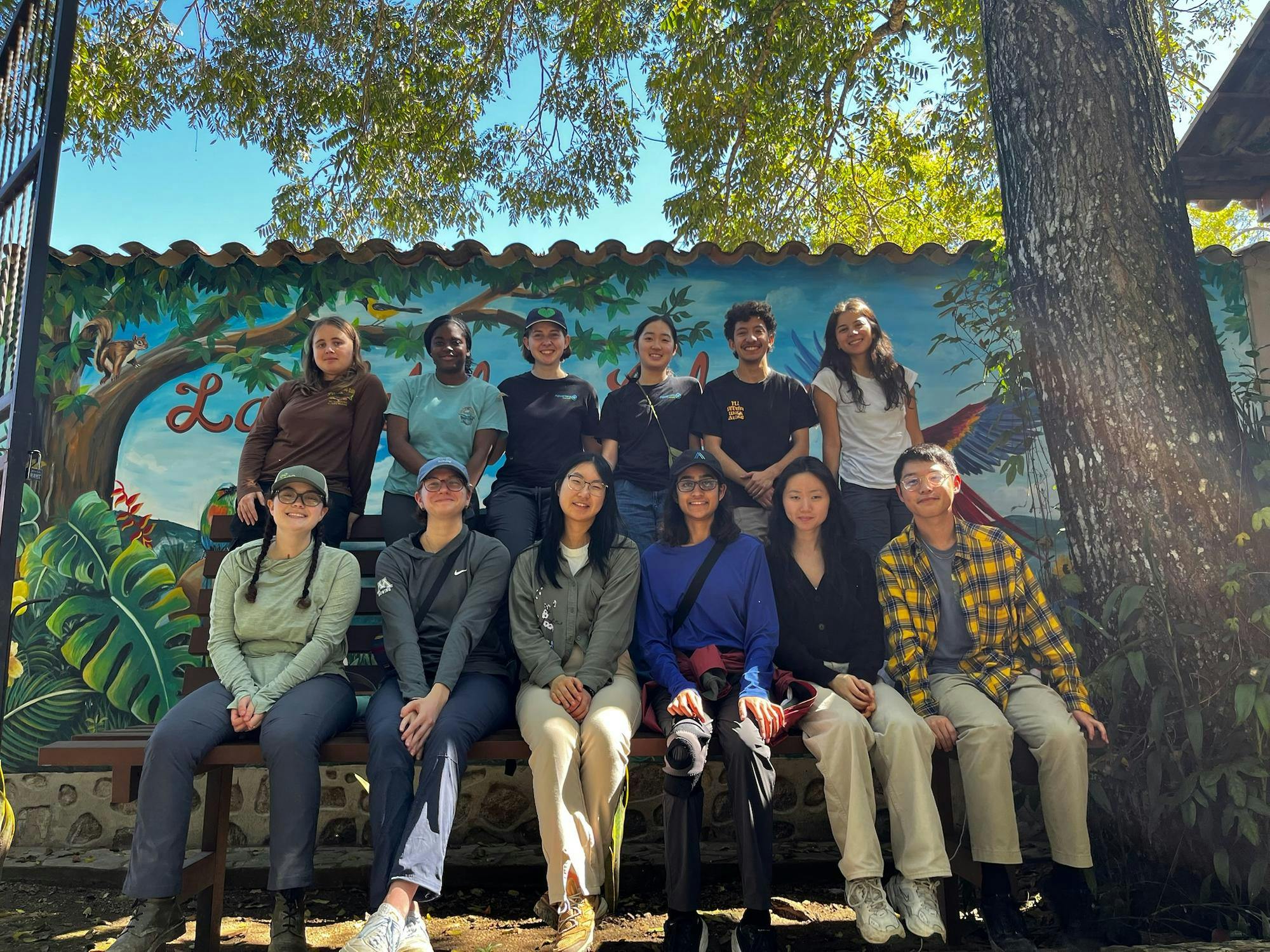
While most of AguaClara’s work takes place in Ithaca, each winter break a group travels to Honduras to see the plants firsthand and work directly with local operators. Team lead Kayla Stephenson ’26 joined the January 2025 trip and helped troubleshoot a plant in San Nicolás, Honduras.
“One of the plants had a blockage in its clarifier, and the community was struggling to remove it,” Stephenson said. “We went in, cleaned it out and helped them get the system running again.”
These trips are a cornerstone of AguaClara’s philosophy: empowering local communities through knowledge transfer. “We always train operators and use materials that are accessible to the community,” Stephenson explained. “The goal is for them to fully understand how the plant works so they can run the plant and fix any issues.”
That community-driven approach helps the systems last. Instead of outside engineers dropping in to install a plant and leaving, AguaClara’s local partners — such as Agua Para el Pueblo, a Honduran non-governmental organization — guide each project from design to long-term maintenance.
For communities that previously relied on untreated river water, the impact of AguaClara plants is profound. “When people don’t have access to clean drinking water, you see higher rates of stomach illnesses and diarrhea,” Wang said. “After an AguaClara plant is built, those rates go way down. People can stay healthy.”
According to Stephenson, access to clean water also relieves financial strain as families can drink from their own tap, instead of purchasing bottled water week after week.
Looking Forward
Though most AguaClara systems are currently in Central America, the Cornell team and its partner organization AguaClara Reach are exploring ways to spread their technology elsewhere.
“We’re hoping to expand into Puerto Rico through a collaboration with Prof. Ruth Richardson’s, [engineering], [WaterSAVerS] project, funded by the NSF [National Science Foundation],” Stephenson said. “It uses AguaClara’s treatment technology.”
According to Wang, the team also envisions adapting its prefabricated “pickup-truck” plants — small, portable treatment units — for use in rural parts of the U.S. These pickup-truck plants can be built ahead of time and driven to communities, meaning water treatment can begin immediately for communities lacking safe drinking water.
For both Wang and Stephenson, the project’s importance goes far beyond its engineering feats.
“Water is something everyone needs to live,” Stephenson said. “Two billion people still lack access to clean drinking water, and around two million [people] die every year from waterborne diseases. Our hope is to play a part in changing that.”
As AguaClara continues to innovate with gravity-powered technology, its mission remains clear — to make clean, affordable water a universal reality.
“Being part of AguaClara has been one of the most empowering parts of my Cornell experience,” Wang said. “It’s taught me that even as students, we can make a real difference.”
Marissa Gaut is a member of the Class of 2027. She is a senior editor for the 144th Editorial Board and was the science & technology editor on the 143rd Editorial Board. You can reach her at mgaut@cornellsun.com.