What’s the line between film as art and arthouse film? What’s a wannabe arthouse film for that matter? After watching Anemone, I find myself questioning my taste and maybe even the concept of taste in general. The film had me trying to delineate between pretentiousness and complexity, between minimalism and the adoption of minimalism as a sort of aesthetic fad, and the difference between guttural heart and fetishized trauma. You begin to become uncertain whether you’re just unappreciative or, what feels egotistically assuming but perhaps intimidatingly possible, you might be right. After Italian Neo-realism invented a new sensibility with which to create a film, or any film movement for that matter, were the films that came after, which adopted that sensibility, actually coming from a genuine place? At best, the expression of the genuinely-inspired idea ended up taking a form that happened to be similar to prior films; more likely, the filmmakers imbibed an idolized structure to help facilitate the expression of a genuine idea; and at worst, the filmmaker traced over revered films in the sort of way ChatGPT approximates reference-texts purely in imitation without independent impulse.
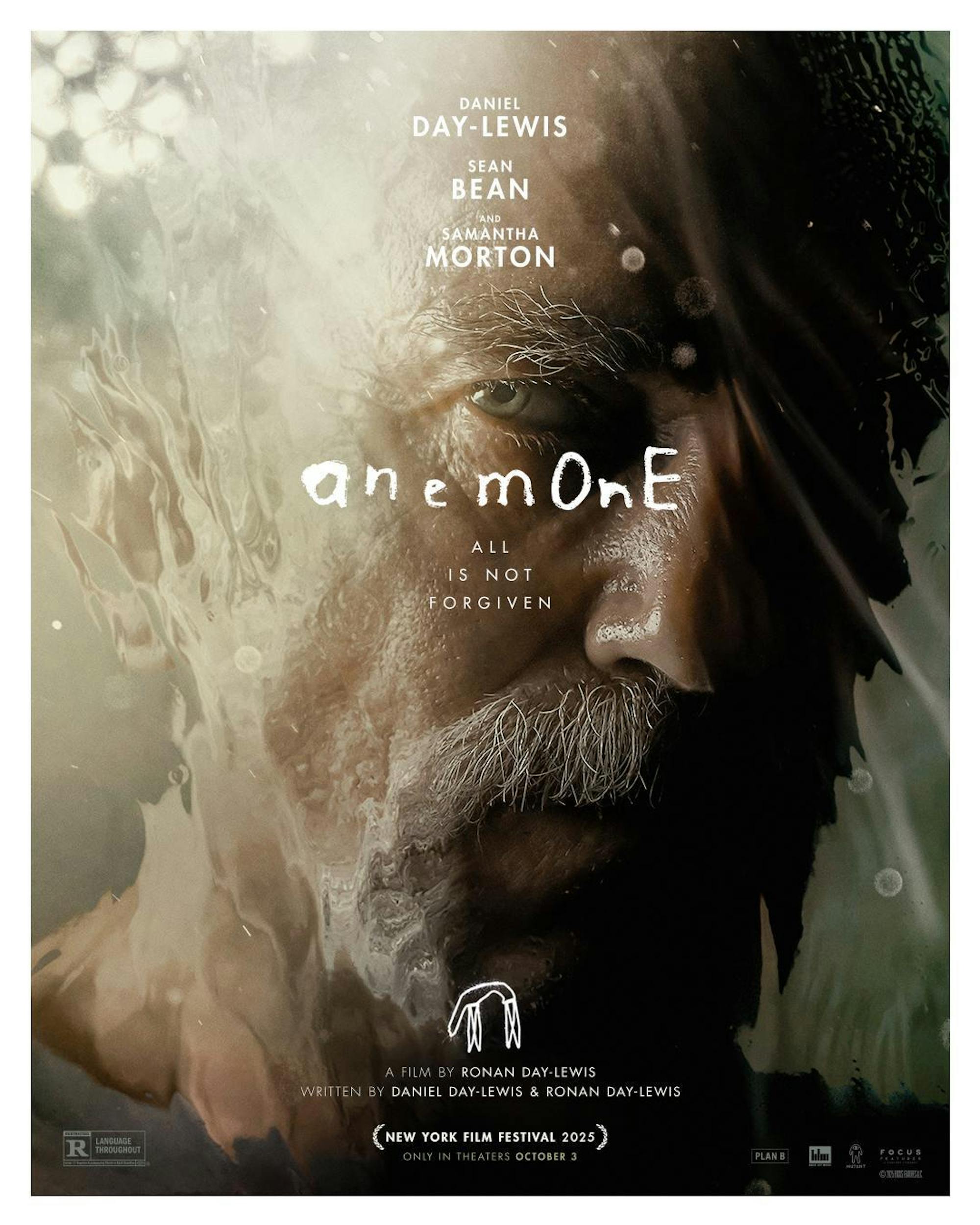
Anemone, most notable for bringing Daniel Day-Lewis back to the big screen after a period of retirement, is co-written and directed by his son. The film offers Day-Lewis a solid window through which to give another one of his remarkable performances. He once again plays a man who has “abandoned his son!” Having struggled with PTSD and shame around his expulsion from the Irish Republican Army, he walked out on his family after pregnancy to become a cabin-bound hermit. You see Day-Lewis ripping up inside as he recalls the event that led to his expulsion, and his jeers and jabs against his brother, Sean Bean, are rendered so naturalistic and deeply human. His retold revenge against a sexually abusive priest is especially memorable as he believably runs the gamut of gleeful vindictiveness, helplessness and trauma. The portrayal stands tall alongside those of Daniel Plainview in There Will Be Blood, Abraham Lincoln, or Christy Brown in My Left Foot, although if I wanted to be harsh, the character is not quite as special as any of the previous.
And in zooming out from the performance, it would be nearly impossible to point to one thing as a spot of bad writing or as an inappropriate cinematographic choice. The plot is a very minimal straight line, or more like an erased line, as the very simple premise is expressly chosen to devote greater attention to expanding and exploring the emotions of the men. It is slow cinema. But you can’t fault it for that either. And to be fair, the way in which information is delayed — about the expulsion, his son and the lot — works well in the revelatory style of a play’s plot.
Yet taken as a whole, after watching the film, I felt as though I’d already seen it many times before, in the sense that it was a faded replica of itself. And that even all the most wrenching emotionally recalled stories were like the exaggerated transplant of the pinnacles of traumatic incidents in other media (especially the abusive priest bit, which has become almost like a trope of hyperbolic trauma today). The directorial sensibility with which the film is made, too, doesn’t feel like it quite belongs to itself. Perhaps Paul Thomas Anderson was an influence on Ronan Day-Lewis (because of his father’s collaboration?), but a particular scene where hail begins to apocalyptically rain down felt very similar to a scene in Magnolia in which frogs begin to rain down from the sky. Not only does the plot point feel trodden over, but the execution, particularly in cinematography, feels borrowed. The progression of shots, from one person being impacted by a singular projectile through glass, through montage, to taking a bird’s eye view, craning down, is very much the same in both. (Both films curiously happen to be named after flowers as well, with loose connection to the story.) And at the same time, there is a decided style and mood reminiscent of even more art-housey films such as God’s Creatures, The Sacrifice or even Moonlight. This is where things get so difficult to pin down, because plenty of films take inspiration from others, and many films staunchly self-admit to belonging to a particular cinematic movement. But there’s something very distinct in the way this film feels similar to other films, which I couldn’t say of other prominent filmmakers with regard to their inspirations; really, I can’t think of another film that feels like this: a self-replica.
This is a trap you begin to recognize as a student-filmmaker, and which I’d probably be kidding myself if I said they haven’t propped up in mine. The most likely feeling you’ll come away with many student films is the same you’ll come away with with Anemone, which is that this is already very familiar. You’ve seen this story before, and the way it’s told may almost feel mocking in the way it lays naked the conventions of the films it is approximating. It’s sometimes explicitly obvious, as in a copied plot, but sometimes more of a vague sense, as it is here with Anemone: of overvaluing long silences, because Oscar-winners had those, or of introducing arbitrary surreal symbolic elements because… the rock in parasite!
Rather than using other films as studies for how to communicate a self-inspired idea, the film may have traced over a collective of past artsy films for lack of one.
Then again, maybe I’ve just gotten sick of “taste.” Because Anemone is a very tasteful film: every shot is beautiful, every camera movement graceful, every bit of dialogue illuminating of its characters; the score is interspersed to hit hard at select moments. Maybe I’m just paranoid. See for yourself.
Tommy Welch is a senior in the College of Arts and Sciences. He can be reached at tsw62@cornell.edu.
Tommy Welch is a member of the Class of 2026 in the College of Arts and Sciences. He is a staff writer for the Arts & Culture department and can be reached at twelch@cornellsun.com.