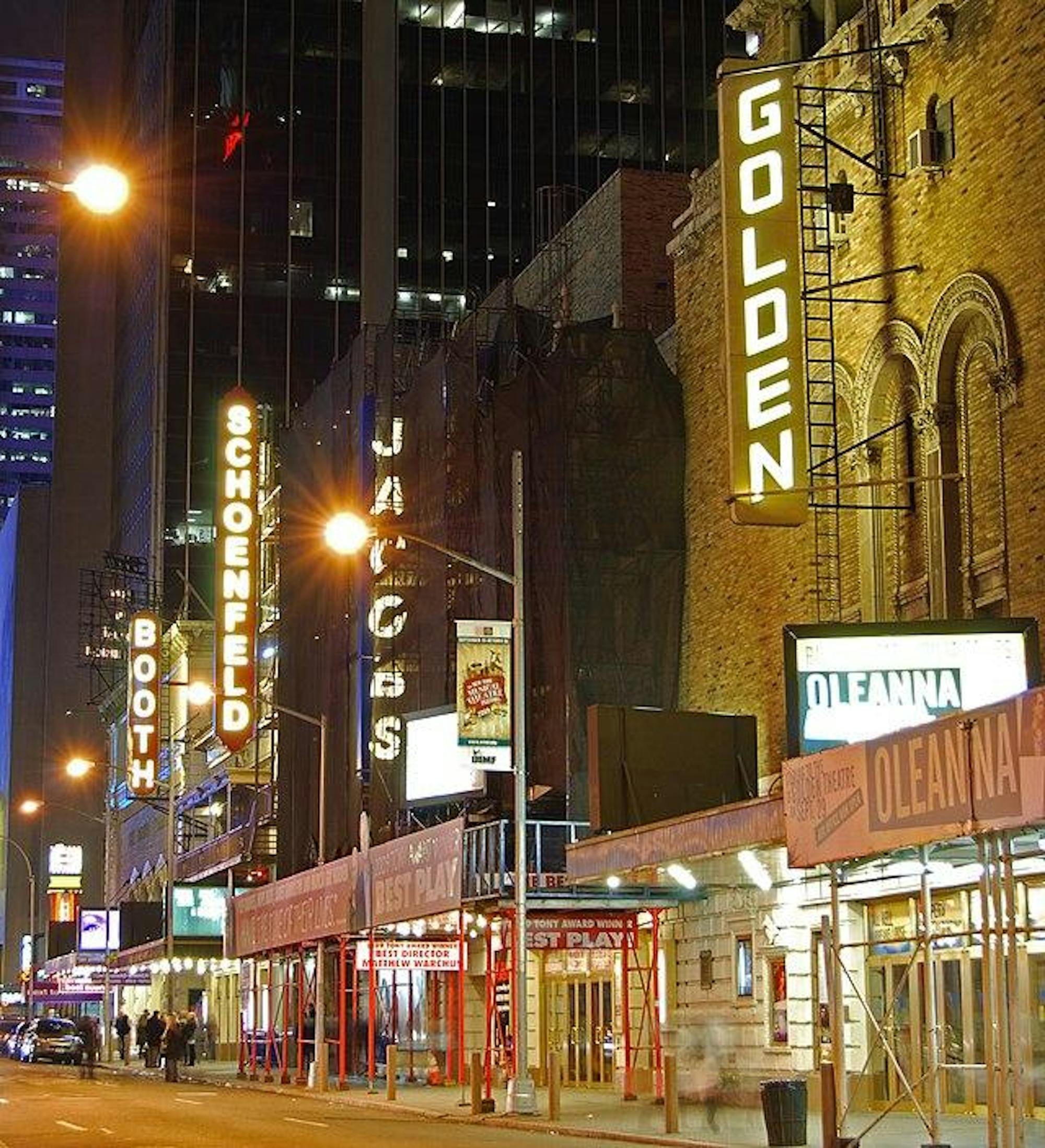
Lots of big things are happening on the greatest stages in the world; Jeremy Jordan is making his return as Jay Gatsby in the beloved The Great Gatsby Nov. 10, Leslie Odom Jr. already began his reprisal of his legendary Aaron Burr in Hamilton Sept. 9 and Aaron Tveit has been welcomed back to Broadway alongside Lea Michele and Nicholas Christopher for the revival of Chess, which premiered Oct. 15 and is scheduled to open on Nov. 16. According to The Broadway League, the 2024-2025 season was Broadway’s highest grossing in its history with a yield of $1.89 billion, as well as the second best-attended behind the 2018-2019 season.
Despite these signs of prosperity in the heart of America’s musical theater industry, two of Broadway’s biggest unions recently expressed concerns that the major industry success is not being reflected in the working conditions of the artists that have brought about said success. The American Federation of Musicians Local 802, the world’s largest union of professional musicians with over 1,200 members, voted to authorize a strike on Oct. 12, with a whopping 98% of members voting in the affirmative. The Actor’s Equity Association, representing over 51,000 actors and stage managers, also voted to authorize a strike on Oct. 16, though they have not released the statistics behind the vote. If Equity went through with a strike, 26 out of 31 shows on Broadway would be affected. If Local 802 went through with a strike, it would mean lights out for every show currently running except for Ragtime, which falls under a not-for-profit contract with its producer, Lincoln Center Theater.
These strike authorizations came in response to widespread dissatisfaction with The Broadway League’s contract renewal terms, with AFM Local 802’s contract having expired on August 31 and Equity’s on September 28. According to AFM Local 802 president Bob Suttmann, specific union frustrations with regards to The Broadway League’s terms are fueled by “wage cuts, threats to healthcare benefits and potential job losses.” These proposed attacks on the working conditions of Broadway artists are downright unjust and uncharacteristic on the tail end of what Suttmann describes as “the most successful season in [Broadway] history.” With revenue reaching levels never seen before, it makes no sense why the trade association benefiting from the hard work and creativity of actors, musicians and technicians shouldn’t be able to provide them with proper compensation. That’s why it is all the more important that unions call out these contract revisions for what they are: profit-motivated exploitation.
As of Saturday morning, Oct. 18, Equity has reached a tentative agreement with The Broadway League that may avert a strike. The union writes on Instagram: “After a marathon mediation session lasting until 6 a.m., Equity and The Broadway League have reached a tentative agreement on the Production Contract. Now we will bring the deal to our members for ratification, and in the meantime, we are putting our full support behind AFM Local 802 as they work with the League to reach a deal that averts a strike.” Details regarding this tentative deal are still coming out to the public, though major demands stood on by Equity included more humane scheduling, increased contributions by Broadway producers to Equity health insurance and the provision of appropriate paid time off.
A deal between AFM Local 802 and The Broadway League was reached at 4:30 a.m. on Thursday, Oct. 23. Local 802 had stated on Oct. 13 that if negotiations persisted in being unproductive, they would call for a strike within the next two weeks — and with time having nearly run out, a strike-averting deal was finally made. Local 802 states that the agreement “provides meaningful wage and health benefit increases that will preserve crucial access to healthcare for our musicians while maintaining the strong contract protections that empower musicians to build a steady career on Broadway.” Considering every factor ranging from the integral role of musicians on Broadway to the dire cost of living issues being faced by New York City residents, the preservation of healthcare access for these artists should be a no-brainer. Had Local 802 gone through with a strike, Broadway would practically have shut down entirely; an important reminder of the widespread impact that the infringement of workers’ rights can have.
With Broadway being the beating heart of the performing arts scene in America and an inspiration to people around the world, threats to the wellbeing of the workers that keep the scene thriving cannot be tolerated. As I’ve witnessed personally, having befriended numerous talented folks attending musical theater and acting BFA programs at some of the most respected institutions across the country, the path to Broadway is one of consistent dedication and sacrifice. Those who are blessed enough to forge their careers on one of the 41 stages of the beloved Theater District toil away performance after performance as they preserve a sacred art worthy of nothing but utmost respect from the fans and the theatre owners, producers and general managers that benefit from their work. There is simply no room for profiteering in an industry that exists to preserve and display a sacred art.
Jordan White is a freshman in the College of Arts and Sciences. He can be reached at jiw39@cornell.edu.

Jordan White is a member of the Class of 2029 in the College of Arts and Sciences. He is a columnist for the Arts & Culture department and can be reached at jiw39@cornell.edu.