Emily Brontë published her masterpiece, Wuthering Heights, in 1847. Her novel is a haunting piece of literature, a psychological exploration of passionate and, for the time, unusual characters. It was gothic, it was complex and it was classic. Today, Wuthering Heights is read in high schools, universities and in the comfort of homes, regarded as one of the best books in history. It was Emily Brontë’s first and last novel. One year after its publication, she died from tuberculosis. And, in a way, I am glad she never lived to see the trailer for Warner Bros. Pictures’ adaptation of her beloved work.
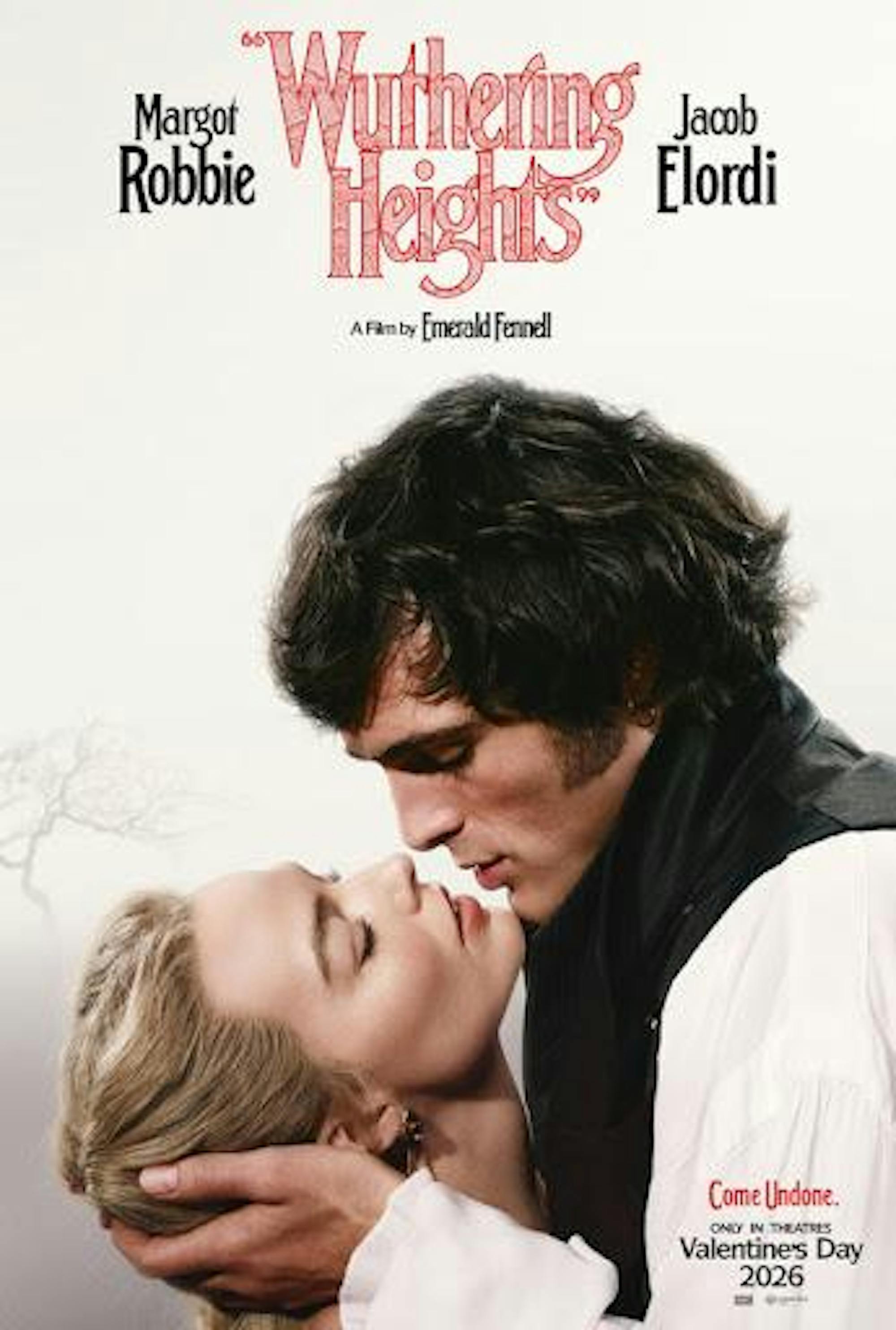
Two weeks ago, the studio released a teaser trailer for a film titled Wuthering Heights, set to be dumped into theaters Valentine’s Day of 2026. In it, the audience catches glimpses of Jacob Elordi as Heathcliffe and Margot Robbie as Catherine Earnshaw. In the novel, Heathcliffe is an orphan brought into the Earnshaw family by Catherine’s father and treated as a favorite son. However, upon Mr. Earnshaw's death, his true son Hindley casts Heathcliffe aside, treating him as a servant. Eventually, Heathcliffe returns for revenge, acting as a bitter and violent antagonist. Catherine Earnshaw develops a close relationship with Heathcliffe, and later in life, the two are in love. However, Catherine’s desire for social advancement leads her to marry Edgar Linton, which sours her relationship with Heathcliffe. Ultimately, the story is a nuanced look at love, social class, morality and the capacity for human cruelty.
The trailer’s one minute and thirty seconds capture none of that. If anything, the trailer gives the sense of a steamy romance and nothing more. Though Emily Brontë strove to subvert Victorian expectations and shock her audience, she herself would have been appalled by this gross twisting of her beautiful novel. Catherine and Heathcliffe, in the trailer, seem to engage in sexual activities. In the book, this never happened, nor was it ever implied. Rather, Brontë depicted the deep spiritual attachment of these two characters, to the point where it brought pain to both if they were separated. Furthermore, in the book, Heathcliff disappears when he is sixteen, Catherine fifteen. When he returns, Catherine is married to Edgar Linton. Emily Brontë could never have expected readers to assume sexual encounters, as the two characters were either too young or married.
The decision of the creators of Wuthering Heights to fabricate plot points that never existed in the original material (and were furthermore contrary to the very nature of the book) shows its complete lack of respect for Brontë’s literature. The quotes in the film’s title on multiple promotional materials are necessary to distance itself from the book, because the writers took the word “adaptation” to the extreme. I expect the movie to steal Brontë’s characters, disregard any troublesome complexities of the novel, and invent scenes they think will increase marketability. Ultimately, that is what the film adaptation is about: money. Romance, as a genre, has been exploding in sales since BookTok took off in 2023. If studios can tap into that market and target audience, their movie’s revenue could skyrocket. Warner Bros. Pictures, however, have taken this strategy too far. In an attempt to cash in on both the literature and spicy romance businesses, they slammed the two together, and Wuthering Heights was born. Warner Bros. Pictures chose Charli XCX to create original pop songs to accompany the movie, audio that blasts audiences into the 21st century instead of preserving a Victorian atmosphere. The studio brought in director Emerald Fennell, who was the visionary for the film Saltburn. Her style, provocative and sexually charged, pollutes the story of Wuthering Heights, adding quotes that make all readers want to rage against a system that would capitalize on a beloved classic.
Unfortunately, the issues presented in the trailer do not stop with the plot. Pollution spreads to the very casting of the film. The novel’s version of Heathcliff, as many scholars point out, is not white. Emily Brontë describes the character as “dark-skinned,” and Mr. Earnshaw travels to one of the biggest slave ports in Europe, Liverpool, to get Heathcliff. The character’s race exacerbates the issue of social class, as Catherine does not wish to lower her status by marrying him, ultimately leading her to choose Edgar Linton, a more respected choice in that time period. Heathcliff’s race plays into Brontë’s themes about morality in England, as Heathcliff is eventually ostracized and treated as inferior to those around him. All of this is erased by Jacob Elordi. The movie has been criticized for whitewashing the novel, simplifying it into only a love story. The actor is a minor Hollywood heartthrob, often cast in cheesy romance films like Netflix’s The Kissing Booth. In other words, Elordi fits perfectly into the image Wuthering Heights is attempting to curate: the spicy romance movie you can go see with the girls. It is this image that erodes Brontë’s masterpiece into a diminished version of itself, leaving the story vapid.
What we see happening with Wuthering Heights is just one drop in the ever-expanding pool of warped classic literature. It happened in 2022, with the release of Netflix’s version of Persuasion, loudly proclaimed as one of the worst Austen adaptations in history. That movie, as with the Wuthering Heights trailer, reduced a wonderful novel into drivel and meaningless romance. If we want to end this frightening trend toward nihilistic reimaginings of thoughtful books we all should cherish, we must deny Wuthering Heights the one thing it seeks: our money. Come Valentine’s Day of 2026, find a more sincere way to spend your time, and leave the Wuthering Heights film to become dust in the wind.
Jane Locke is a sophomore in the College of Arts and Sciences. She can be reached at jal562@cornell.edu.
Jane Locke is a member of the Class of 2028 in the College of Arts and Sciences. She is a staff writer for the Arts & Culture department and can be reached at jlocke@cornellsun.com.