Consumerism’s “final boss” is nowhere to be found. Its final victim, however, looks right through the screen. “Run, don’t walk!” “Come with me to get!” “5 summer must-haves!” are all dull phrases that echo across TikTok shop hauls and Amazon storefront ads, urging you to move fast, buy now and don't think twice because you must get it! Each scroll as repetitive as the last, only expanding the surface area of things to consume. But if it wasn’t the Labubu, the Sonny Angel, the Smiski, or the Beanie Baby, maybe it’s the stanley, the owala, the hydroflask or the yeti. Another craze, another plushie, another polyester shirt — the next purchase already queued up before you even finish the last.
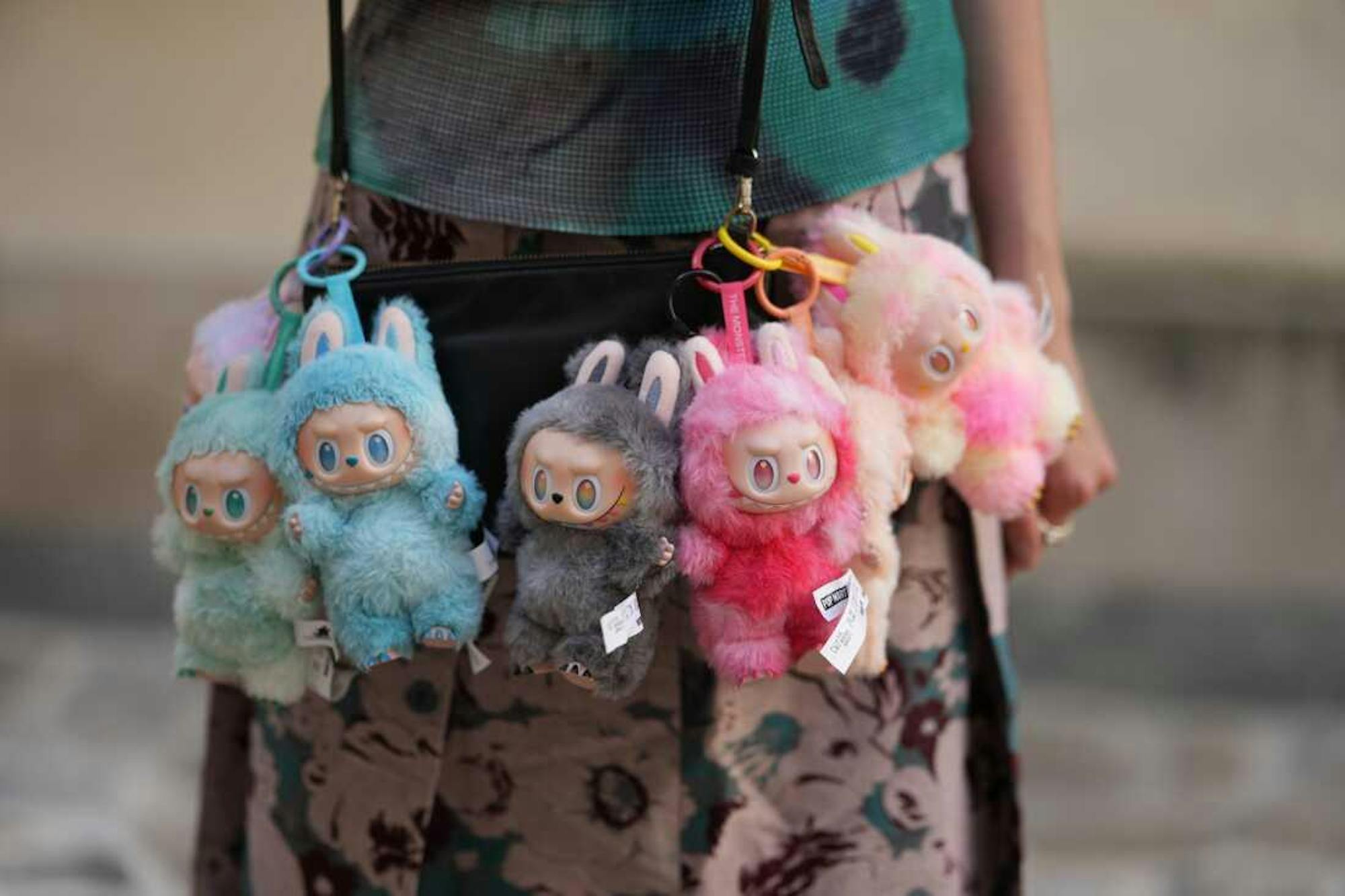
This cycle has been laid bare by the latest craze for Labubu plush dolls. Gnarly little things with a wide-eyed, snaggle-toothed and vaguely unsettling appearance. The Labubu surged into global consciousness through Pop Mart, a Chinese toy company now valued at nearly $8 billion. According to The Economic Times, the plush figures became “plush powerhouses,” propelled by TikTok virality and scarcity marketing. For fans, the Labubu is just a weird toy that is all the rage right now, but beneath its furry outer surface, lays a signal of being plugged into the latest micro-trend.
Our culture, one structured around capitalism, thrives on fantasy. As much as we are sold things, we are sold the idea of acquisition, attention and self-betterment through ownership. You can buy your dreams and sell your issues. Monetize your sleep with a new pillow, and let money purchase all your problems with the promise of temporary relief. But once you get there, after you’ve acquired all the latest trends, there’s always just something else. A new thing to buy, a new object to desire.
But the Labubu hype is not what is unique about this phenomenon, but the fact that it’s part of an older pattern. The transformation of an object into cultural currency through hype, desire and the oh so disastrous “fear of missing out.” What this shows is that what we see as “valuable” can quickly be turned into a trivial purchase. Consumers who are sold the product of fame, under the illusion of transformation, fail to break from the cyclical practice of buying and forgetting.
Of course this isn't the first time we've seen this pattern. In the 1600s, something called “tulip mania” plagued the Netherlands. An era when tulip bulbs in the Netherlands became so expensive that they were traded like currency, until the bubble collapsed. In the 1990s, Beanie Babies were marketed as collectibles destined to be rare and valuable, only to end up in garage sales and thrift stores not even two decades later. The Labubu craze sits neatly in this lineage of another ordinary object inflated by hype, speculation and the fear of missing out.
What’s different today is the scale and speed that consumerism has moved at. Social media hasn't just encouraged buying, it collapses desire, community and consumption into the same act. The usual ritualistic TikTok haul is simultaneously a personal diary, an advertisement and a communal craze. McKinsey’s 2025 State of the Consumer report describes this era as one defined by “constant churn,” where the lifespan of trends shortens with every viral cycle. Before you can even finish your purchase, a micro-trend emerges, peaks and fades in a matter of weeks. Ensuring that consumers like you and I are always restless, somewhat lost and always chasing the next thing.
The emotional pull is strong because capitalism sells more than objects. The idea that buying a plush will bring comfort, a skincare routine will grant beauty, a desk lamp will transform productivity, all sell you the illusion of improvement. What you buy is unfortunately never just a product, but a marker of attention, identity and belonging, wrapped in a package and shipped to your door.
But this cycle is exhausting. The harm of purchasing for the sake of collection is subtle but enduring. When consumption becomes a performance, we lose track of satisfaction itself. The Labubu will eventually fade, just like her distant relative the tulip and just like her grandma the Beanie Babie. But the cycle won’t. Because capitalism doesn’t sell the product, it sells the promise of fulfillment that never arrives.
Consumerism’s final victim is the consumer themselves. Trapped in the loop of buying and forgetting, people are left with clutter, sometimes debt and the gnawing suspicion that they still don’t have enough. In the capitalist culture we experience today, there is no end point, no threshold where ownership equals contentment. There is only the next thing, the next link, the next “seasonal essential.”
Nadirah Vander Linden is a junior in the College of Arts and Sciences. She can be reached at nav27@cornell.edu.