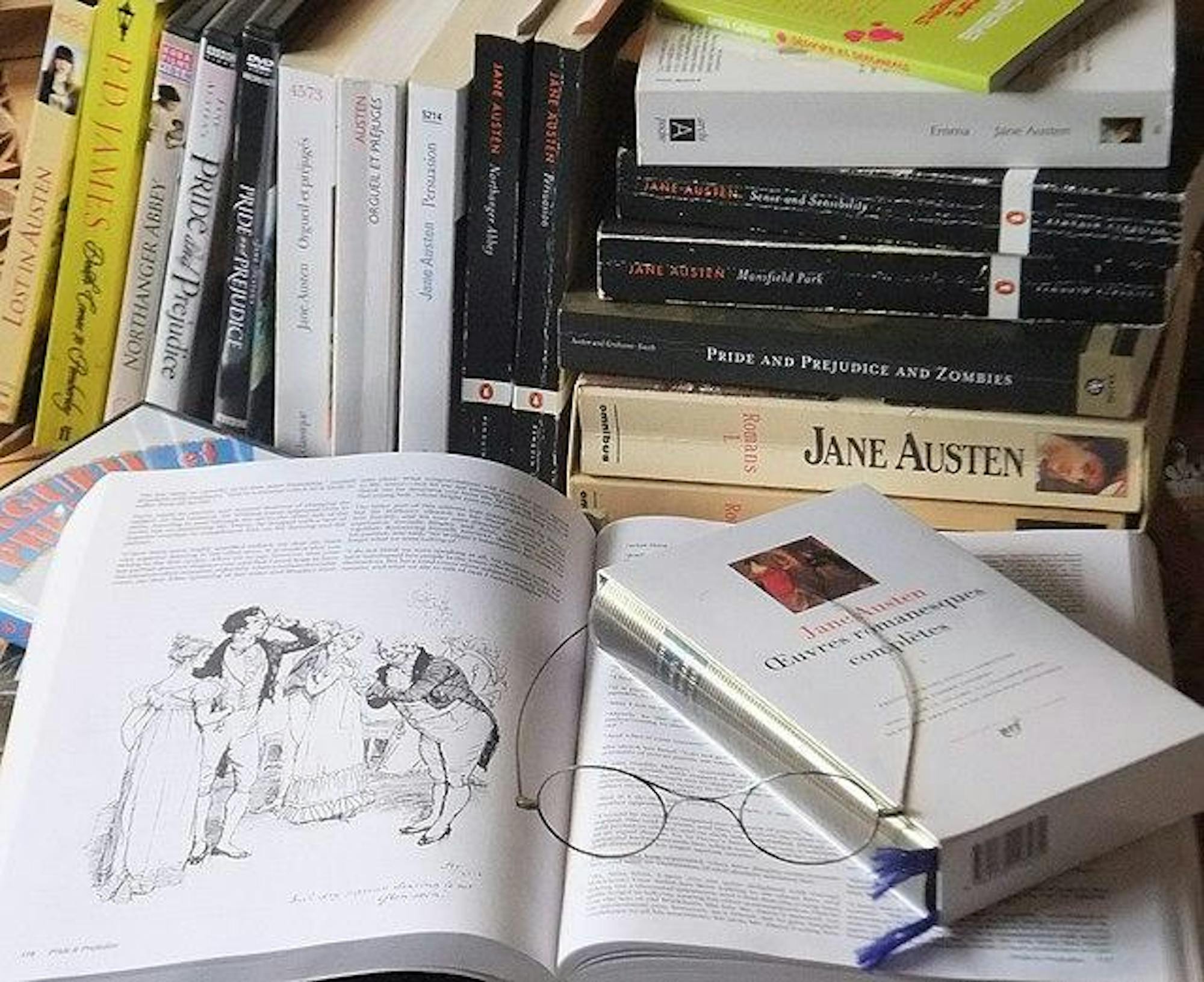
When Jane Austen, a figure revered across the globe for her portraits of human nature, began her writing career, it was completely anonymous. Her first novels were simply marked as “the author,” acknowledging her previous works. Pride and Prejudice was “By the Author of ‘Sense and Sensibility.’” Emma was “By the Author of ‘Pride and Prejudice.’” Today, this unidentified individual has become a phenomenon worthy of countless movie adaptations and a nationwide organization committed to adoring her work. Her fame is only going to continue, as this year Jane Austen will be pushed further into the spotlight. Why? Come December, she turns 250 years old.
Birthdays are a time for reflection, whether it be on the lessons learned through the past or the possible adventures coming in the future. Unfortunately, Jane Austen is no longer walking the Earth, scribbling away at a desk or speaking to audiences about what she wishes to instill in new generations. Fortunately, writing gives those hungry for the lessons of Austen a peculiar opportunity: the ability to glean knowledge from the books left behind. Austen may be gone, but her novels and letters survive, amplifying her voice in the present and through to the future. With this anniversary, we should take time to pause and consider Austen’s words.
When readers today think of Jane Austen, most jump to the timeless tales of romance, like that of Mr. Darcy and Elizabeth Bennet in Pride and Prejudice. However, an important piece of Austen’s writing that often gets overlooked is her comedy. That should be Austen’s first message on her 250th birthday: find the humor in the world around you. In Pride and Prejudice, you need look no further than the character of Mr. Collins to find a good laugh. A thoroughly ridiculous person, Mr. Collins serves as a form of comic relief in the book. He bumbles around, makes extremely long speeches about all the various positive qualities of his patroness and jumps from one woman to another in the search of a wife. Pride and Prejudice certainly has its serious moments, evidenced by the dark manipulative powers of Mr. Wickham, who convinces Elizabeth’s sister to run off with him without any intention of marrying her. Yet, Austen takes time to poke a little bit of fun at the society around her. Today, 250 years after the birth of Austen, and eventually Pride and Prejudice, we could do well to emulate her style.
Jane Austen provides us with less light-hearted advice as well. In Emma, the title character is a somewhat-spoiled, self-proclaimed matchmaker. During a picnic trip, Emma behaves rudely to Miss Bates, a poor, yet ultimately kind, woman who is mocked for her trivial speeches and unending comments. Mr. Knightley, Emma’s love interest in the novel, rebukes Emma severely, causing Emma to release her callousness towards another woman. Austen wrote this scene in Emma, and the protagonist’s subsequent realization that she has never been “so agitated, so mortified, [so] grieved,” to remind us today to never assume the circumstances of another and decide prematurely on their character. This is a recurring theme, most easily identifiable by the title of Austen’s most beloved novel, Pride and Prejudice. The prejudice which Elizabeth initially builds up towards Mr. Darcy blinds her to the true workings of his generous and loyal heart.
However, the most crucial lesson Austen can teach us, 250 years into her life, is the value of writing. Northanger Abbey provides the greatest insight into the workings of an author’s mind, speaking on the merits of her craft. In ruminations that quickly leave the actual plot of Northanger Abbey, Austen defends the novel by calling it a “work in which the greatest powers of the mind are displayed … the liveliest effusions of wit and humor, are conveyed to the world in the best-chosen language.” Austen, as an author and reader, understood the need for language to be put to paper, writing out stories full of lively characters and eternal advice. More than anything, her life, her dedication to writing even when almost no one knew her name, reminds us today to pick up a pen or open a book. If you do nothing else to celebrate Jane Austen’s 250th birthday this year, at least read one of her forever insightful, completely charming and endlessly entertaining novels.
Jane Locke is a sophomore in the College of Arts and Sciences. She can be reached at jal562@cornell.edu.
Jane Locke is a member of the Class of 2028 in the College of Arts and Sciences. She is a staff writer for the Arts & Culture department and can be reached at jlocke@cornellsun.com.