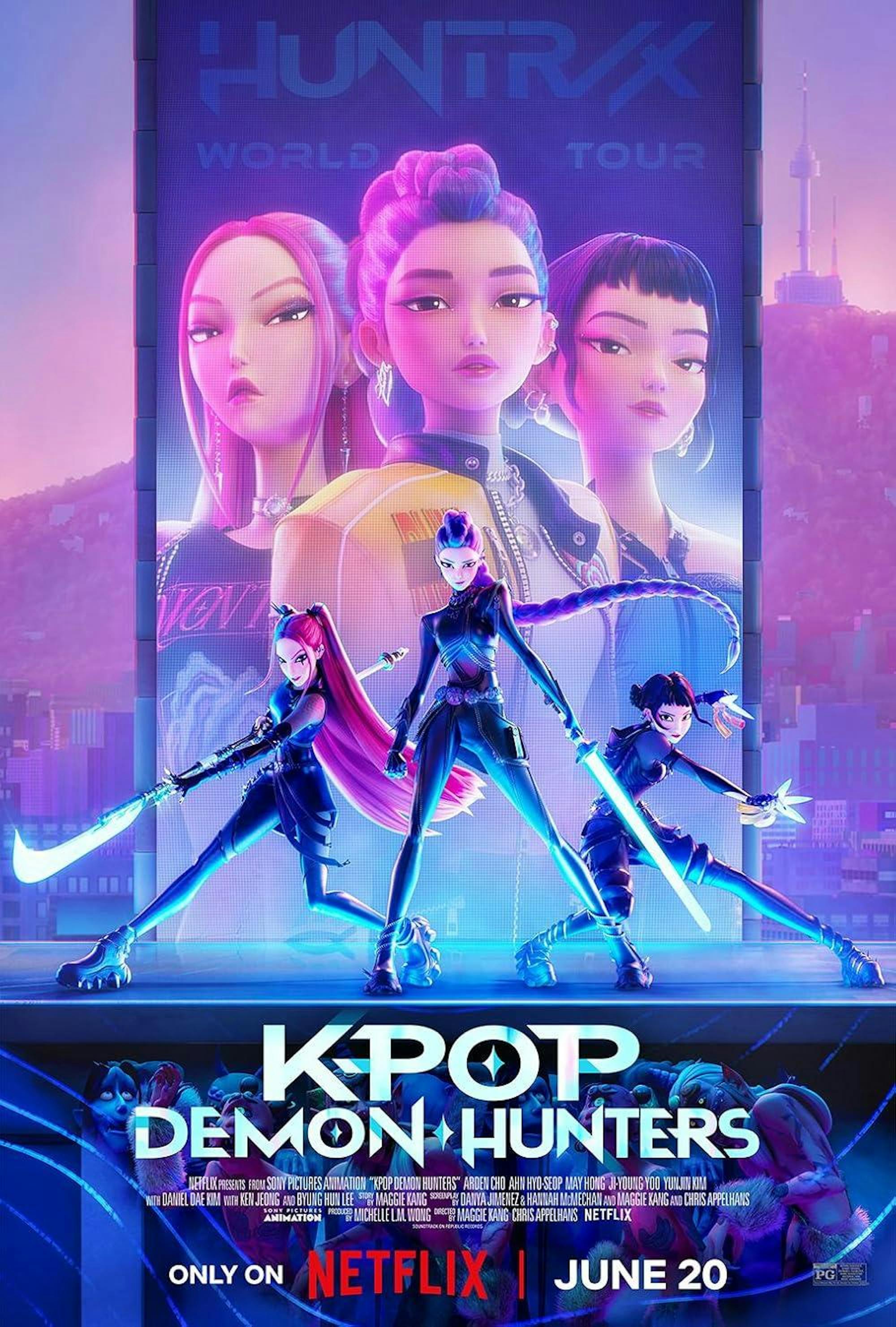
When KPop Demon Hunters premiered this summer, it initially appeared to be just another family-friendly musical fantasy, likely to entertain households without leaving a lasting mark on the broader cultural landscape. However, within weeks of its release, the film had evolved into a full-fledged cultural phenomenon, propelled not only by Netflix’s promotional efforts but also, and perhaps more significantly, by its soundtrack. The breakout single, “Golden” by Huntr/x, achieved unprecedented success, earning numerous awards while simultaneously rewriting chart history. It became the first song performed by a fictional group to reach the No. 1 position on the Billboard Hot 100, a milestone in itself, and it also marked the first time that a track by an all-female group of three or more members had topped the chart since Destiny’s Child’s “Bootylicious” in 2001. This remarkable achievement elevated Demon Hunters beyond the boundaries of our screens, establishing it as a cultural landmark and signaling the soundtrack’s extraordinary influence in driving the film’s visibility, engagement and impact on audiences both within and outside the traditional fan base.
Unlike many film soundtracks that fade from public consciousness shortly after a release, Golden quickly took on a life of its own across social media platforms. Fans streamed the song obsessively, propelling its popularity to new heights with each passing day. Social media platforms such as TikTok played a crucial role in amplifying the song’s reach. Videos ranged from teachers leading full classroom sing-alongs to enthusiastic covers by fans and even videos capturing genuine, often astonished reactions from listeners experiencing the song for the first time. In a heartfelt viral post, the lead vocalist thanked fans for their support, celebrating Golden’s achievement in reaching No. 1 on the Billboard Hot 100. In this way, Golden became more than a mere component of the Demon Hunters soundtrack, connecting listeners across different communities and age groups, helping to solidify the film’s presence in the realm of pop culture. Even people who had never heard of or seen the film, myself included, found themselves drawn into the phenomenon, with the cultural impact creating platforms that allowed the soundtrack and its visuals to reach audiences far beyond those who had actually watched the movie.
Although the film has clearly done well on its own, what fascinates me is how quickly it exploded in popularity around a single song. This feels like a perfect example of how pop culture moves today: in pieces. People don’t always sit through an entire movie or read a whole book anymore; they take a striking image and meme it, clip 30-second sound bites for laughs or entertainment, or, in this case, latch onto a song and create entire communities around it. To me, that shift in how we engage with culture is nothing short of remarkable. The release of Demon Hunters and the rise of Golden topping charts worldwide demonstrate just how advanced media has become in 2025. Our taps, clicks, shares and likes have more impact than we often realize. Pop culture today no longer exists solely on screens or pages; it thrives through conversations, remixes, and the shared experiences we so eagerly seek.
A single song, with lyrics wrapped in the allure of a catchy melody, has helped skyrocket Demon Hunters into cultural relevance while also revealing the unique ways we, as audiences, engage with the media we encounter. In this way, we begin to lay down bricks of shared experience, building a community from cultural fragments rather than focusing solely on the work as a whole. Whether through streaming the soundtrack, engaging on social media, or fans creating covers, remixes, and reaction videos across platforms, Demon Hunters demonstrates that pop culture today is moving away from passive consumption and evolving into active participation. This shift makes its impact more immediate and far-reaching than ever, as we chase connection, creativity and culture beyond the screen.
Mikayla Tetteh-Martey is a junior in the College of Agriculture and Life Sciences. She can be reached at mkt62@cornell.edu.
Mikayla Tetteh-Martey is a member of the Class of 2027 in the College of Agriculture and Life Sciences. She is a staff writer for the Arts & Culture department and can be reached at mtetteh-martey@cornellsun.com.