The other morning, I was cutting across the Arts Quad when I noticed how beautiful the flowerbeds looked. Bursts of color softened the paths and the edges of the buildings, each corner carefully trimmed and cared for. A few gardeners were hard at work, bent over their tools. For a moment, I almost kept walking, as I usually do. But then I slowed, hesitated and finally walked up to say thank you. It was an impulse — maybe a warm memory of my childhood in the countryside, maybe just the sense that someone should give words to the beauty. It felt a little awkward, but the smile I received in return was brighter than the whole afternoon.
The very next day, I had another small moment of recognition. I ride the bus across campus all the time, and after my class, I was back on board, expecting a routine ride. Suddenly, I spotted my favorite driver from last year — this time on a different line, the 51 instead of the 10. We exchanged a smile and a few words, and for a brief moment, the campus felt a little more like home after the summer.
These encounters seem ordinary and fleeting. Yet they lingered with me. Why? I realized they reveal just how much of our community is sustained by people whose work is so often invisible. You walk into your building before class, and the floor already gleams. The heat hums in the radiators, and the microphone is set up. Outside, the snow that fell overnight has been pushed aside, the paths salted, the leaves cleared. The dining hall fills with food that seems to appear as if by magic. A book you requested is waiting at the library desk labeled with your name.
All of this happens because of people. And yet so often their work — custodians, dining staff, gardeners, maintenance crews, bus drivers, librarians — is designed to stay out of view. To put it sharply: The better they do their work, the more invisible it becomes. Cleaning shifts are scheduled for nights, repairs are timed for breaks, food is ready before most of us are awake. Without them, campus life would quite literally fall apart. We experience the results, but rarely the hands that make them possible.
We rarely pause to name them. Part of this is habit. Part of it is hierarchy: In a world that prizes academic achievement, the labor that makes it possible is overlooked. Yet there’s something deeply human about acknowledging what has been unseen. It shifts the story of campus from one centered primarily on intellectual life to one that also includes the care and maintenance. The “unseen” labor is what creates the conditions for every achievement. No lecture can be heard if the room is too cold or the mic doesn’t work (we all know this firsthand). No paper can be written without books that have been catalogued, repaired, reshelved. No all-nighter is possible without the staff who keep the dining hall open late or the lights on in the library.
That’s why these small encounters feel so powerful. When a gardener looks up and meets your eyes, when a bus driver remembers you after months away, when a custodian greets you in the hall — they interrupt the script. They remind us that belonging isn’t only created in classrooms, clubs or study sessions. It’s also built in the quiet gestures of staff who sustain our daily lives.
There’s an ethical lesson in this, too. When we only honor the visible, we risk reproducing the same hierarchies that make some lives count more than others. But when we notice, thank and connect with the staff whose labor sustains us, we resist that hierarchy. We say: you are part of this community, and we see you.
So here is a small invitation for this week. Next time you walk into your dorm or your lecture hall, pause for a moment. Look around. Say thank you. Ask a name. Notice the gardener on the Arts Quad, the bus drivers on line 10, 30 or 51, and the custodian whose morning greeting can change the shape of your day.
The unseen labor of campus deserves to be seen — not as background, but as the quiet foundation of our shared life. Thank you to everyone who keeps Cornell running.
The Cornell Daily Sun is interested in publishing a broad and diverse set of content from the Cornell and greater Ithaca community. We want to hear what you have to say about this topic or any of our pieces. Here are some guidelines on how to submit. And here’s our email: associate-editor@cornellsun.com.
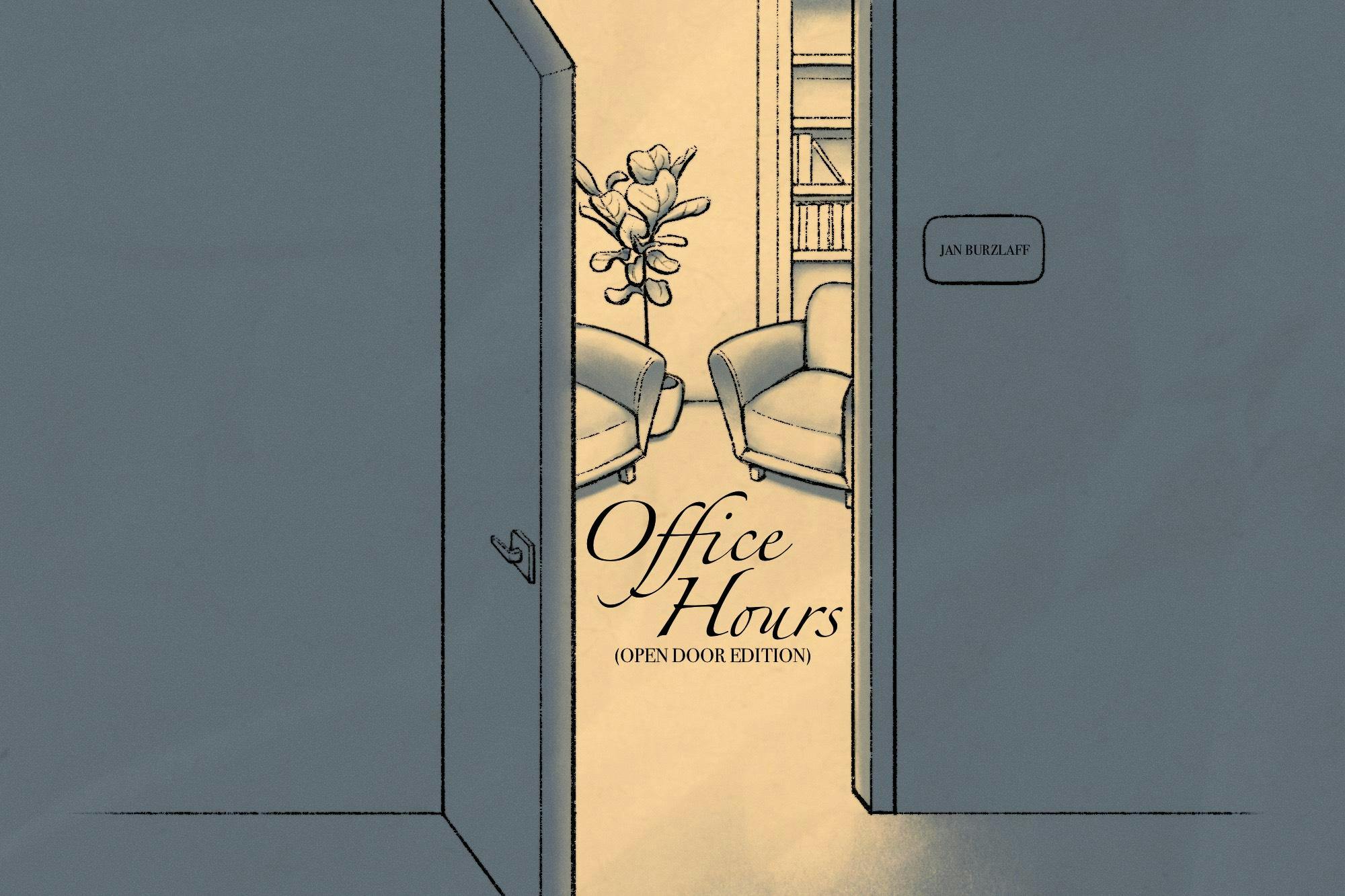
Jan Burzlaff is an Opinion Columnist and a Postdoctoral Associate in the Program for Jewish Studies. Office Hours (Open Door Edition) is his weekly dispatch to the Cornell community — an associate's reflections on teaching, learning and the small moments that make a campus feel human. Readers can submit thoughts and questions anonymously through the Tip Sheet here. He can also be reached at profjburzlaff@cornellsun.com.