


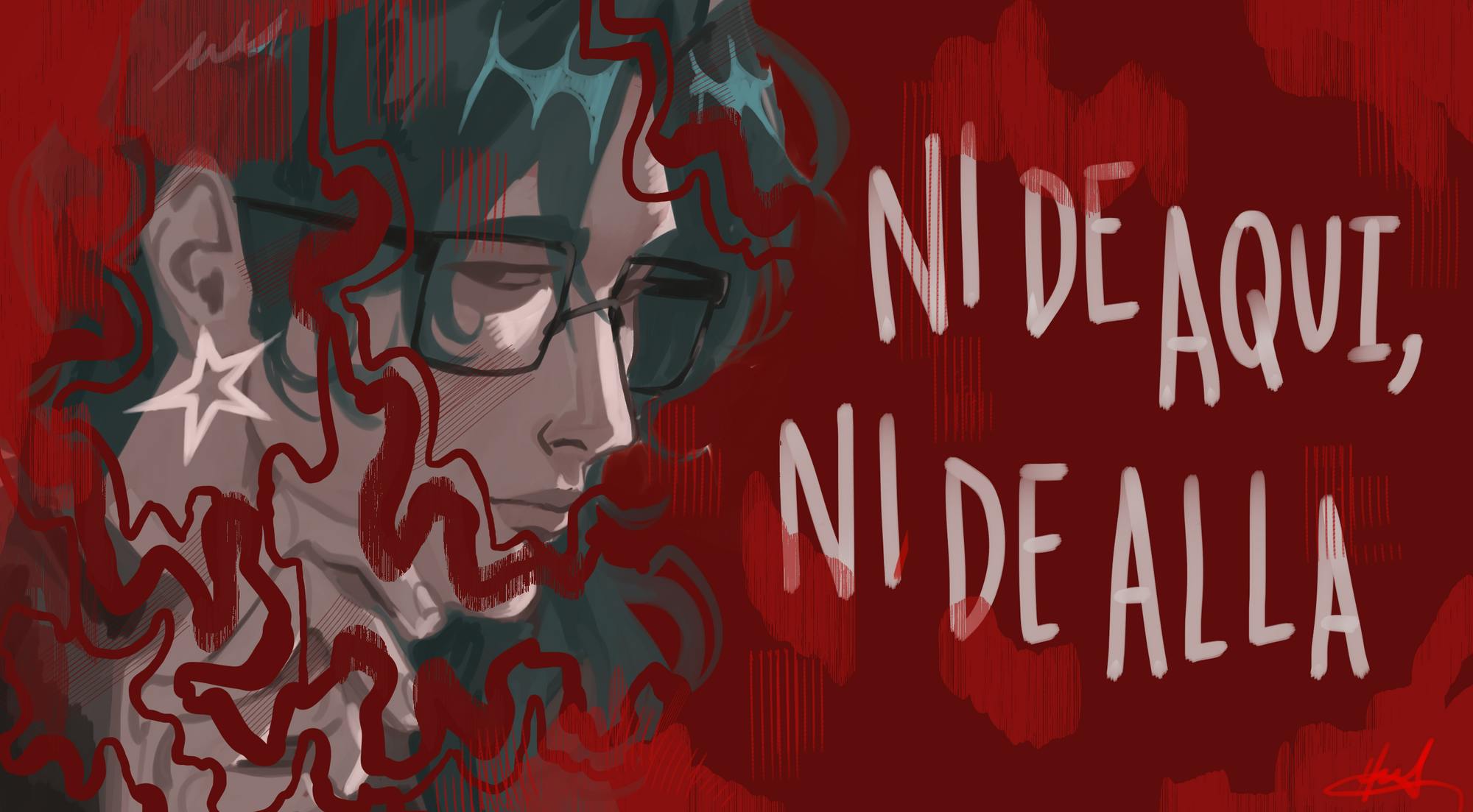
The worst part about being 20 years old is growing acclimated to the rhythm of young adulthood. As I reach the cusp of this stage, however, my obsession with Honkai: Star Rail — the multi-billion-dollar Chinese game that has amassed over 300 million active global users in 2025 — has ultimately merged with my academic work. My intention, thus, is to highlight my personal reflections of American Christian nationalism through the lens of a silly video game.
Unfortunately, I first must embark on a brief description of the specific story arc I wish to emphasize. The third planet, Penacony — the so-called “Planet of Festivities” — was released on the 2.0 update of Honkai. Besides the ongoing storyline of Amphoreus, Penacony gained the favor of fans worldwide for its 1920s-esque animation and dream-like accents. The story follows multiple interest groups, but for the purpose of this column, my main focus will be on the religious motifs of the main antagonist, Sunday, and his relation to the concerning sociopolitical infrastructure unraveling in the United States.
Sunday, as his name suggests, is a character heavily inspired by Christian iconography. Many of his quotes read like biblical scripture: “Oh, Triple-Faced Soul, please sear his tongue and palms with a hot iron, so that he will not be able to fabricate lies and make false vows,” followed by, “Under the light of the Harmony, all wickedness is revealed. I implore THEM to shed THEIR light, and I’ll ask you questions on THEIR behalf” are quotes that could be attributed to Revelations 19:15 and Psalm 7:11. Sunday, thus, is described as a tired man disillusioned by humanity’s darkest corners and the god that reigns over them. He found that sacrifice and obedience — and in the process, bloodshed and forced conversion — to the Aeon of Order would absolve society of its sins. From his golden halo to his boss battle theme, Sunday reflects the story of a devoted servant, a messenger that must do as they command.
While I have already alluded to the significance of some biblical scripture, the Book of Joshua serves as further evidence of Sunday’s character arc. The brutal violence in the Book of Joshua is deemed necessary as Joshua conquers the Promised Land: each of the 31 Canaanite kingdoms is burned down because they did not turn to God. Similarly, Sunday accepts that he must sacrifice the people of Penacony to establish Order.
How does this relate to the Christian nationalist movement in the United States? Well, dear reader, Sunday’s arc in Penacony is simply a reflection of what may culminate if religion continues to find loopholes in government. With the alleged rise of a "New King David" in the United States, as well as the justification of the deportation of immigrants through Proverbs 28, Sunday is simply a warning of false prophets and misappropriation of scripture for personal or political agendas. In the case of the current administration, the Bible is taken as a literal piece of scripture without an ounce of personal interpretation. Thus, violence, as seen in Joshua 10-12, is seen as necessary, justified by the vision of God’s celestial command. Sunday may be fictional, but his political motives mirror three ideas present in our current society: the wrath of God, the Promised Land in America, and the violence that must occur to consolidate it.
Christian nationalism, like Sunday’s obsession with Order, is lost in its iteration of apocalyptic eschatology. There’s an obsession with the appearance of a new messiah, yet with each alleged prophet a new facet of fascism unveils. The use of violence under the pretense of apocalypse, rapture, and God’s wrath misconstrues the purpose of scripture. Rather than an object of morale, the Bible becomes a readily available justification for colonialism and American authoritarianism.
Beneath Christian aesthetics, the lull of an ethereal dream, endless slot machines and colorful distractions hides a subtle nudge to reflect. Sunday’s character, as stated, is simply a warning of what our society could look like if the government is not completely divorced from religion. In a pluralistic society, the idea of religious centralization seems sinful, yet we are experiencing the beginnings — if not already in it — of dictatorship founded upon alt-right Christian nationalists. And like in Penacony, what is there to do other than watch?
The Cornell Daily Sun is interested in publishing a broad and diverse set of content from the Cornell and greater Ithaca community. We want to hear what you have to say about this topic or any of our pieces. Here are some guidelines on how to submit. And here’s our email: associate-editor@cornellsun.com.

Hannia Arevalo '27 is a Senior Opinion Columnist and a Government and Near Eastern Studies student in the College of Arts & Science. They also were the Graphics Editor on the Cornell Sun's 143rd Editorial Board. A native Texan and proud Mexican-American, their fortnightly column, Ni de Aqui, Ni de Alla, focuses on exploring the intersection between Latino politics, political visibility at Cornell and the implications of religion in politics. They can be reached at harevalo@cornellsun.com.


