

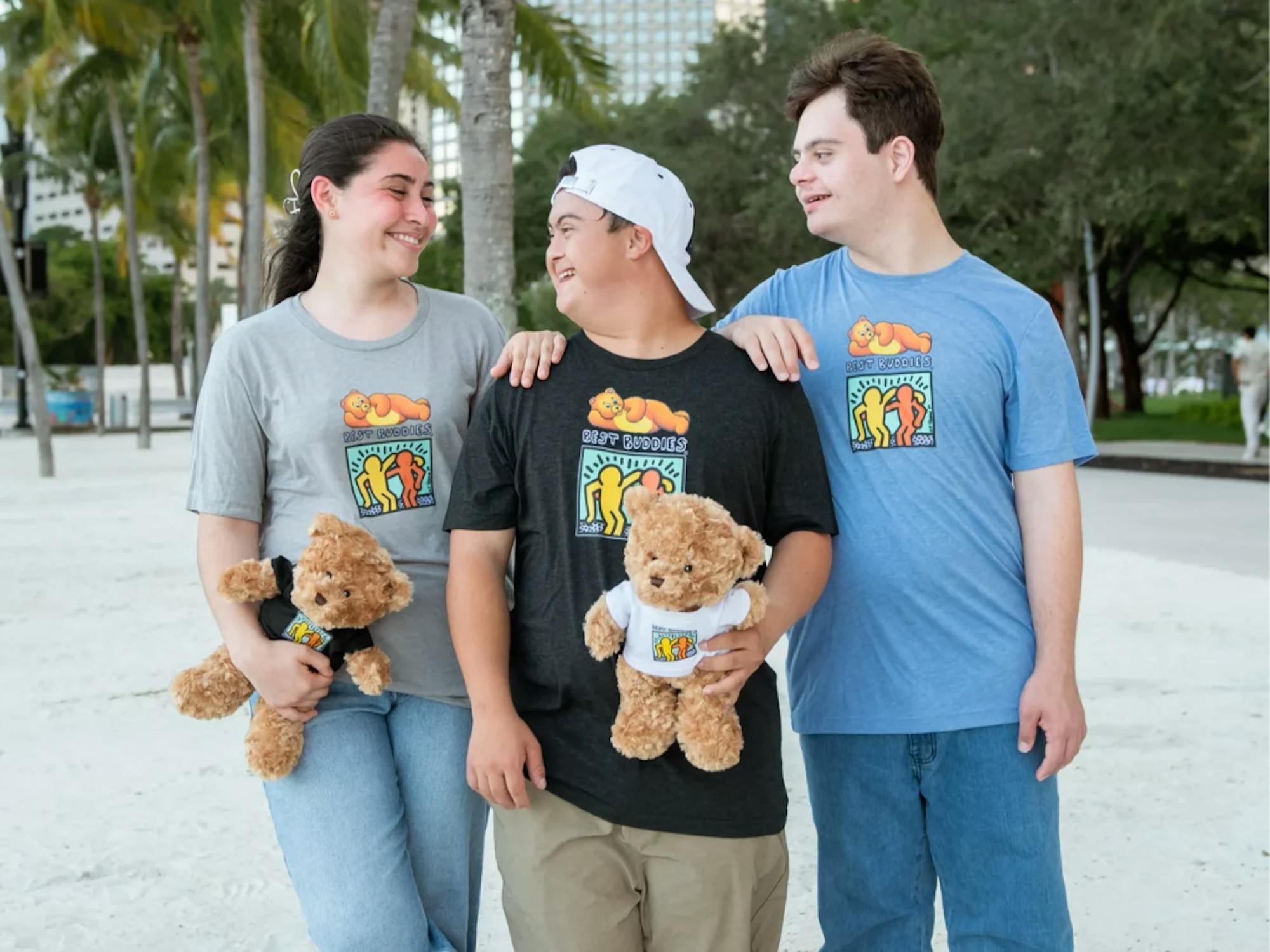
Every week, Avery Carr ’28 paints and reads books with her buddy — an individual with a developmental disability she was paired with through Cornell’s Best Buddies chapter. The books feature different people, artists and authors whom Carr had never heard of, and she said that she is learning a lot by reading them together.
“Best Buddies is so special because you get to make connections with real people in the community, not students — people who you never would’ve met otherwise — and are able to learn so much from them,” Carr, co-president of the Best Buddies chapter, said.
Led by Carr and Co-President Layla Kaiden ’27, the Cornell chapter is one of over 3,000 Best Buddies chapters across 46 countries, representing the world’s largest organization dedicated to promoting inclusion, opportunity and one-to-one friendships for people with intellectual and developmental disabilities.
The Best Buddies chapter partners Cornell students with “buddies,” or people with intellectual and developmental disabilities, from across the Finger Lakes region. The IDD community includes people with autism, Down syndrome, Fragile X syndrome and Williams syndrome.
The organization aims to provide opportunities to break down barriers and form one-of-a-kind friendships through on-campus events and its buddy-pairing system, where club members are paired with a Cornellian mentor.
“We work to create genuine friendships and a space where everyone feels accepted, celebrated and valued.” Kaiden wrote in an email to The Sun. “What I find most meaningful is the sense of connection and belonging that grows from these friendships.”
The group centers its work around fostering inclusion. Carr explained that in her high school, students with IDDs were separated from the rest of the school community. She appreciates that the organization is working toward “changing that norm” and “letting people with IDDs experience life alongside neurotypical people,” Carr said.
An essential part of promoting inclusion involves the group's bi-weekly events, where buddies join Cornell’s members for bonding activities like scavenger hunts, ice cream socials and gingerbread house making.
“Our most memorable event, though, is definitely our end-of-the-year formal,” said Julia Handel ’27, Best Buddies’ vice president of chapter activities. “Here on campus, we have sorority and club formals, but that’s not something many of our buddies will get the chance to experience, so making it possible for them is something I really appreciate.”
Kaiden echoed Handel’s sentiment, writing that the organization’s formal was one of her favorite memories of this year.
“We all danced, laughed and celebrated the moments we shared throughout the year,” Kaiden wrote. “It truly reflected the heart of our community.”
Whether it’s brightening a tough day or sparking excitement, these events offer emotionally enriching experiences for the buddies. For Handel, this emotional impact is what drives her.
“It’s really special to me when I’m able to help turn a buddy’s bad day around, or when I see a buddy eager to tell their parents how much fun they had when they get picked up,” she said. “It lets me know these events really are having the impact we hope for.”
Beyond attending the group’s bi-weekly activities, members can sign up to be a part of a buddy pair or a buddy family. Buddy pairs are pairings of one Cornell student with a person with an IDD, whereas a buddy family pairs two Cornell students with a person with an IDD.
Buddy pairs and families allow mentors to form personal relationships with people in the program, outside of the designated Cornell or Best Buddies events. Buddies are free to text one another, and buddy pairs often meet up off-campus for ice cream or walks, Carr said.
Buddies vary widely in age. The group focuses on finding connection and unity despite differences, and their buddy pairing system highlights the value in friendships with people across differences.
“When it comes to creating friendships, a lot of people focus on similarity,” Handel said. “They’ll ask themselves, ‘How similar do they seem to me? Could we be friends?’ When, really, you can make such amazing friendships and learn so much about the world around you by spending time with people who are different from you.”
Handel’s buddy is 35 years old and lives in Binghamton, but she said that they have formed an “amazing friendship” despite their differences.
Carr said that a large goal for her Cornell career has been to “learn more about different people, cultures and religions,” and feels that the type of meaningful exchange of knowledge and connection with her buddy is what makes being a part of this group so impactful.
At its core, Best Buddies is about redefining friendship — about creating meaningful bonds, not on the basis of similarity, but on a genuine desire to understand and appreciate people’s differences.
“We are of different ages, different backgrounds and have vastly different lives, but, over time, we develop this amazing bond that you really can't find anywhere else,” Handel said.


