

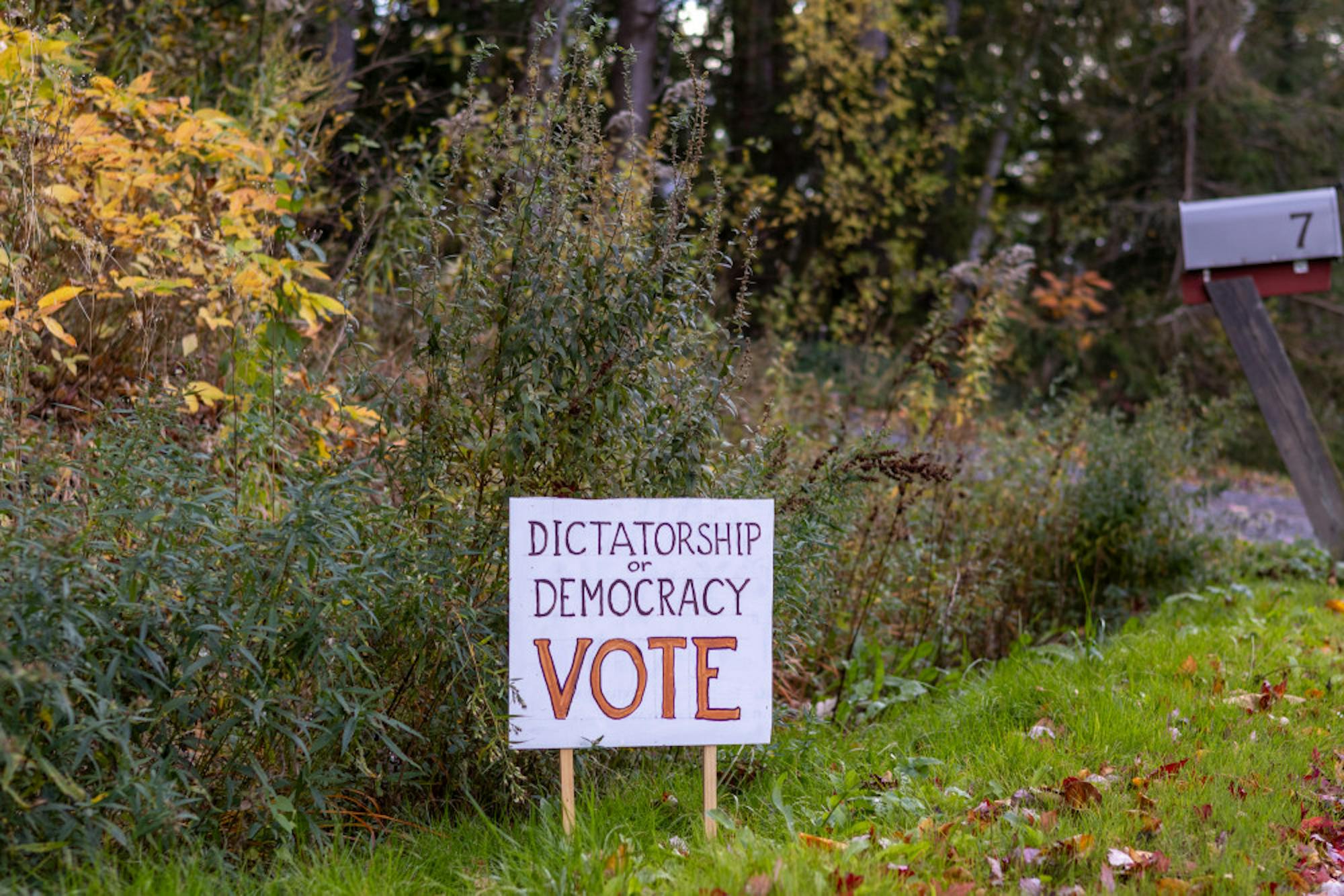
One week until the election. Seven days to decide if you'll cast your vote.
As I walk through campus and see volunteers in Collegetown dedicated to registering as many voters as possible, I can't help but think: for most of us, our vote in the national election doesn't matter (it does in our local elections). Unless you're voting in a swing state — Arizona, Georgia, Michigan, Nevada, Pennsylvania, Wisconsin or North Carolina — the outcome is already a foregone conclusion. To the 31 percent of the student body from New York, your 28 electoral votes will certainly go to the Democratic candidate — it is the same in my home state of Maryland. I could go on about how this is an apparent flaw in our system, where few votes in very few states decide the outcome. However, I'm not here to tell you we must change the system. Instead, I want to tell you that despite your (nonexistent) impact on the result of the national election, you still need to vote.
I'll give you three reasons why.
First, it is your civic duty to vote. I know this sounds cliché; you've probably heard this before — it was my 12th-grade government teacher's favorite line. However, it's more than just a catchphrase; it's an expectation we should take seriously. Think about it: voting, along with maybe serving on a jury or paying taxes, is one of the only actions we can take that gives us agency in the functioning of our government.
Second, voting is about visibility. Even if it doesn't tip a national election, our vote creates a public record of what matters to us in aggregate. This record is important everywhere, but especially on a college campus where a significant number of young people have the opportunity to turn out. Here's how it works: political campaigns live and die by data, voter trends and turnout rates. Consultants advise candidates based on this data, telling them which topics to prioritize, which policies to promote, and which groups to cater to. If youth turnout is low, leaders have no incentive to focus on issues like student loan reform or climate initiatives; their attention shifts elsewhere. But when young voters are active, these issues get pushed to the forefront. Even if you don't have a senator on the ballot this year or if the presidential race seems like a given, showing up in the national election has a ripple effect. It can lead to future campaigns tailoring their platforms and messages into outreach that targets you — the ones who vote. It might be subtle, but these shifts are real, shaping the future of policy by elevating our concerns. By voting, we are not just picking candidates; we are also ensuring our demographics are noticed.
Third, and to me the most important reason to vote, is simply because you can. This may seem obvious, but for much of the world, and even within our country's history, the right to vote has been far from guaranteed. Look around the world — countries where voting systems are rigged or nonexistent, political expression is silenced, millions, and likely billions, can only imagine having a say in their government. Even in the United States, the right to vote was highly restricted until about 100 years ago (and remains so for some groups). It was not until years of struggle and protest that marginalized groups like women and Black Americans were granted stronger protections against the systemic barriers that had barred their voices. Each of these milestones was a victory but also a reminder of how fragile our rights can be — and how easily, if we take them for granted, they can be restricted or undermined.
Thus, I urge every student to go to the ballots on November 5th or send in their mail-in ballot. Your vote probably won't matter in this national election, but it absolutely matters that you vote.
Seth Berman is a third-year student in the College of Arts & Sciences. His column, The Other Side, takes on controversial issues both on the Cornell campus and in broader societal contexts, offering a unique perspective on debates that challenge conventional thinking. He can be reached at smb474@cornell.edu.
The Cornell Daily Sun is interested in publishing a broad and diverse set of content from the Cornell and greater Ithaca community. We want to hear what you have to say about this topic or any of our pieces. Here are some guidelines on how to submit. And here’s our email: associate-editor@cornellsun.com.


