MOSCOW — As nine-year-old Hunter Bridges entered Red Square for the first time, he set his eyes on the world-famous St. Basil’s Cathedral. Amidst a crowd of tourists navigating through the plaza, the colorful and curious architecture directed the young boy’s mind to the only other thing with which it can compare.
“When I got here, I thought it was candy for a second,” he said.
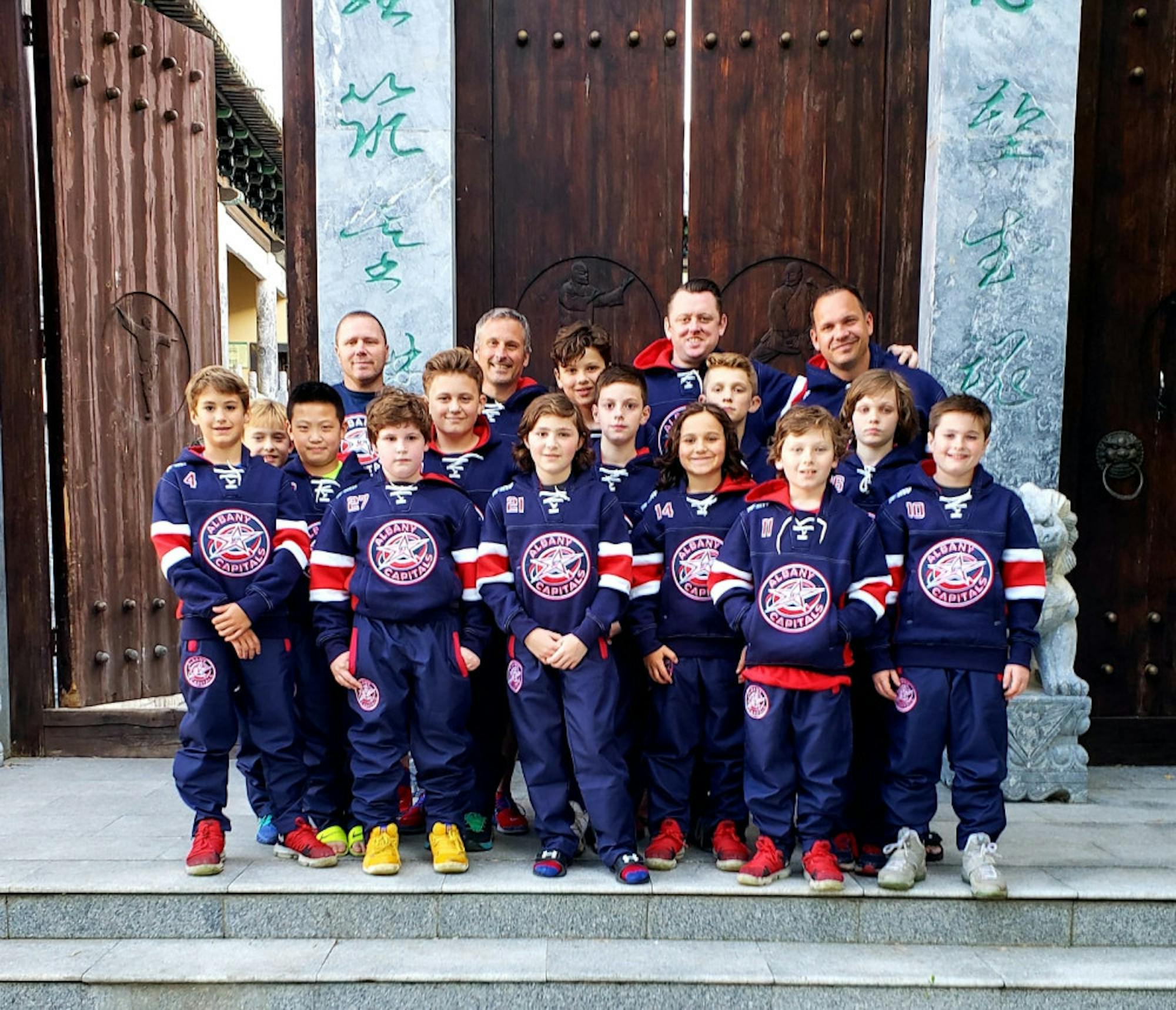
The delicate charm of Bridges’ comment aside, it underscores just how unconventional his trip to Russia is. Bridges is the youngest on a hockey team of 14 boys, aged mostly 10 and 11 who, at the time of their arrival in Moscow, have just finished competing at a youth tournament several hours south of the Russian capital. The foreign nature of their journey required a certain kind of leadership for everyone involved — including the parents.
Enter Brad Chartrand ’96, a Cornell alumnus and once-NHL enforcer. The former Los Angeles King leads the charge for the Capitals. Chartrand is a typical head coach: reserved on the surface, but passionate and fiesty underneath. Chartrand is accompanied by his assistant coach Styles Bridges, Hunter’s father, who takes the role of boisterous motivator both on the bench and in the dressing room.
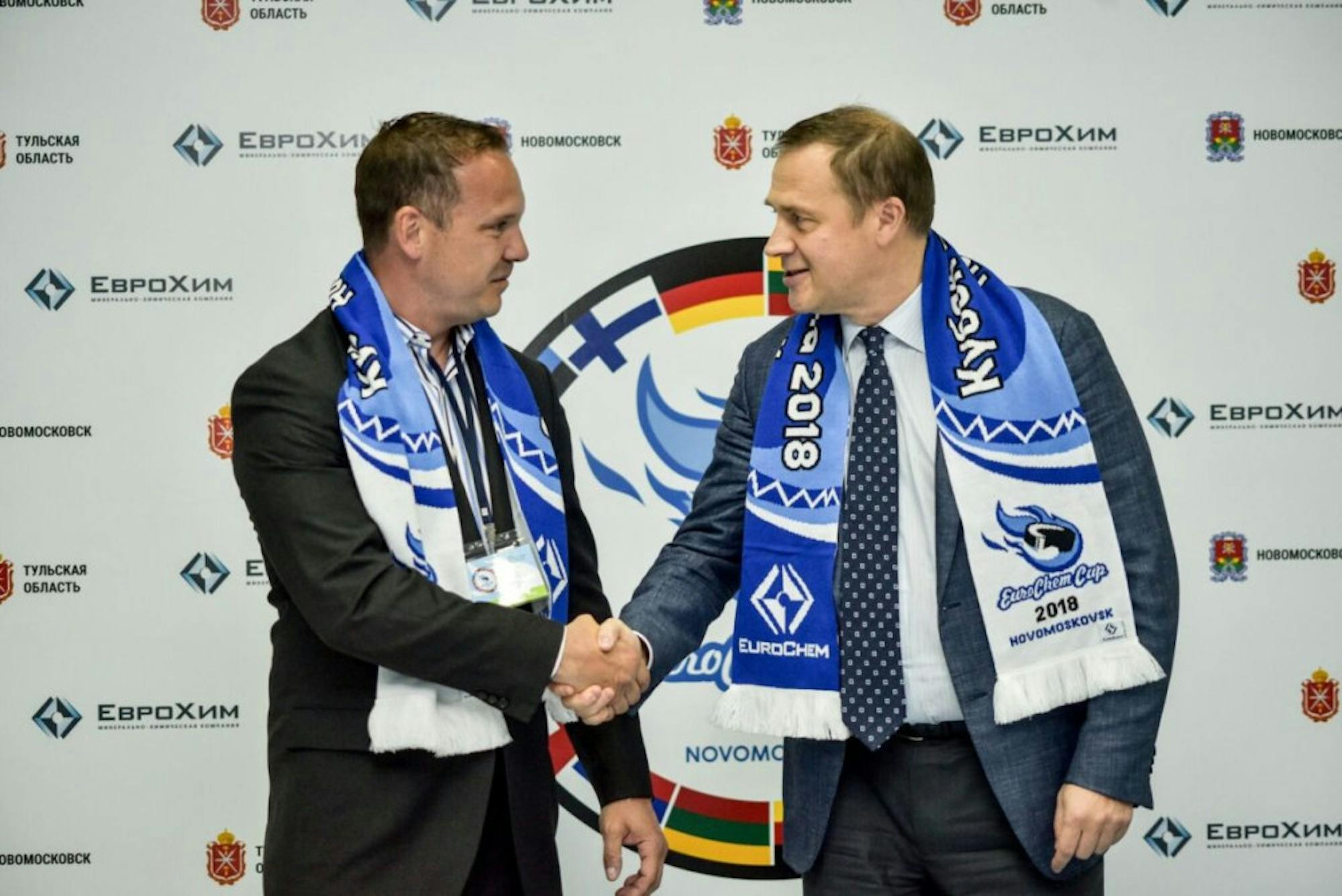
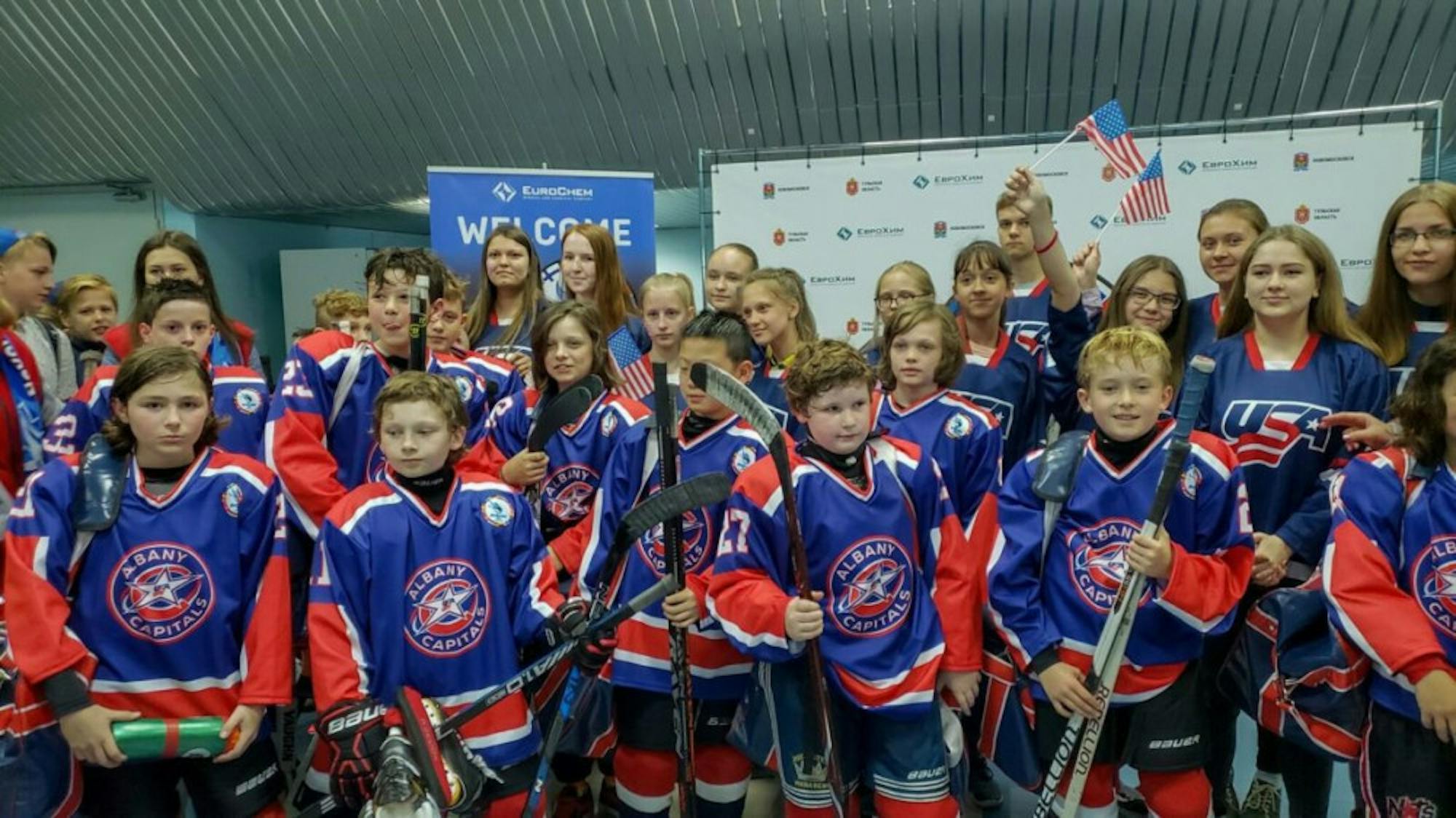
The Albany Capitals, a group of young hockey players from across Upstate New York were the first American team ever invited to the EuroChem Cup in Novomoskovsk, the de-facto world championships for youth hockey and the only international tournament of its kind. They traveled through the Russian countryside to the Jubilee Ice Palace with their parents and their four coaches.
At the tournament they competed from teams representing eight different countries: Belgium, Switzerland, Lithuania, Finland, Germany, Lithuania, the U.S. and four teams from Russia. The Capitals finished in 10th place out of 12 teams but were certainly the most exotic to the local spectators.
Despite their relative lack of competitiveness on the ice, the boys and their coaches learned a great deal about hockey and culture, with their families looking on.
That message proved to ring true as the Capitals would take another beating — this time at the hands of Germany, 9-0 — to have their fate sealed as the 10th-place finisher in the tournament.
***
The obvious context of the trip was the constantly changing geopolitical tides between the U.S. and Russia. In Moscow, the travellers visited the U.S. Embassy and were welcomed by Deputy Chief of Mission Anthony F. Godfrey, a career diplomat and non-political figure. Godfrey stated that it was the United States’ firm belief that the Russian government and its agents had inappropriately interfered in the 2016 presidential election. Afterwards, when asked if the boys remembered what Godfrey had said (he spoke for about 15 minutes), they returned mumbles and blank stares, and not one of them recounted any information about geopolitical conflict. Politics was a decidedly evaded topic of conversation throughout the trip, partly because the elder Chartrand took serious his responsibility of guiding his players and their families through Russia, politics-free. He had been there twice before as a hockey player, and he wanted to ensure that the journey was one of ambassadorship through the love of a sport, not one of walking on eggshells because of diplomatic uncertainty. “I don’t feel like I’ve felt any hostility as an American,” he said. “We’re here to play hockey, and if we can bridge the gap between our countries through love of this great game than that will be a success in my eyes.” Even so, it was hard for anyone plugged into the news to be unaware of what was going on. As the Capitals were set to face off against a Russian team for their first game, a comically large picture of Russian president Vladimir Putin playing hockey towered over them on the wall behind center-ice. At many steps along the journey, the kids enjoyed culturally immersive experiences — a famous cake of Tula, called a pryanik, underneath a statue of Vladmir Lenin, a bowl of the traditional Russian soup borscht in the upper level of a movie theater turned catering hall, a week-long stay at an east-Asian-themed resort in the countryside. “I was scared [of coming to Russia] at first,” said forward Ben Dalto. “But then you get used to it. You start to like the food, and all the people are so nice to you. I was nervous and excited I guess.” In the ice rink, the boys were accosted by local school children assigned to root for the American team by their teachers. Novomoskovsk is a small, industrial town, and the folks who live there are not used to Americans. While much of the social conditions were a new experience, the boys took it in stride. The tournament was well-run and well-structured, and the players were treated like “royalty” for much of their time in Russia.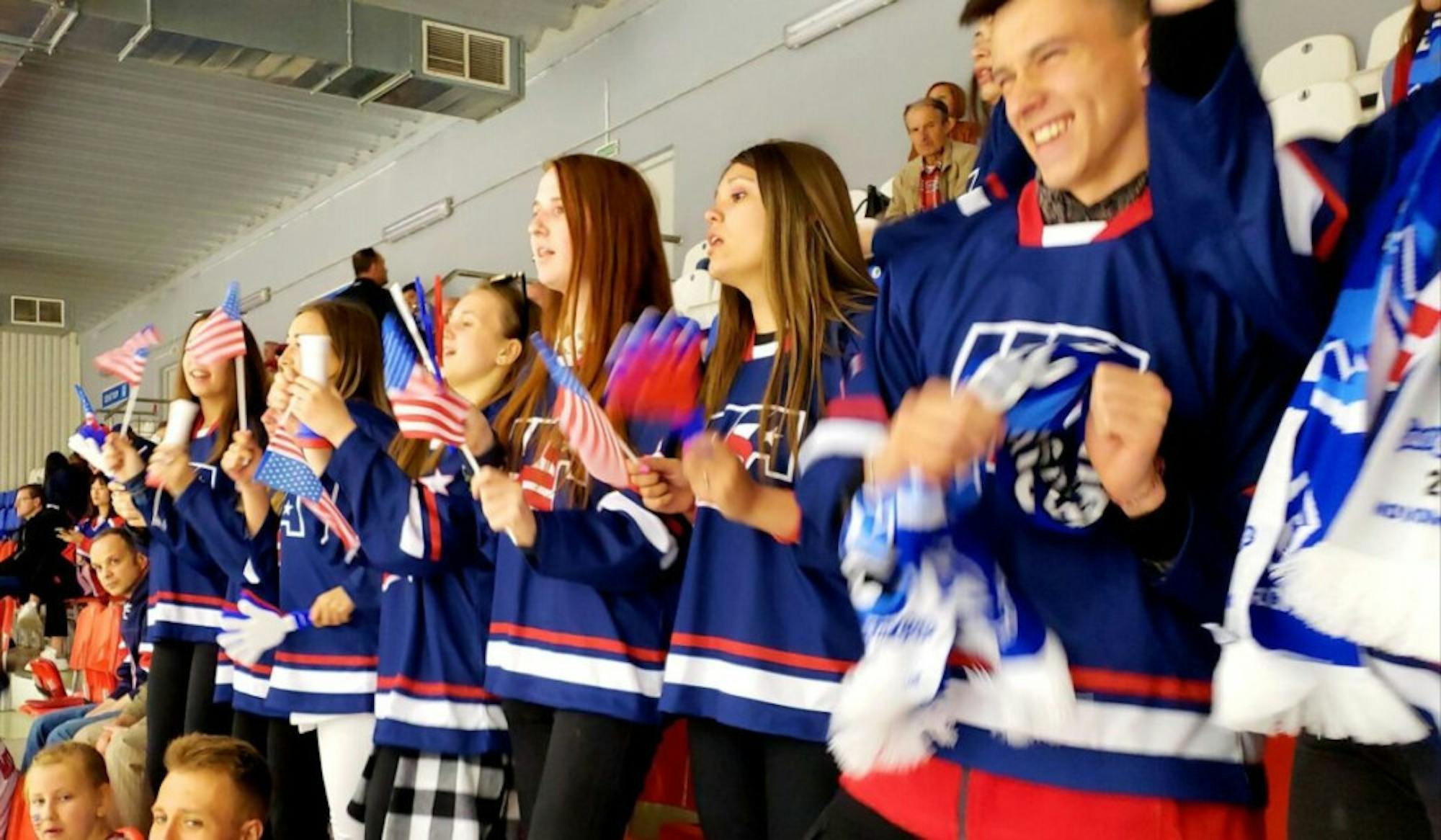
***
After five days of culture shock for parents and players alike, it was time to return to normalcy. Back in the States, the boys had to gear up for a trip to Kingston, Ontario for a tournament soon after and it was back to business-as-usual summer hockey hysteria. The flight back saw a light mood, with people gathering near bulkheads to share stories from the trip over wine and beer provided by the in-flight crew. I was jokingly invited by Styles join the team in Kingston for another go-around, and everything for the grown ups was slowly creeping back towards normal, a relief for most of us who were tired of travel — and dying for some American food. But for the kids, there seemed to be some disappointment about going back. They’re young, but they play hockey at a high level, and they all hope to play in the NHL one day. Their trip to Russia gave them their first glimpse of what that might be like, and they’re forever grateful to have had the experience. “We’ll never be able to play like this again,” said defenseman Karter Kenniston of Tupper Lake, New York. “Unless we make the NHL.”