I have spent a lot of time thinking about what it means to be a public administration student at Cornell.
We are taught about institutions. We study policies, implementation, accountability and public trust. We learn that a government or university can write the most carefully crafted policy in the world, but if that policy does not actually protect the people it is supposed to serve, then something has gone terribly wrong.
So when I read about Jane Doe, I cannot look at it simply as another news story. I look at it as a student. I look at it as a woman. And I look at it as someone who came to Cornell believing that the institution around me would take care of me and my peers. I am angry. I am frustrated. And, honestly, I am tired.
I am tired of women being taught to be careful instead of institutions being held accountable. I am tired of women being told to watch their drinks, stay with their friends, share their locations, carry their keys between their fingers and never walk home alone. I am tired of the responsibility for preventing sexual violence being quietly placed on the people most vulnerable to it.
And I am tired of hearing that the solution is another policy, another task force, another training, another website or another statement. Because women already know how serious sexual violence is. We live with it. We plan around it. We think about it when we walk home at night. We think about it when we enter a party. We think about it when we decide whether to trust someone. And now, at Cornell, we are being forced to think about whether we can trust the institution that is supposed to protect us.
The allegations made by Jane Doe are devastating. In a civil lawsuit filed this month, she alleges that she was drugged and sexually assaulted by seven members of Cornell's Chi Phi fraternity in October 2024 while she was unable to consent. She has named the seven men in her lawsuit.
The names of the defendants are included so they can feel the frustration of not only Cornell’s Jane Doe but also the frustration of women attending universities around the country: Matthew Ingalls, Johnathan Newell, Winston Lee, Gillio Lopes, Diego Sarabia, Scott Norris and Scott Kretzschmar. The allegations are now the subject of renewed scrutiny after New York Attorney General Letitia James has been appointed by Governor Hochul as special prosecutor on the investigation. CNN has now devoted extensive national coverage to the case, including interviews with Jane Doe's attorney and Cornell students who say the allegations have fundamentally changed how they think about safety and trust on campus.
Most recently, a transcript obtained by CBS News and reported by the Associated Press shows that Jane Doe told Cornell police shortly after the alleged assault that she was “100% confident” she had been raped. The transcript also reportedly contains more than the six-page statement that had previously been provided to the District Attorney's Office. Tompkins County District Attorney Matthew Van Houten has acknowledged that his office did not previously review the full transcript and has said the reopened investigation could be presented to a grand jury. The dispute over what evidence was provided to prosecutors, and when, has now become one of the central questions surrounding Cornell's handling of the case.
The questions have now grown beyond Cornell's campus. The Cornell Daily Sun reports that New York Gov. Kathy Hochul has called for a transparent, independent review of Cornell's response, while New York Attorney General Letitia James' office is reviewing the University's handling of the allegations. Cornell has maintained that it shared its investigative information with prosecutors and has emphasized that federal privacy laws limit what it can disclose about individual disciplinary proceedings. The University's position and the concerns raised by prosecutors, students and outside officials are now part of an increasingly public debate over whether Cornell's existing systems for reporting, investigating and responding to sexual violence worked as they were supposed to.
The University's 2025 Survey of Sexual Assault and Related Misconduct found that 35% of undergraduate women who responded reported experiencing nonconsensual sexual contact during their time at Cornell, compared with 23% in 2023. The survey also found an increase in nonconsensual sexual contact across the student population. The University and The Sun have appropriately noted that the 2025 survey had a much lower response rate than previous surveys, meaning the findings need to be interpreted cautiously. But even with that limitation, the numbers are deeply concerning.
Thirty-five percent. Even writing that number feels unbearable.
In Febuary 2025, Cornell implemented a Presidential Task Force on Campus Sexual Assault. It developed plans for education, prevention, transportation, communication and accountability. Those are important steps. But a recommendation is not the same thing as change. A policy is not the same thing as protection. A task force is not the same thing as accountability. And a statement is not the same thing as trust. How can a university implement and create ‘recommendations’ when they can't even follow them nor protect their student community? Students need to feel safe walking on campus knowing they have a university who will stand beside them during a time of crisis rather than brushing their issues aside and having them feel alone.
And I want to say something very clearly: I am proud of Jane Doe for speaking up.
I am proud of her for refusing to let her alleged experience disappear. I am proud of her for putting herself through the pain of telling a story that no person should ever have to tell. And I am proud of her for naming the men she alleges were involved.
Not because survivors should have to publicly expose themselves to be believed. Not because women should have to go to court to make people care. And certainly not because speaking publicly is something any survivor owes us. But because silence is often what institutions benefit from.
And Jane Doe refused to be silent. That matters. Her courage matters. Her voice matters.
After reading the reports and watching the national coverage, I keep coming back to the same thought: How many women have been silent because they did not believe speaking would change anything?
I do not want to graduate from Cornell knowing that we became better at writing policies than we became at protecting people.
I do not want another woman to become another statistic. I do not want another survivor to wonder whether speaking up is worth it. And I do not want another Cornellian walking across this beautiful campus with her keys between her fingers, looking over her shoulder, wondering whether she is safe. We should not have to live like that. Women should not have to live like that. Students should not have to live like that. And Cornell should never accept that as normal.
The Cornell Daily Sun is interested in publishing a broad and diverse set of content from the Cornell and greater Ithaca community. We want to hear what you have to say about this topic or any of our pieces. Here are some guidelines on how to submit. And here’s our email: associate-editor@cornellsun.com.

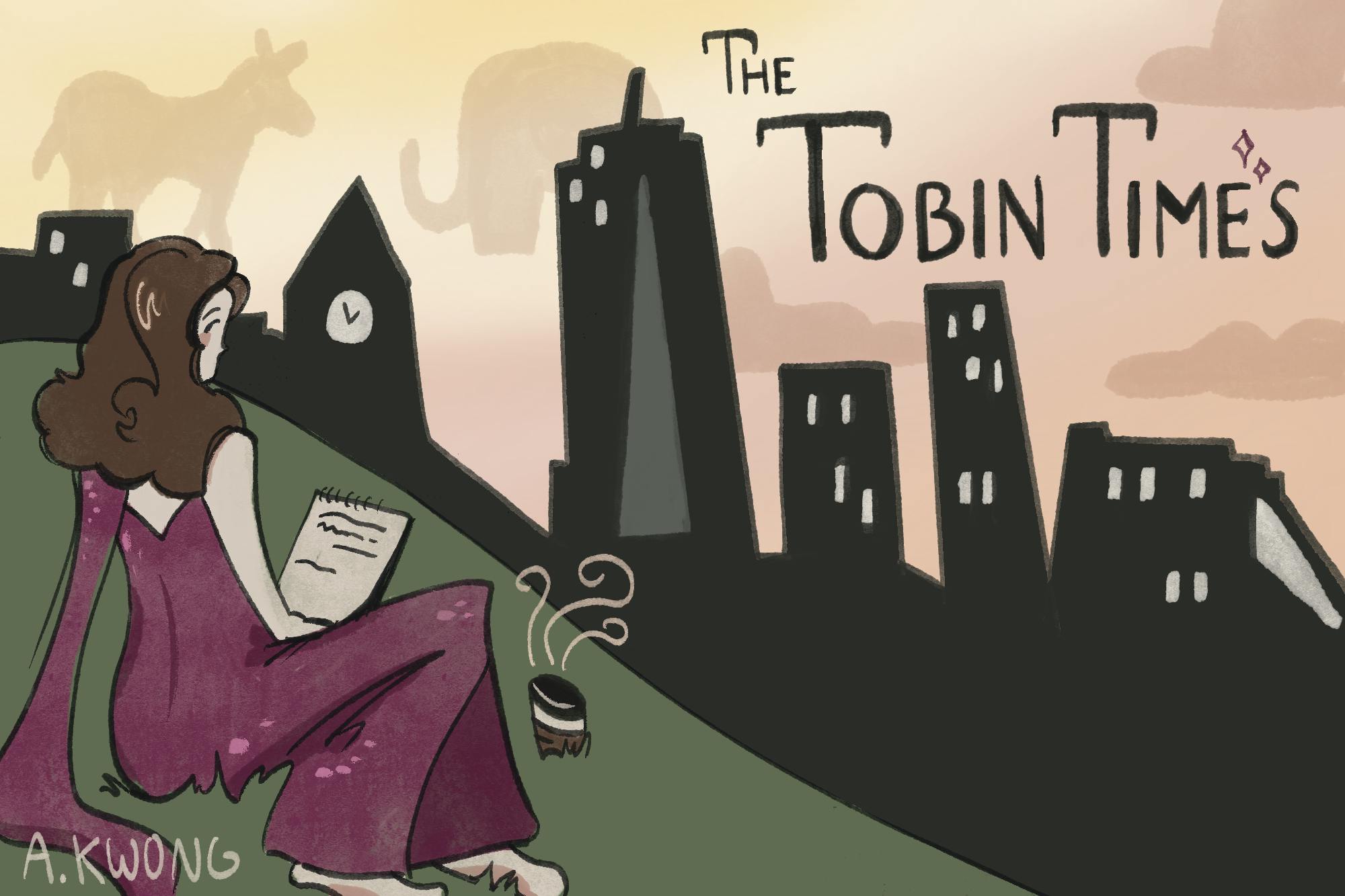
Lali Tobin MPA '27 is an Opinion Columnist and a master's student at the Jeb E. Brooks School of Public Policy. Her monthly column, The Tobin Times, explores public policy and politics through different lenses. She hopes to engage readers in hearing how politics is the most discussed topic in the media and why it is important to stay on top of current issues. She also hopes to tackle current social trends that can be connected through public policy. She can be reached at ltobin@cornellsun.com.